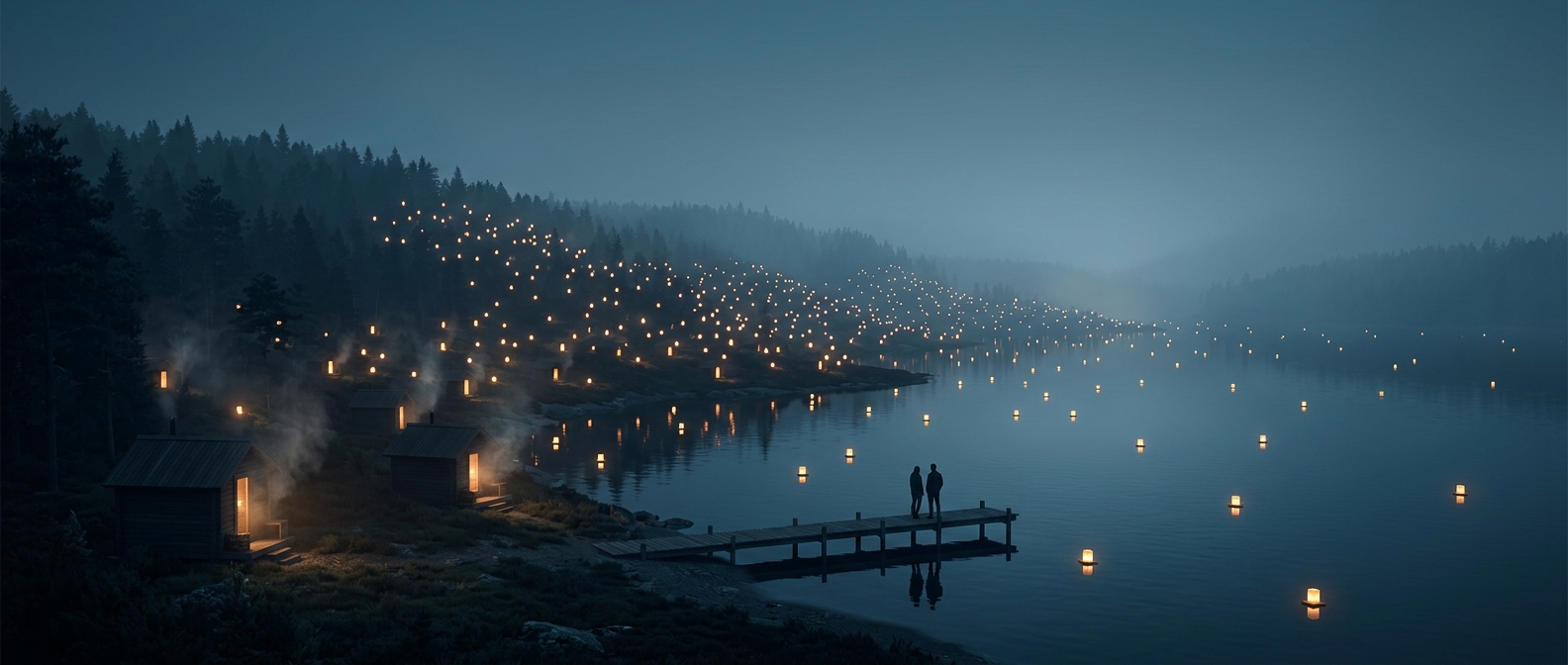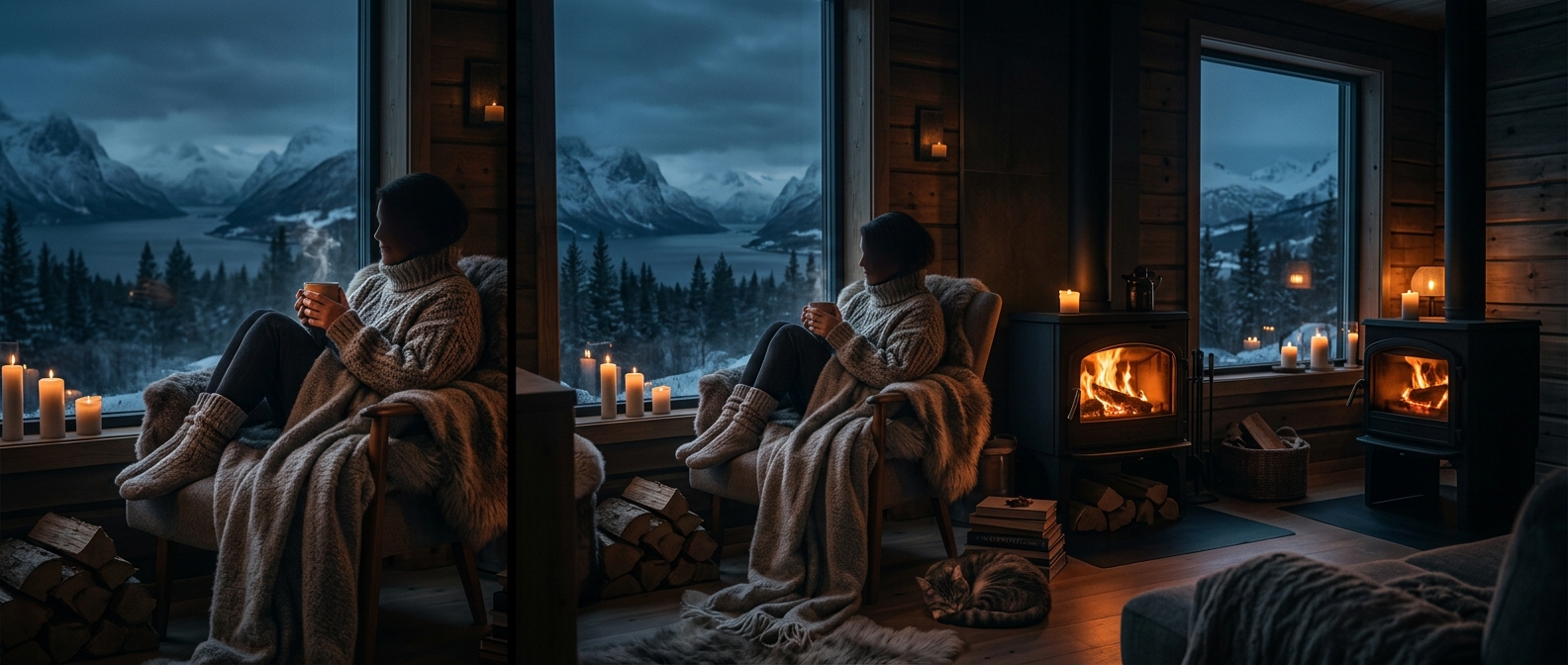
Koselig turns winter evenings into time together
In Norway, koselig describes a feeling of comfortable ease: an atmosphere that is welcoming, unhurried, and often shared. It is related to the Danish idea of hygge, but it is not a checklist of objects or a special winter ritual. A room can feel koselig because people settle in, talk, eat, or simply spend time side by side without needing a formal occasion.
That social element matters when daylight is scarce. Rather than treating every dark evening as empty time to endure, people can make it a setting for ordinary indoor life. Soft lighting and familiar surroundings help a home feel inviting; company and small routines give the evening its purpose. The feeling comes from how the space is used as much as from how it looks.
A seasonal mood, not a cure for the dark
Norway stretches far north, so winter daylight varies greatly by location. In the far north, some places experience polar night—a period when the sun does not rise above the horizon—while southern parts of the country still see daylight. Koselig can describe a response to winter across these different settings, but it does not make the season equally dark everywhere or erase its difficulties.
It also offers a useful way to understand Norwegian indoor life without reducing it to décor. The point is not simply to add warmth to a room, but to make staying in feel worthwhile: a meal that lasts, a relaxed visit, or a quiet evening shared with someone. When winter brings people indoors earlier, that small shift—from waiting for daylight to making a welcoming evening—can change the feel of the season.