Why earwax usually moves out on its own
Earwax is not simply dirt trapped in the ear. It helps protect the ear canal by catching dust and keeping the skin from drying out. The canal’s skin gradually moves outward, and ordinary jaw movements—such as chewing—help carry old wax toward the opening, where it can fall away or be wiped from the outer ear.
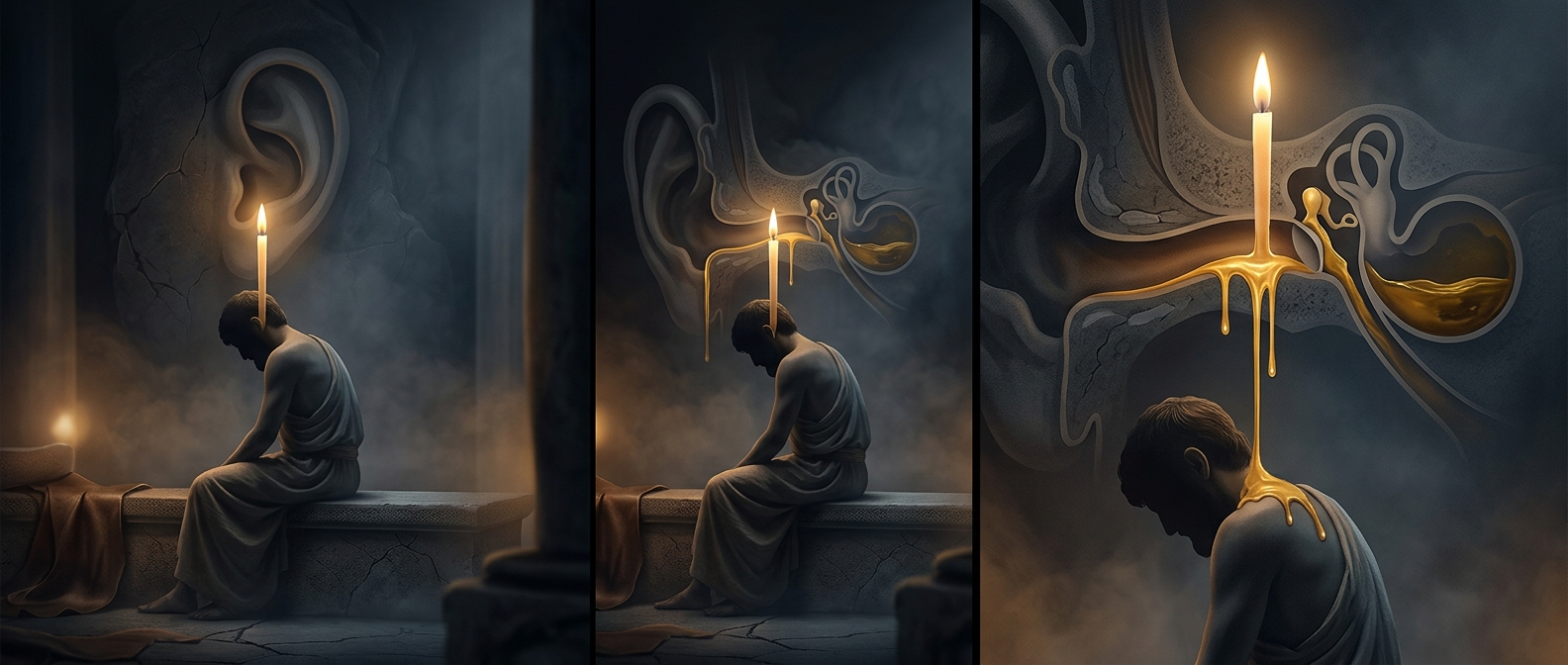
That process can be disrupted if wax is pushed back by an object or packed into the canal. A candle placed at the opening does not reverse the canal’s normal outward movement; pressure or contact can instead compact wax farther inside, where it is harder to remove and may affect hearing.
The risk is not limited to a failed remedy
The ear canal is narrow and ends at the eardrum, a delicate membrane that transmits sound. A flame, hot wax, or a sudden movement can injure the outer ear or canal; wax that reaches the eardrum can cause a burn. Even without an obvious injury, a blockage may leave the ear feeling full or muffled.
For a blocked-ear feeling, avoid putting a candle or other object into the canal. If the blockage persists, hurts, or affects hearing, a health professional can check whether wax is the cause and remove it without pushing it farther inward.