When flexibility outlasts the pose
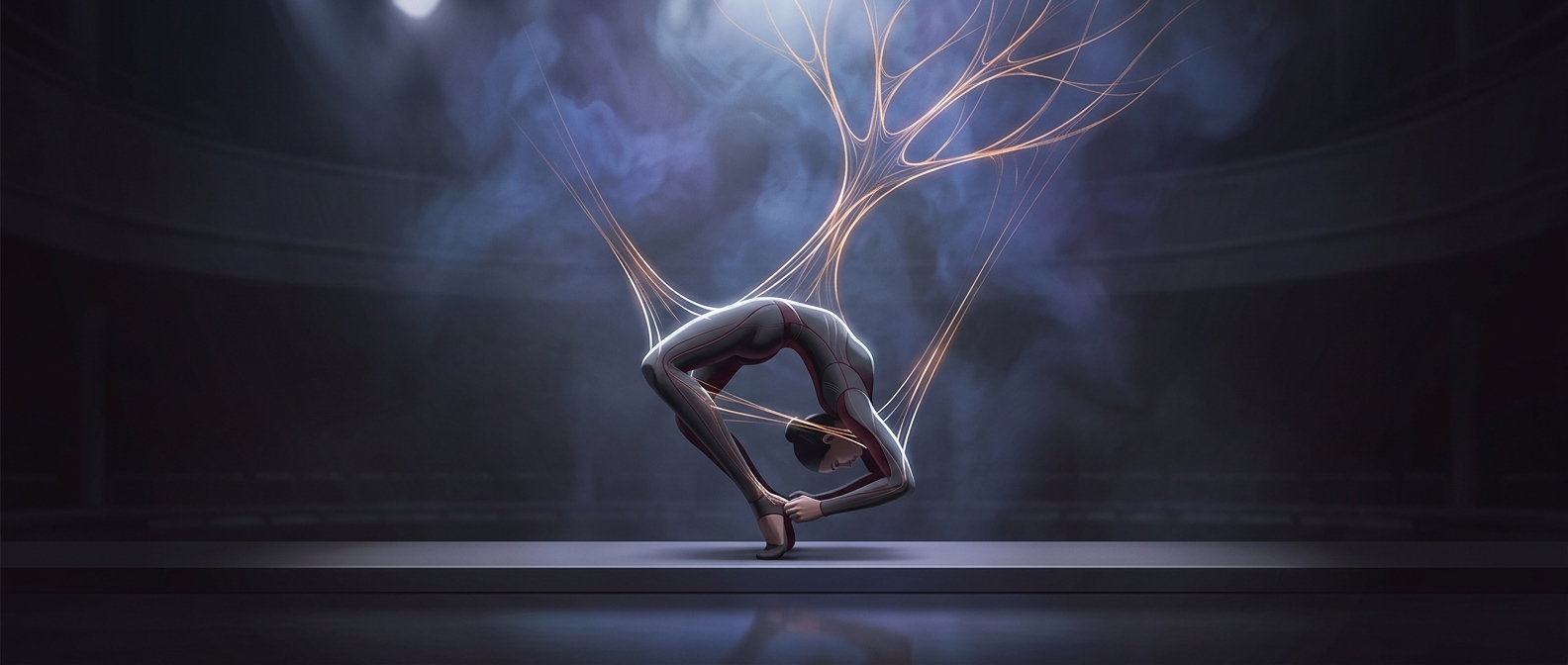
A contortionist’s range of motion comes from more than flexible muscles. Joints are also held together by ligaments—tough bands of connective tissue that limit how far bones can move. Repeatedly taking a joint to its extreme can place sustained strain on those bands. If they lose some of their tension, the joint may remain unusually loose even when the performer is no longer stretching.
That change is different from a muscle becoming more comfortable with a stretch. Muscles can adapt to repeated training, while ligaments help provide passive stability. They do not simply snap back like elastic after being pulled; significant or repeated strain can leave them less effective at checking a joint’s movement.
The tradeoff behind extreme range
A looser joint can make a striking pose possible, but it may also ask muscles to do more work to keep the joint controlled. In some performers, that can contribute to discomfort or a sense of instability, especially during movements that load the joint. The effects vary: training history, technique, and individual anatomy all matter, and unusual flexibility does not automatically mean injury.
The lasting consequence is not necessarily that a performer can no longer move. It may be that movement requires more care—or that an old extreme range comes with discomfort long after the performance ends.The same looseness that makes a pose possible can also reduce the joint’s built-in restraint.