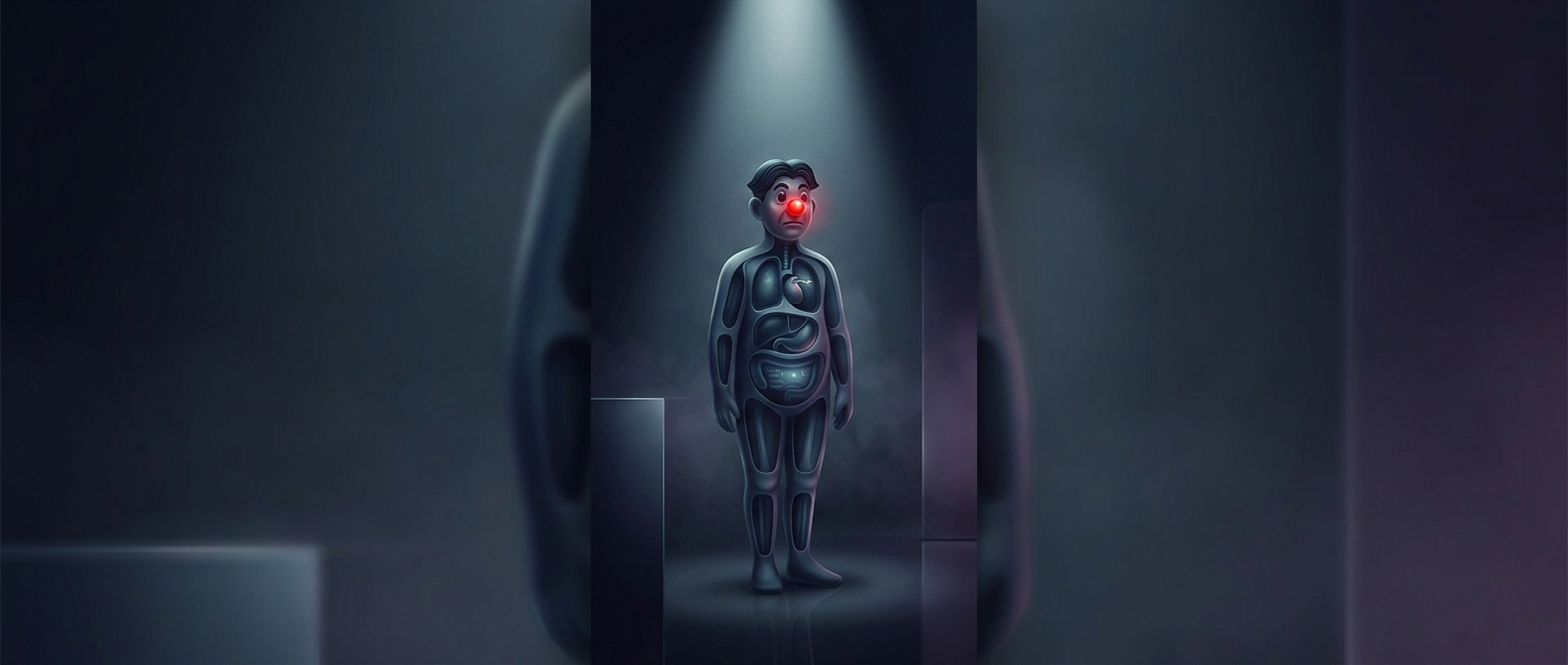
A Patient Turned Into the Game Board
Cavity Sam is more than a character on a box: his body is the playing surface. In Operation, players use metal tweezers to lift small plastic pieces from outlined openings without touching the metal edges. Each opening is a narrow target, and a slip makes the game’s buzzer sound and Sam’s nose light up.
That simple circuit turns a steady hand into the central challenge. The player must guide the tweezers through a tight space, grip a piece, and pull it out without brushing the rim. The visible mistake-and-reaction loop makes the rules easy to grasp even for someone who has never played before.
Silly Ailments, Real Tension
Sam’s ailments give the procedure its comic tone. A “broken heart” or “butterflies in his stomach” translates familiar expressions into little objects to retrieve. The jokes make the body feel like a whimsical puzzle rather than a realistic patient—but the tweezers still demand careful control.
The no-anesthesia premise sharpens that contrast. Sam is presented as a patient undergoing a procedure, yet the game replaces medical realism with a buzzer and a glowing nose. The consequence of a shaky hand is not pain; it is an unmistakable signal that the player touched the edge.
That combination is the game’s clever engine: the player imagines performing delicate surgery, while the hardware reduces every fumble to a brief, funny alarm.