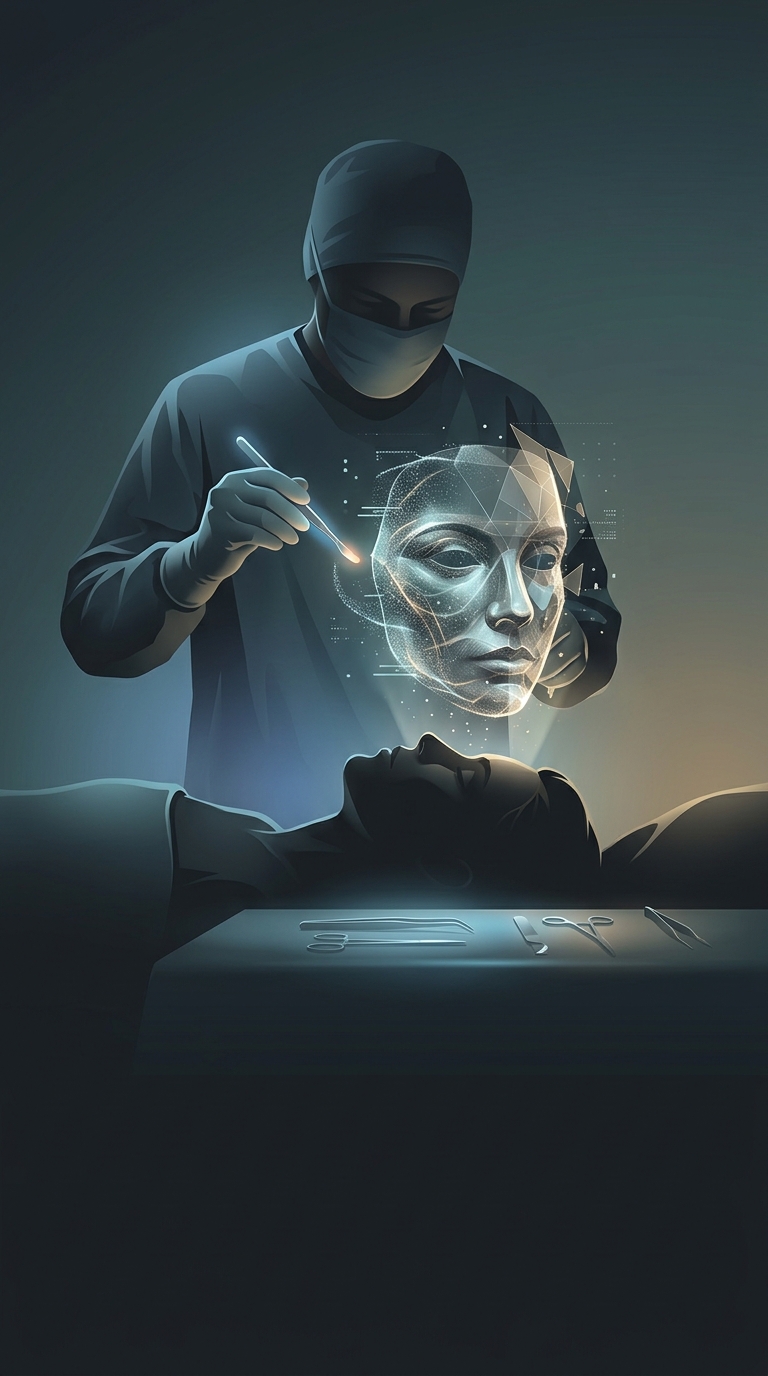
From Filtered Selfies to Surgical Plans
Beauty filters have changed the starting point of some plastic-surgery consultations. A patient may arrive with a selfie that has been digitally altered to smooth skin, reshape a nose, enlarge eyes or lips, or sharpen the jawline. That image can help reveal what the person hopes to change—but it is not a reliable blueprint for an operation.
Surgeons have to translate the desired look into changes that are possible on the patient’s actual face. They examine the underlying anatomy, skin, and proportions, then discuss what surgery can and cannot alter. A filter can quietly change several features at once, so a request that sounds like “make me look like this picture” may require a more specific conversation about which feature matters most.
The Operation Still Has to Fit a Real Face
Digital previews and edited reference images can support that discussion, but a preview is a planning aid, not a promise of the result. Real tissue has limits: a surgeon cannot freely resize or reposition every feature without regard to structure, function, healing, and how the change will look from different angles. The goal is to plan for the patient’s face, not reproduce an image produced by software.
In that sense, filters have altered the work around surgery more than the mechanics of cutting or reshaping tissue. They have made it more important to separate a patient’s underlying concern from the artificial image that first gave it a shape. The crucial step is turning a filtered ideal into a realistic, individualized surgical goal.