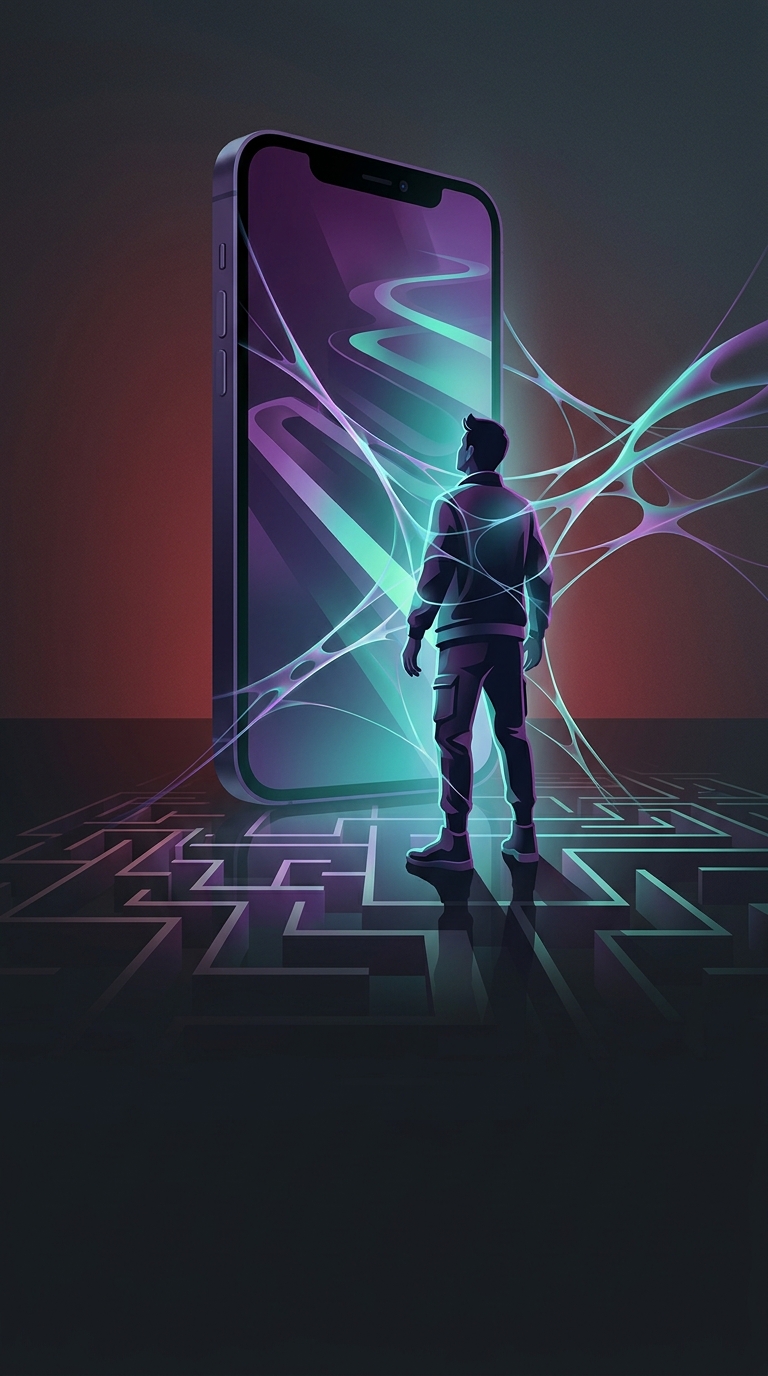
The casino blueprint was a pattern, not a floor plan
A casino can keep visitors playing by making it easy to continue and hard to notice how long they have stayed. Designers achieve that with environmental cues: few obvious stopping points, constant stimulation, and rewards that arrive unpredictably. Digital feeds use a screen-based version of the same logic. The connection is better understood as borrowed design principles than as engineers copying one exact casino plan.
Why the next item keeps coming
A traditional page or episode has an ending. An infinite scroll removes that natural stop: fresh posts appear as the user moves down, so there is no final page signaling that the session is over. Autoplay does something similar with video, starting the next clip before a viewer has to decide whether to continue.
The content itself is variable. One swipe may bring a joke, a useful tip, or something personally compelling; the next may not. That uncertainty can make checking again feel worthwhile. It resembles the appeal of unpredictable rewards in gambling, though a feed is not literally a slot machine: its posts, goals, and risks are different.
The interface becomes the room
Casinos shape attention through the surrounding space; feeds do it through the sequence of screens and prompts. Notifications can draw someone back, while recommendations keep the next item close at hand. Together, these features reduce the number of moments when a person must consciously choose to continue.
That does not make a feed physically impossible to leave. It means the design can remove ordinary stopping cues and place the burden of stopping on the user. A page that never ends has no built-in moment when the experience says, plainly, “you’re done.”