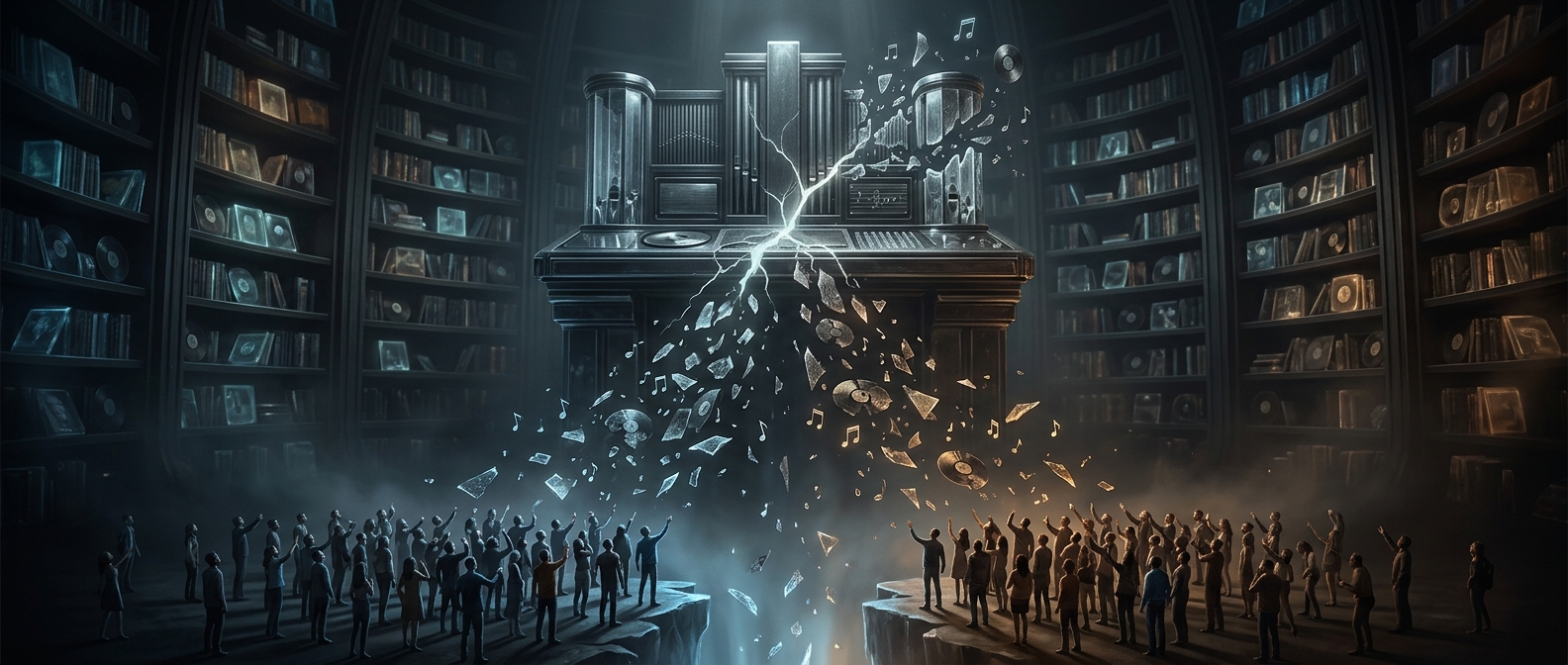
A queue is part of a playlist’s meaning
A playlist can look like a fixed list of tracks, but many music apps also decide what plays after it ends—or what to suggest between deliberate choices. A recommendation system uses signals such as listening history, skips, likes, and similarities between songs to rank what might come next. Change the ranking rules, and the same playlist can lead into a noticeably different listening session without anyone editing its track list.
That distinction matters to fans who use playlists as more than storage. The order, transitions, and familiar next song can turn a collection into a mood, a ritual, or a shared reference. When the queue shifts, the disruption may feel personal even though the underlying change is software deciding among competing predictions about what a listener wants.
Why fans can disagree about the same change
A new system may surface songs that feel more relevant to one listener, while pushing aside the deep cuts, older favorites, or carefully chosen transitions another listener valued. The algorithm is optimizing for its own signals of fit; it does not necessarily know that a particular sequence carries memories or marks membership in a fan community.
Those differences can split reactions. People who welcome discovery may see the revised queue as a useful refresh. People who relied on the old behavior may experience it as a loss of control—and, when they share playlists or listening habits, as a disruption to a communal routine. The argument is therefore not simply about whether the recommendations are “better.” It is about what the system is supposed to preserve: immediate relevance, or the continuity listeners have built around music.
The quiet power of what plays next
Because a queue operates in the background, a small ranking change can reshape listening without changing the visible playlist at all. A song that no longer arrives at the expected moment can alter the mood of a session; repeated across many listeners, those changes can also shift which tracks become familiar within a fandom. The next-song choice is easy to overlook, but it is one of the ways an app quietly edits the experience of a collection.