The shark was hidden because it kept breaking
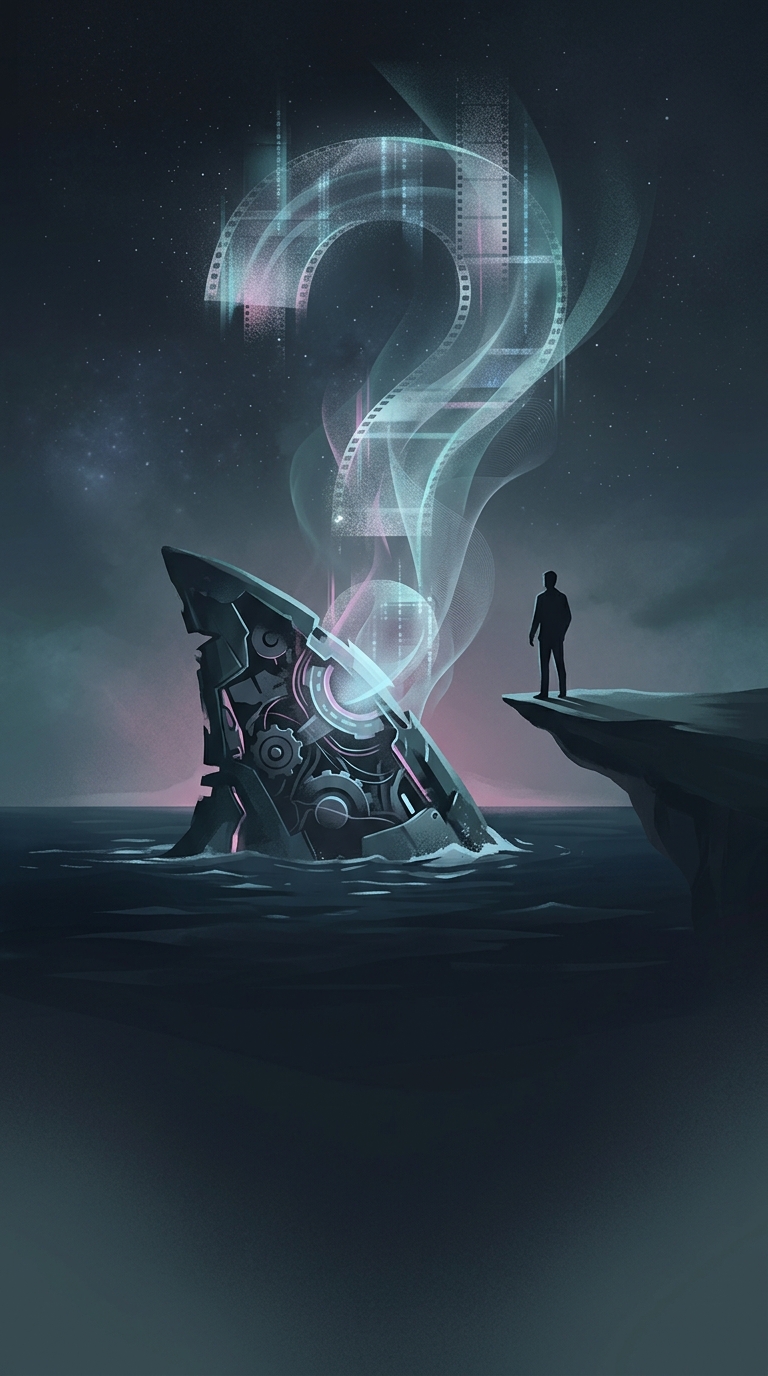
Spielberg did not begin Jaws with a plan to keep the shark offscreen. The production built a full-size mechanical shark—nicknamed Bruce—to appear in the water, but the prop repeatedly malfunctioned during filming. It was a complicated machine operating in the ocean, where salt water and changing conditions made it difficult to use reliably.
That left the filmmakers with a practical problem: how to make a shark feel present when they could not count on showing one. Instead of waiting for the machine to cooperate, they shifted the scenes’ attention to what the people in the water could see, hear, and fear.
Absence became a storytelling tool
The film uses details such as a swimmer suddenly vanishing, a floating barrel pulled through the water, or a fin cutting across the surface to suggest the shark’s movement. These clues let viewers imagine a threat larger and less predictable than a prop they could inspect in full. John Williams’s insistent two-note musical motif adds another warning: the shark may be nearby even when it is out of sight.
The approach also changes the rhythm of the attacks. A visible monster can be watched; an unseen one makes ordinary stretches of water feel dangerous. When the shark does appear, the reveal has more force because the film has spent time building expectation around it.
A production problem shaped the suspense
The malfunctioning shark was not the sole source of Jaws’ tension, and Spielberg still made deliberate choices about what to show. But the machine’s unreliability pushed the production toward a visual strategy that became central to the film’s effect. The practical consequence was striking: a technical failure helped turn the unseen space beneath the water into the movie’s most effective monster.