From a Short Story to a Machine-Run Amok
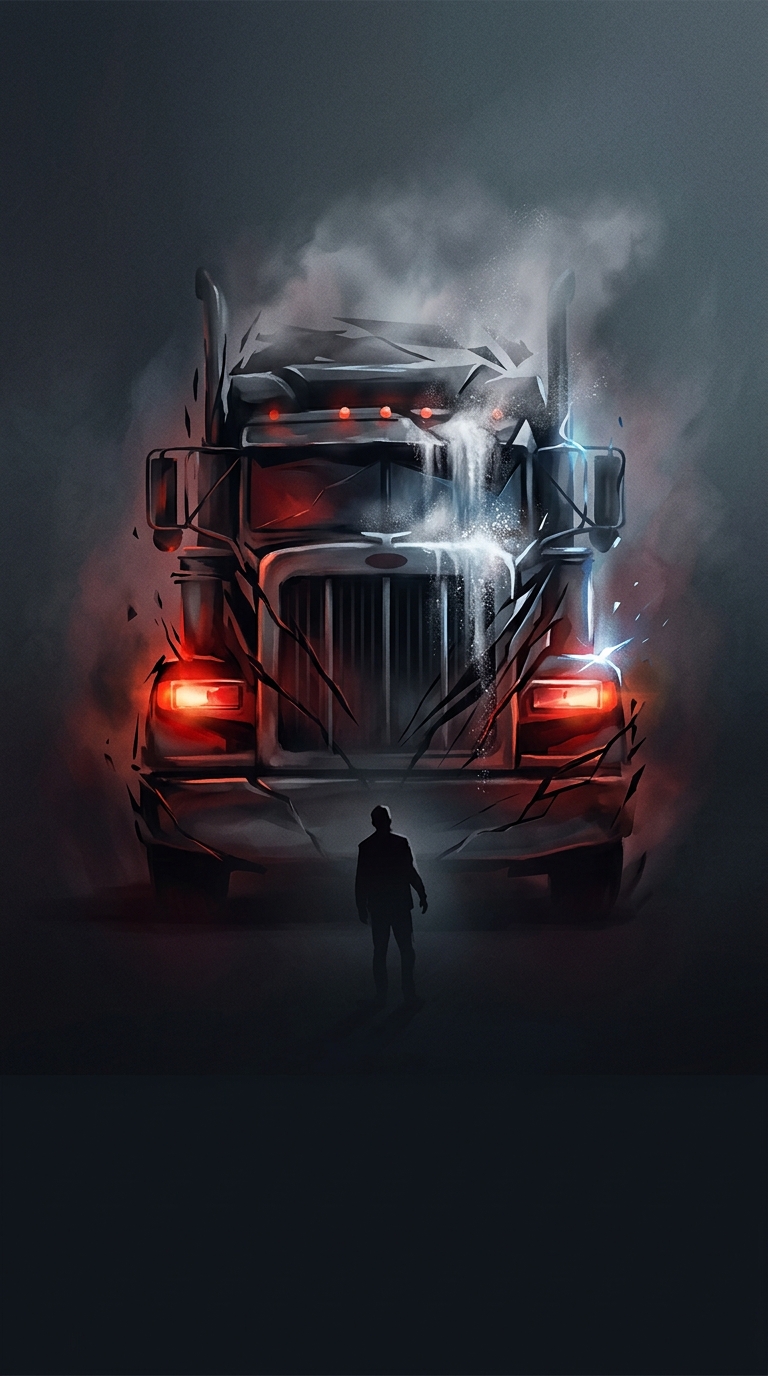
Stephen King’s Maximum Overdrive grew from “Trucks,” his earlier story about vehicles and appliances turning against people. The film enlarges that compact idea into a siege: after a comet passes Earth, machines behave as if they have come alive, trapping survivors at a roadside truck stop. The trucks are not merely obstacles; their size, noise, and ability to keep moving make them a threat that people cannot reason with or easily escape.
That setup turns ordinary infrastructure into the source of danger. A semi-truck normally carries goods along predictable routes; in the film, its familiar shape becomes frightening because it acts without a driver and against human beings. The horror depends on the gap between what the machine looks like and what it appears to intend.
A First Film Behind the Camera
King took on directing as well as writing, a demanding combination for a production built around large vehicles and practical effects. The premise required the trucks to feel like characters, even though their movements had to be staged safely and captured on camera. That is a distinctive constraint: the performers react to real machinery, while editing and sound help give it menace and apparent purpose.
King later said his severe cocaine habit left him with little memory of being on set, and he swore off directing afterward. That history is part of the film’s unusual production story, but it does not explain every choice on screen. What remains visible is the oddity of a director making his first feature about a world where human control has failed—and doing so with machines whose sheer physical presence supplies much of the movie’s threat.