What “elastic” means in a collision
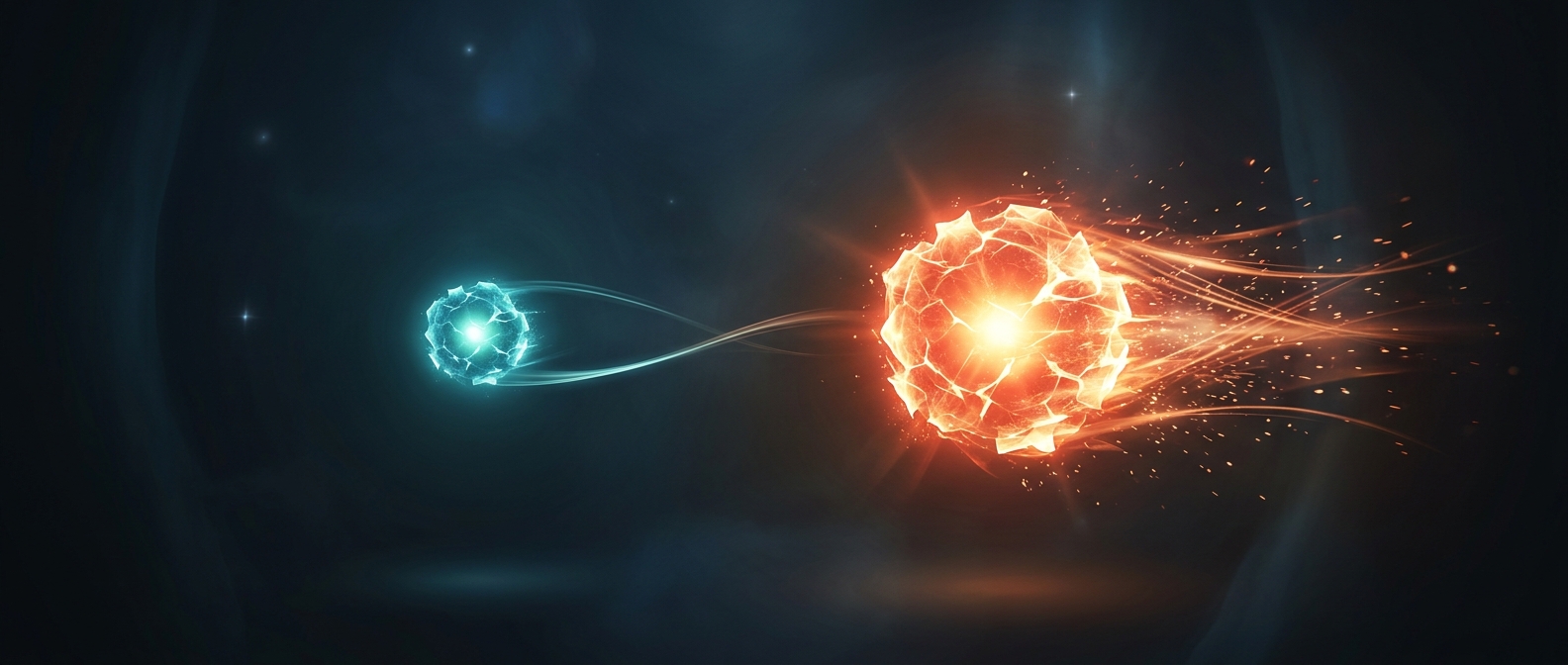
In physics, an elastic collision is one in which the objects’ total kinetic energy—the energy of motion—before impact equals their total kinetic energy afterward. The objects may exchange speed and direction, but none of that energy is permanently converted into other forms. Total momentum is conserved too, as it is in any collision within an isolated system.
That definition applies to the combined motion of the colliding objects, not necessarily to each one. A moving ball can transfer kinetic energy to a stationary ball; the first slows while the second speeds up. In an ideal head-on collision between equal masses, the incoming ball can stop and the other can leave with its speed.
What happens at impact
A collision briefly compresses the objects where they touch. In an ideal elastic collision, that deformation stores energy like a spring, then returns it to motion as the objects rebound. The balls need not be perfectly rigid; they must simply recover the stored energy without lasting loss to other forms.
Real materials are less tidy. Some energy becomes sound, some warms the materials, and some remains in microscopic or lasting deformation. Friction at the contact and with the table can also drain motion. The balls may still bounce sharply, but their total kinetic energy after impact is slightly lower than before.
Why the ideal still matters
The perfectly elastic collision is a model that makes motion easier to calculate. It works especially well when the energy diverted into sound, heat, and deformation is small compared with the motion involved. Scientists can then treat the collision as elastic without claiming that a real object loses absolutely nothing.
That distinction is useful at a billiard table: the rebound can look nearly perfect, while careful measurements would reveal a small energy deficit. The ideal describes the clean rule behind the bounce; the real table supplies the losses.