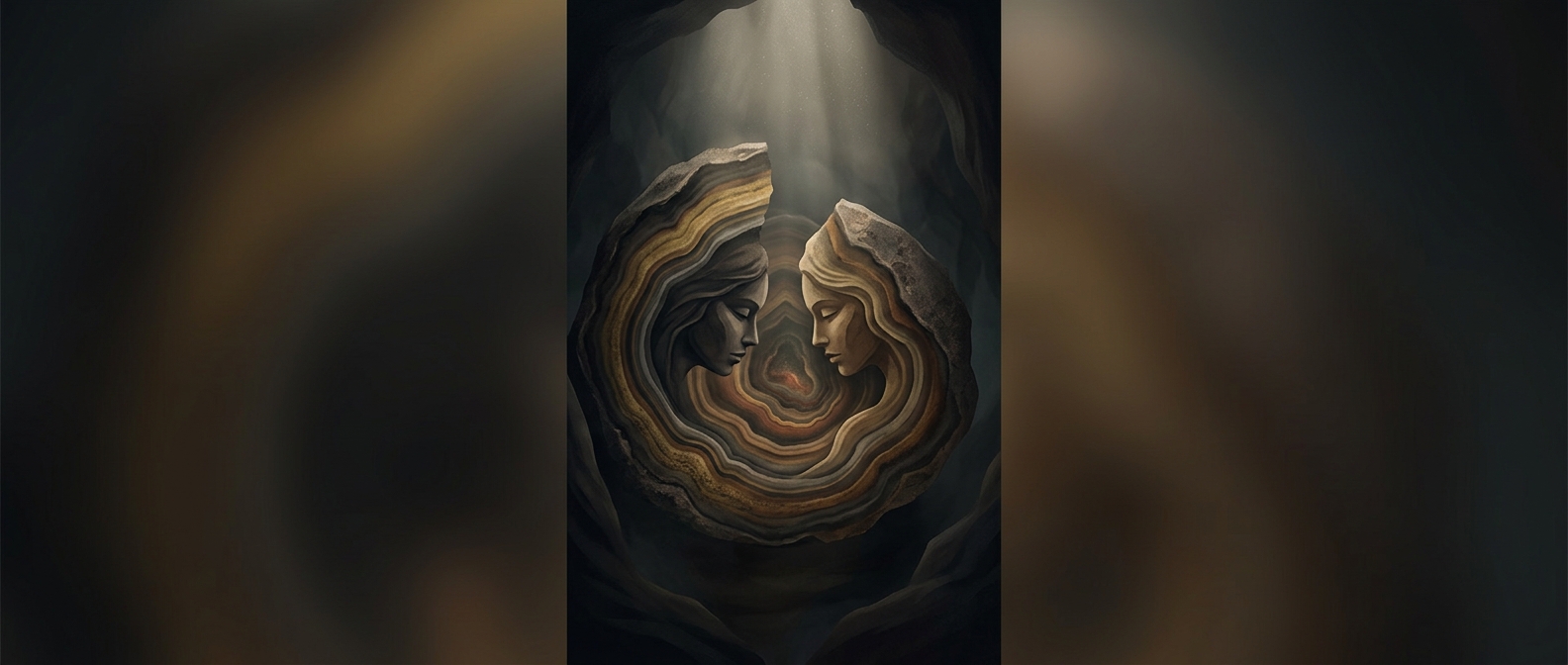
What happens when mercury meets gold
The dramatic image has a real chemical basis, though “dissolves” can be misleading. Mercury can enter the surface of gold and form an amalgam—a mixture in which mercury and gold are combined. The gold does not vanish; its atoms become incorporated into the mercury-rich material, which can look like a silvery paste or coating.
Why the contact can seem so sudden
Gold’s atoms are held together in a solid metal lattice. Mercury can wet the gold’s surface and diffuse into it, disrupting that structure locally. The effect depends on the metals’ condition and the amount of contact: a thin layer of gold may be rapidly damaged, while a larger piece does not simply disappear at a touch. The visible change can nevertheless be striking because mercury spreads across the surface and carries gold into the amalgam.
A vivid symbol, not a zodiac mechanism
That quick transformation makes the pairing useful as an image of something that seems to unsettle what looked solid. In the symbolism attached to Gemini, it can suggest energy that will not stay still or wait patiently. That is a metaphor, not a chemical explanation of personality: mercury’s action on gold follows the properties of the metals, not a person’s zodiac sign.
The concrete consequence is less mystical than the image: mercury can contaminate and damage gold, which is why the two metals should not be casually handled together.