How Fly Agaric Could Pass Through a Reindeer
Fly agaric (Amanita muscaria), the red mushroom with white spots, contains two chemicals that help explain the reports of Siberian ritual use. Ibotenic acid can cause nausea and confusion; muscimol is the main intoxicating compound. The balance between them varies, and drying or the body’s metabolism can change some ibotenic acid into muscimol.
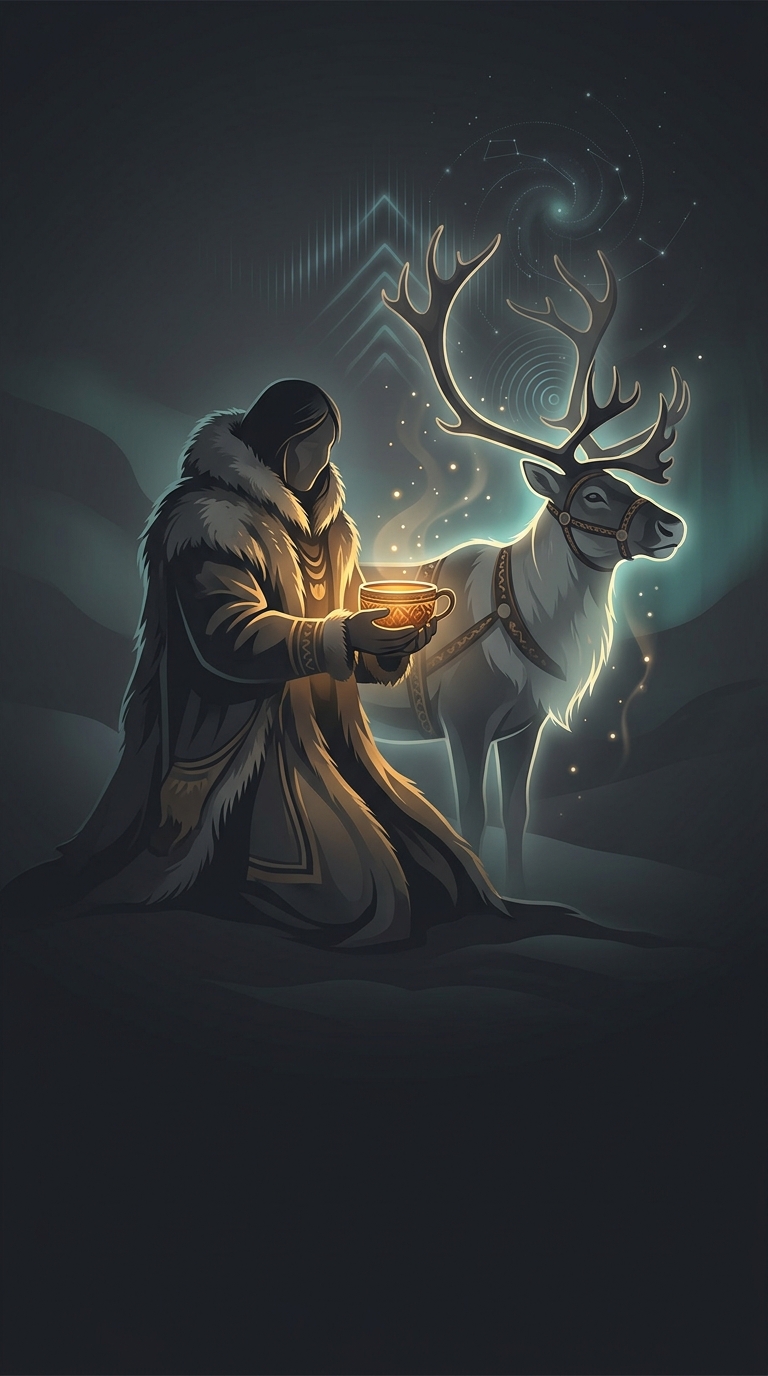
Accounts describe people giving the mushrooms to reindeer and then drinking the animals’ urine. Reindeer can eat fly agaric, and muscimol may remain active after passing through an animal. The practice was reportedly a way to obtain its effects while reducing exposure to some of the mushroom’s harsher components. It was not a clean biological filter: urine could still contain active substances, and the effects and risks were unpredictable.
Why Urine Could Still Have an Effect
The body does not process every chemical in a mushroom the same way. Some compounds are broken down; others can leave the body largely unchanged. Muscimol can be excreted in urine, so an animal that has absorbed it may pass some of it onward. That offers a plausible mechanism for the reports—but it does not mean the body neatly removes every toxin while preserving only a safe hallucinogen.
The distinction matters because “psychedelic” can make the experience sound controlled. Fly agaric intoxication can also involve vomiting, disorientation, agitation, or deep sleep. Traditional use took place within particular cultural practices; it should not be reduced to a dependable recipe for visions.
From Shamanic Reindeer to Santa?
A popular theory connects these traditions to Santa Claus: the red-and-white mushroom resembles Santa’s familiar colors, reindeer appear in both stories, and shamanic journeys can be described as flights. It is an evocative resemblance, but there is no solid evidence that fly-agaric rituals were the source of the Santa tradition. Similar motifs can invite a story without proving a historical link.
The more grounded point is striking enough: reports of reindeer consuming the mushroom, and of active compounds passing into their urine, show how people built practical knowledge around a local animal and a powerful wild fungus.