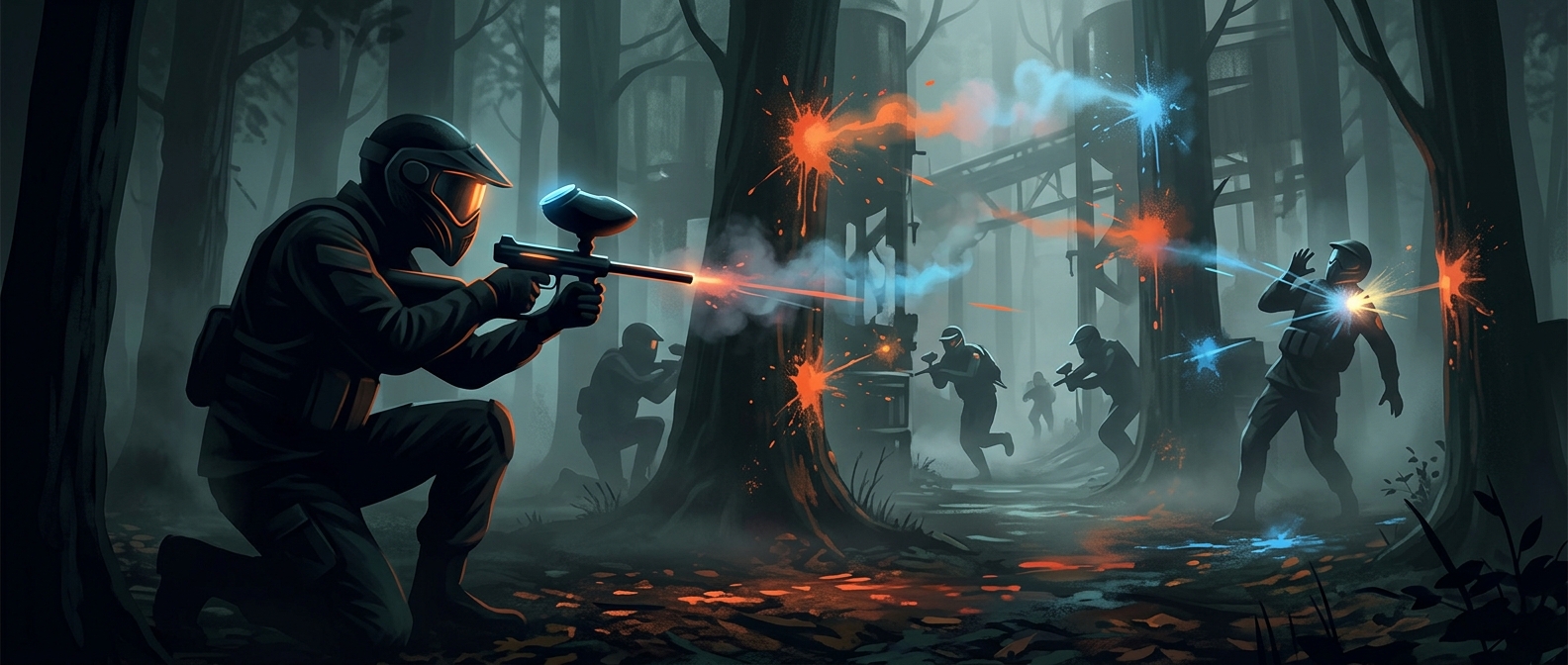
A marking tool built for distance
The original job of a paintball marker was practical: put a visible spot somewhere a person could not easily reach. In forestry, a worker could mark a tree from the ground; on a ranch, a marker could identify an animal without requiring someone to get close enough to touch it.
These tools worked pneumatically. A trigger released compressed gas, which pushed a small paint-filled capsule through the barrel. That let the operator make a mark from a distance, but the device was designed to deliver a marking capsule—not to make a game comfortable or safe. Early markers could be cumbersome, and a shot that struck a person could hurt.
From work equipment to game equipment
The leap to recreation came from changing the purpose of the shot. Instead of marking a tree or animal, players could use the visible splat to show that an opponent had been hit. The marker’s basic mechanism already supplied the ingredients: a projectile, a trigger, and an unmistakable result at a distance.
That change also demanded a different kind of ammunition and a different set of expectations. Recreational paintballs are made to break on impact and leave a visible mark, while protective gear helps reduce the risk of injury. The equipment’s agricultural and forestry origins explain why the sport still centers on a simple, readable outcome: a paint mark turns a distant shot into evidence that everyone can see.