Why the eldest person sets the pace at a Korean meal
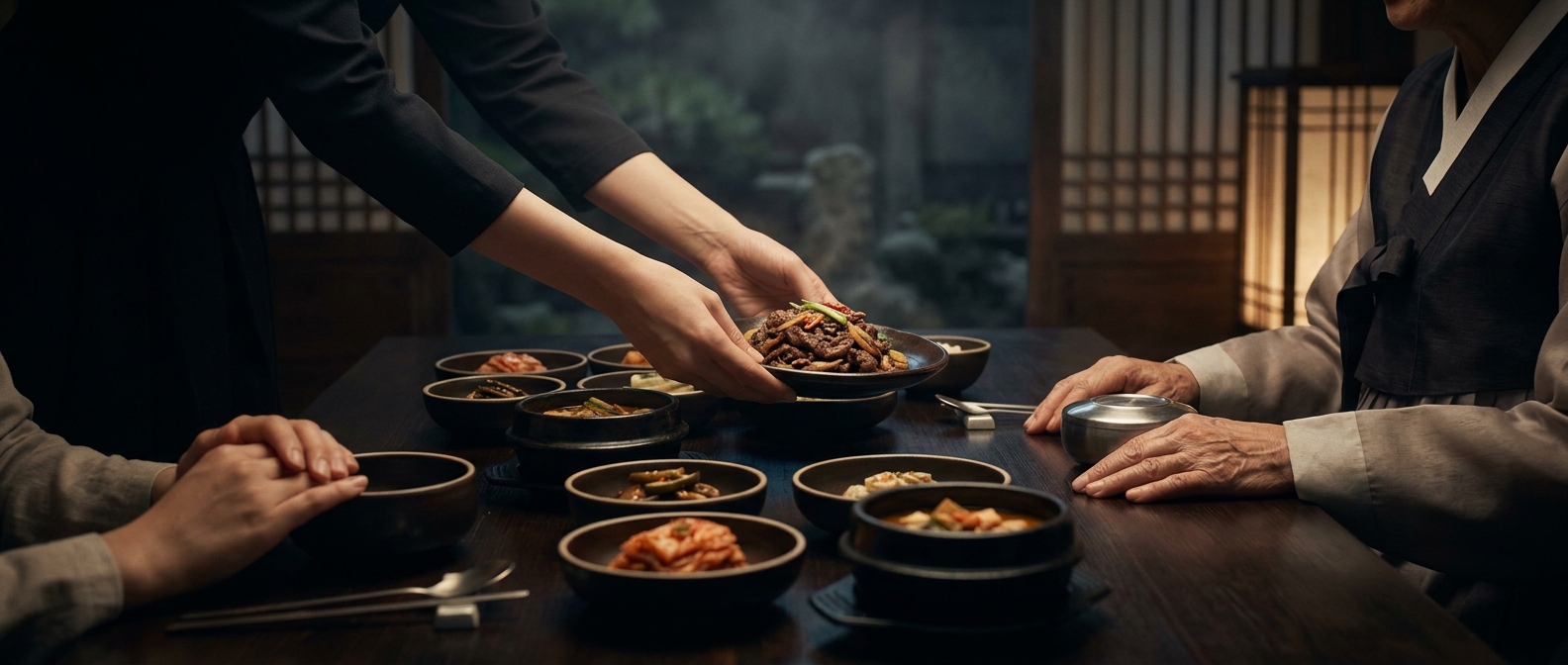
In traditional Korean dining etiquette, age helps establish who should act first. The eldest diner is often served before younger people, and others wait for that person to begin eating. The pause is a small, visible way to acknowledge seniority—not simply a rule about who is hungriest.
The custom reflects social norms shaped in part by Confucian ideas about respect within relationships, including between older and younger people. At the table, respect becomes practical: diners watch for the elder to sit, receive food, or take the first bite, rather than treating everyone’s meal as starting at once.
Reading the room as a guest
For a visitor, the easiest approach is to wait a moment and follow the lead of the oldest person or host. In a group setting, that brief pause can prevent an awkward start and signal attentiveness. If someone explicitly invites you to begin, follow their cue.
This is best understood as traditional etiquette, not a rigid rule followed identically at every Korean meal. Habits vary by family, age group, and situation, and an everyday meal may feel much less formal than a ceremonial or family gathering. Still, when the custom is observed, the meal’s first bite is also a quiet acknowledgment of who is gathered around the table.