Why a Plain Wall Can Seem to Change Color
Stare at a high-contrast pattern of stripes, then look at a blank surface. For a moment, you may see faint colors or a reversed tint. The wall has not changed: the effect comes from temporary adjustments in the visual system, the network that processes signals from your eyes.
How Contrast Shifts What You See
Your brain compares activity from visual pathways that respond differently to features such as light versus dark and one color versus another. A repeating stripe pattern keeps some of those pathways active in a predictable way. With sustained exposure, their responses adapt—they become less responsive to that particular input.
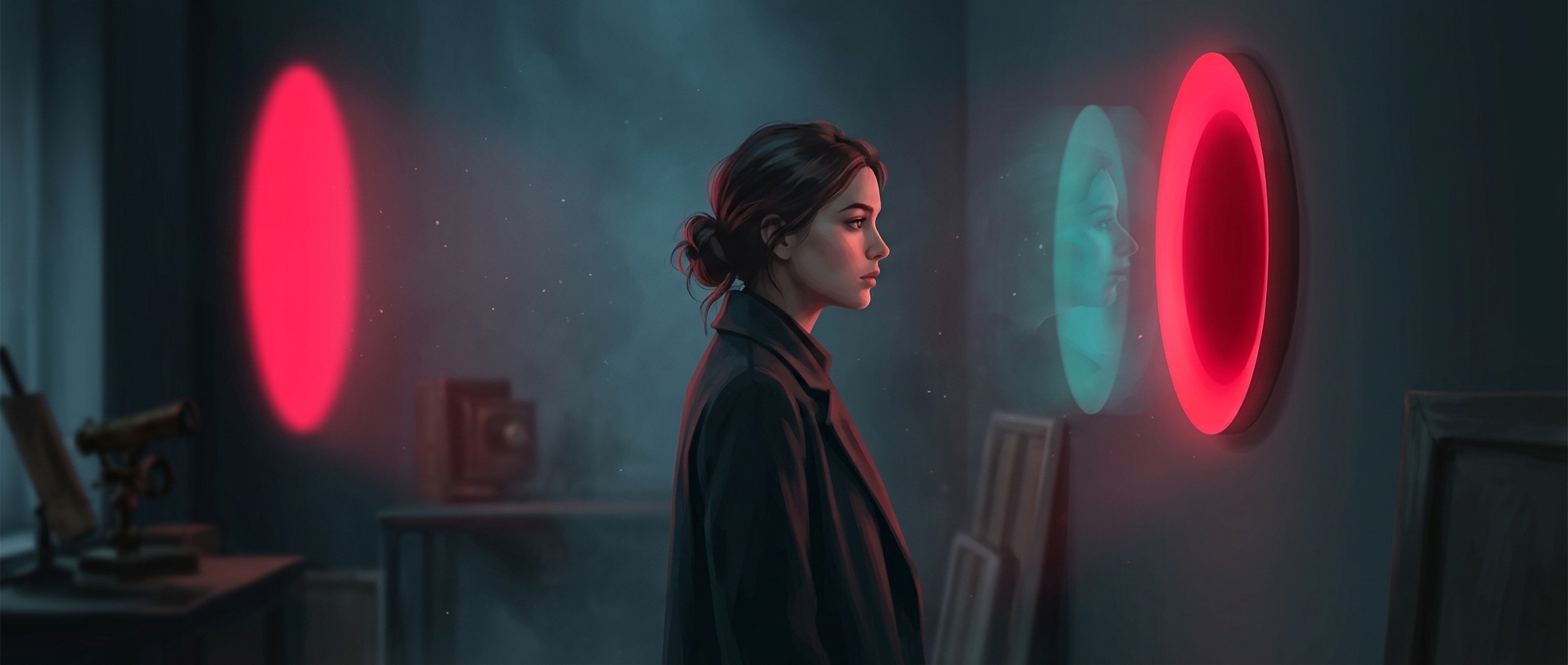
When you turn to a plain surface, the pattern is gone, but the adaptation does not vanish instantly. The pathways that were stimulated are briefly less responsive than their counterparts. That imbalance changes how the new, even field is interpreted, producing an afterimage: a visual impression that lingers after the original stimulus is removed.
The Pattern Leaves a Temporary Trace
This is why the effect can seem to contain color even when the stripes were black and white. The visual system is not simply recording a scene like a camera; it continually compares signals and adjusts its sensitivity. After a strong, repeated contrast, those adjustments can make an ordinary surface appear tinted until the responses rebalance.
The phantom color is therefore a trace of the viewing process, not a feature of the surface. A blank wall can briefly seem to carry the pattern’s visual opposite because your eyes and brain are still settling back from what they just processed.