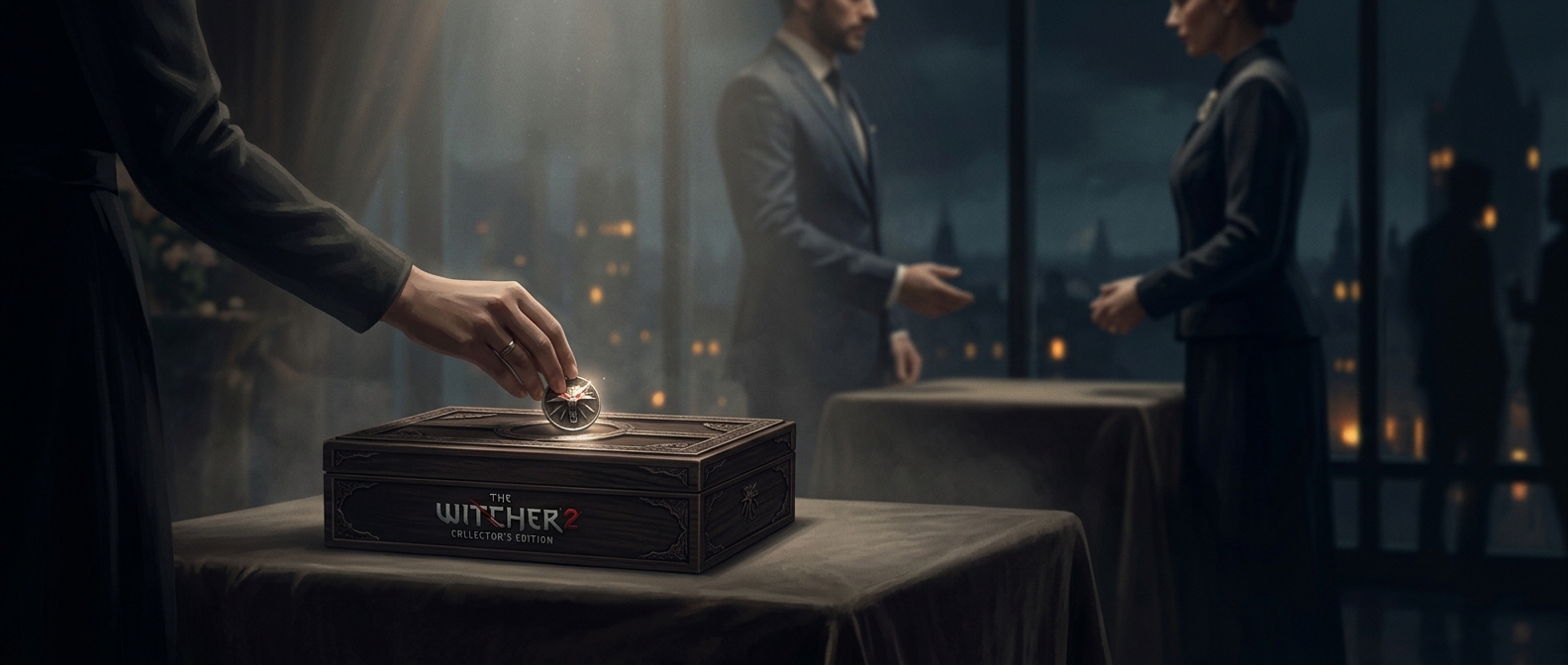
Why The Witcher 2 Became a Diplomatic Gift
The game was meant to represent more than a new release. When Polish Prime Minister Donald Tusk presented The Witcher 2: Assassins of Kings to President Barack Obama in 2011, he was showcasing CD Projekt Red, a Polish studio whose international success had become a point of national pride. A locally made role-playing game could serve as a compact cultural calling card: evidence that Poland was producing ambitious work for a global audience.
A Gift Can Carry a Message Without Being Used
The gesture drew on the game’s visibility abroad, not on whether its recipient would sit down and play it. The Witcher 2 belonged to a fantasy series rooted in Polish author Andrzej Sapkowski’s books, but the game itself was an exportable piece of contemporary culture—software, storytelling, and technical craft packaged in a form recognized around the world.
That made it useful in a diplomatic exchange. A book or film might signal a country’s culture; a successful game could also signal a modern creative industry. The gift put the studio and its work in the conversation, even if it never became part of Obama’s gaming life.
The Distance Between Symbol and Experience
Obama later said he had never played the game. That detail neatly exposes the difference between a present’s public purpose and its private use: the gift could communicate Polish pride at the moment it was handed over without requiring the president to finish a quest or even start one. Its significance lay less in the hours of play it received than in what its selection said about the country choosing it.