A game built from camera feeds
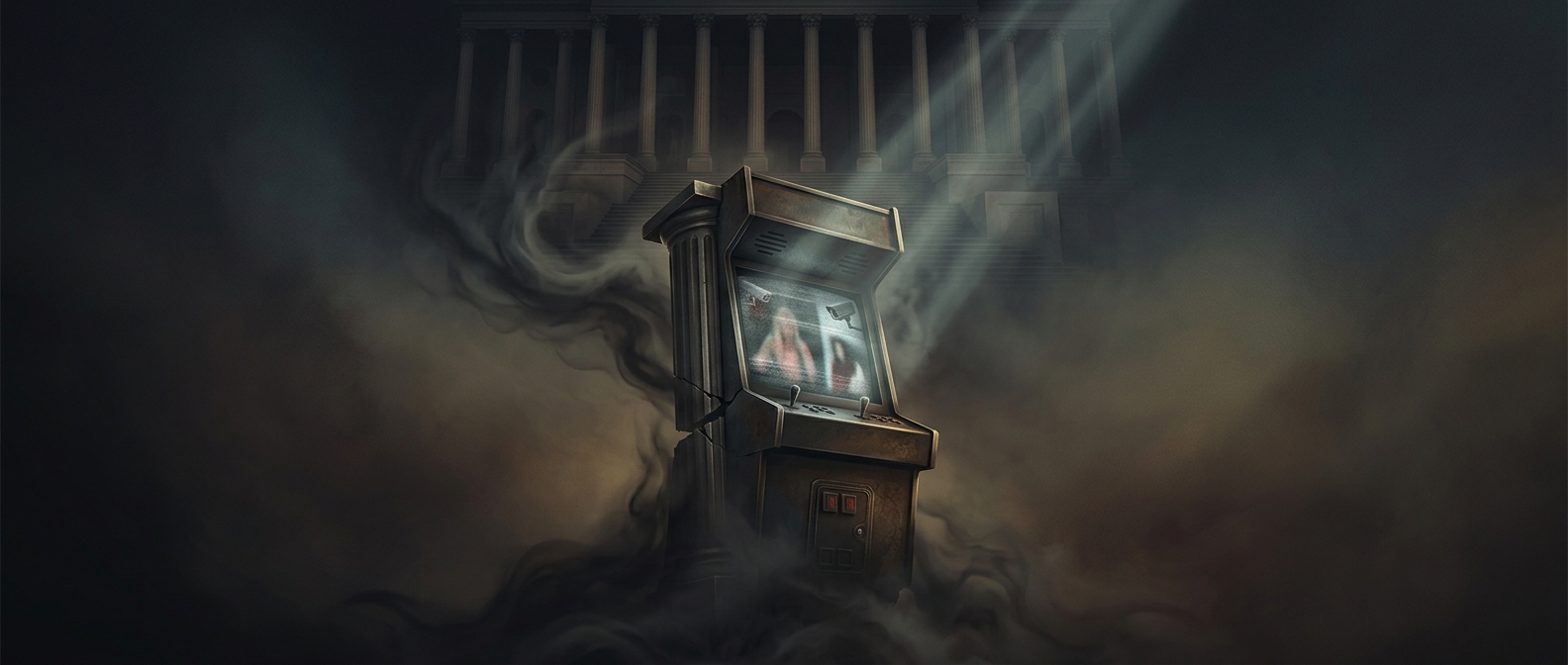
Night Trap put players in the role of an operator watching a house through security cameras. The people inside were under attack by “Augers,” vampire-like intruders, and the player had to switch views and activate traps at the right moment to stop them. Its footage was prerecorded live-action video, not animation: miss a cue and the scene continued without the player’s intervention.
That design made the game look more like a movie than a conventional action game, but left players with a narrow job—watch, recognize a cue, press a button. The grainy images and sometimes awkward performances were part of the package, not evidence that the game had a more elaborate simulation beneath the surface.
Why the footage became the story
In 1993, senators examining violent video games used Night Trap as an example. The game’s premise involved protecting young women at a slumber party, but the intruders’ attacks—and scenes in which women in nightclothes were caught in traps—gave critics striking images to focus on. They argued that the game treated violence against women as entertainment. The hearings debated its subject matter far more than the player’s limited, repetitive task.
That gap mattered. A short clip of a woman being seized could look like the game invited players to harm her, while the actual objective was to save the partygoers. The game was controversial not because its mechanics were especially sophisticated, but because its footage made a simple rescue game easy to frame as a shocking spectacle.
From scandal to ratings
The hearings helped intensify pressure on the video-game industry to create a ratings system. The industry responded by establishing the Entertainment Software Rating Board, which began rating games in 1994. Night Trap thus became a symbol in a larger argument over how games should be labeled and who should decide what children could play—a debate sparked, in part, by scenes that were more memorable than the gameplay surrounding them.