How Lara Croft stepped off the screen
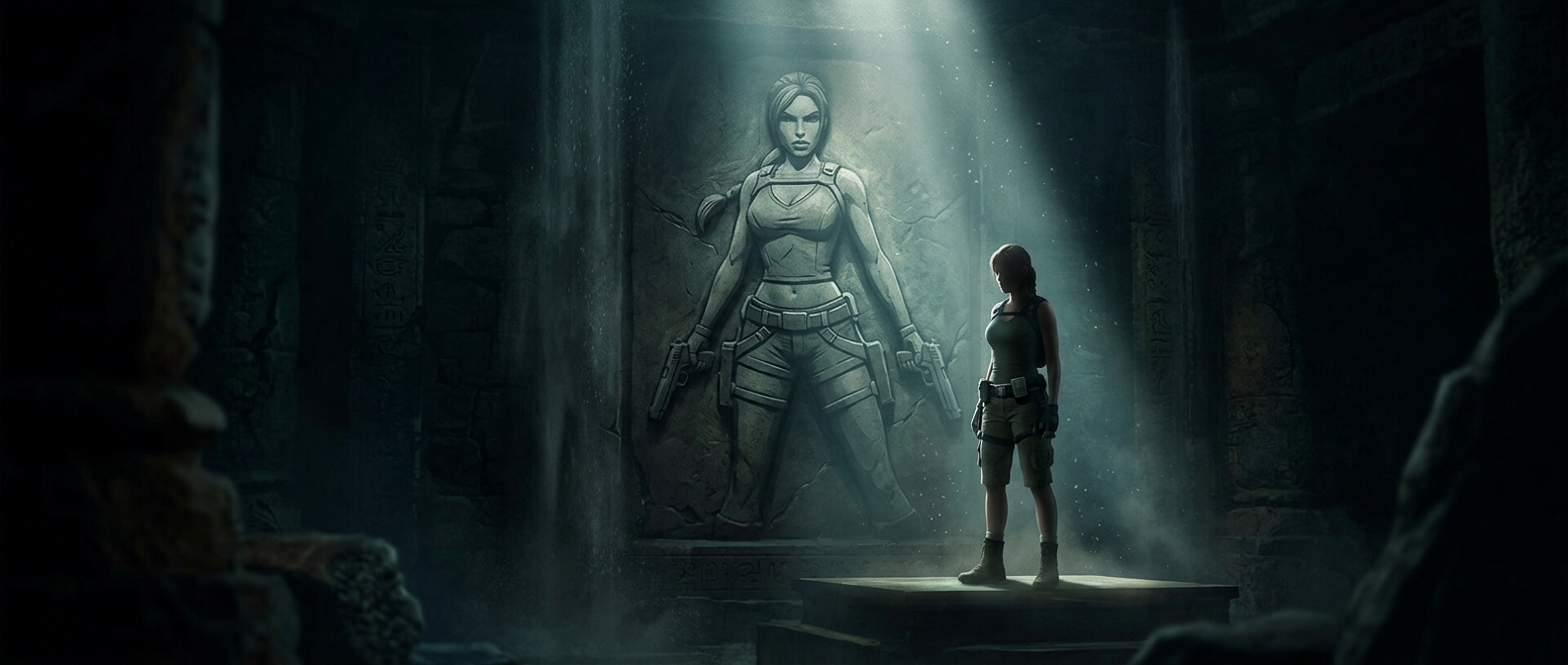
Early Tomb Raider promotions used real-life models to portray Lara Croft, turning a character made from angular, low-polygon graphics into a person audiences could see at events and in publicity images. A model could recreate Lara’s signature look and poses in a way that a still image from the game could not: the digital adventurer became a recognizable figure in the room.
A character built for two kinds of attention
In the game, Lara’s design had to read clearly despite technical limits. Her simplified shape, outfit, and confident stance did much of the work of making her identifiable. Promotional appearances translated those visual cues into clothing and performance, carrying the character’s identity beyond the console.
That translation was not the same as bringing the game’s graphics to life literally. A person could suggest Lara through costume and pose, while the game remained the place where her actions and adventures unfolded. The model was a real-world stand-in for publicity, not a replacement for the animated character.
From game protagonist to public image
The choice reflects how game marketing can extend a fictional world into everyday media. A character who appears only on a screen is encountered through play; a character represented by a model can also appear in photographs and at promotional events. Lara’s sharp, distinctive design made that leap especially practical: audiences could recognize the reference even though the real person and the polygonal heroine were plainly different.
The result was a memorable contrast: a digital adventurer whose blocky form belonged to the limits of early 3D games, represented off-screen by a living person.