A map that made the box feel incomplete without it
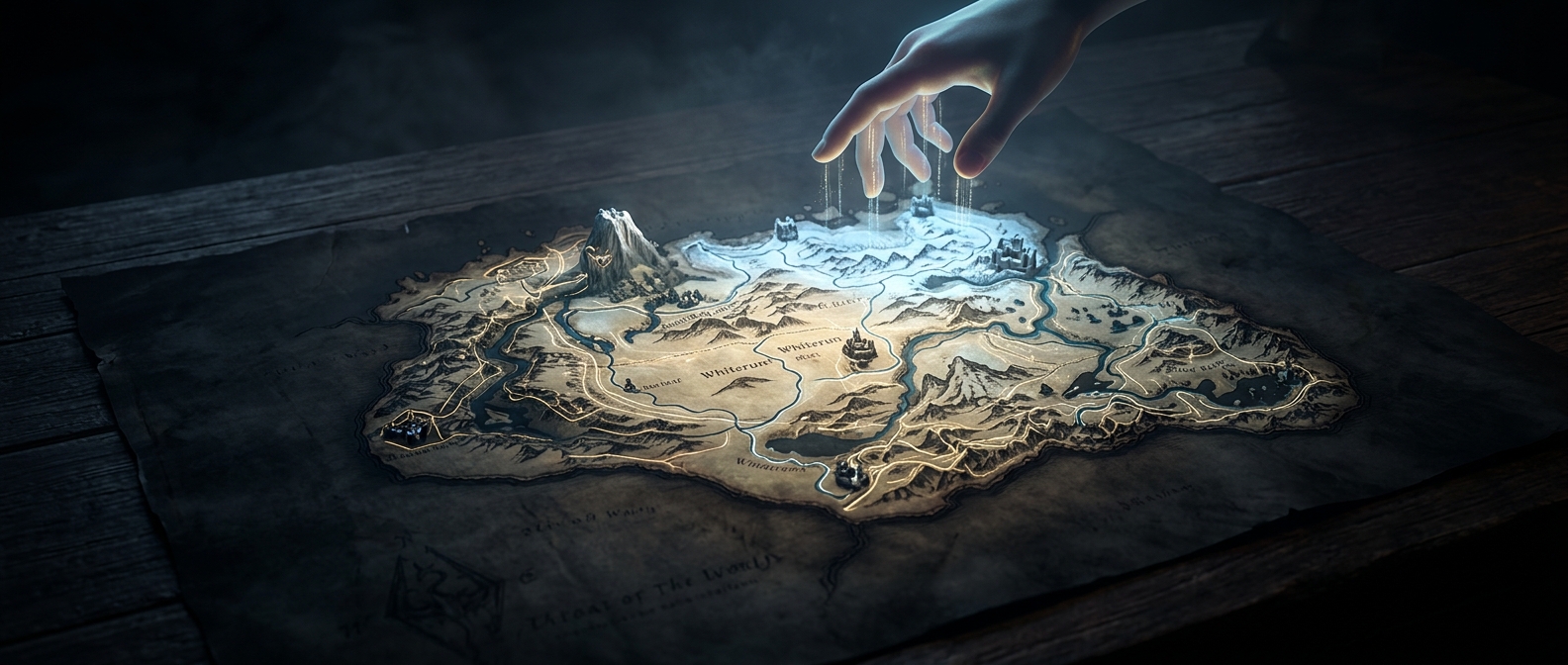
A paper map of Skyrim did more than decorate the game’s packaging. The province is designed for wandering: roads branch toward towns, landmarks draw players off course, and exploration often means choosing a direction before knowing exactly what lies there. A printed map gives that landscape a broad, glanceable shape outside the game itself.
That physical presence also made the map easy to keep nearby. Unlike a screen map, it could be unfolded beside the television or computer and scanned without pausing to navigate menus. It turned the game’s setting into an object players could handle even when they were not playing.
The resale tradeoff
The map also changed the economics of passing the game on. A used copy with its map still included felt more complete; a copy missing it was less appealing to someone who wanted the original package. That gave owners a small reason to keep the map rather than leave it behind when trading the game in.
The effect was modest, not a lock on resale. Players could still sell the game, and the map did not make that impossible. But an included item can make a purchase harder to break apart: the more useful or distinctive the contents seem, the more an owner may hesitate to surrender them separately.
A keepsake with practical value
The clever part was that the map could serve two roles at once. It helped make a sprawling fictional place easier to picture, while also giving the physical edition something a digital download could not provide. Its value as a keepsake and its value as part of the complete game package pointed in the same direction: keep the map, and perhaps keep the game with it.