The Factory Lunch That Traveled Through Pipes
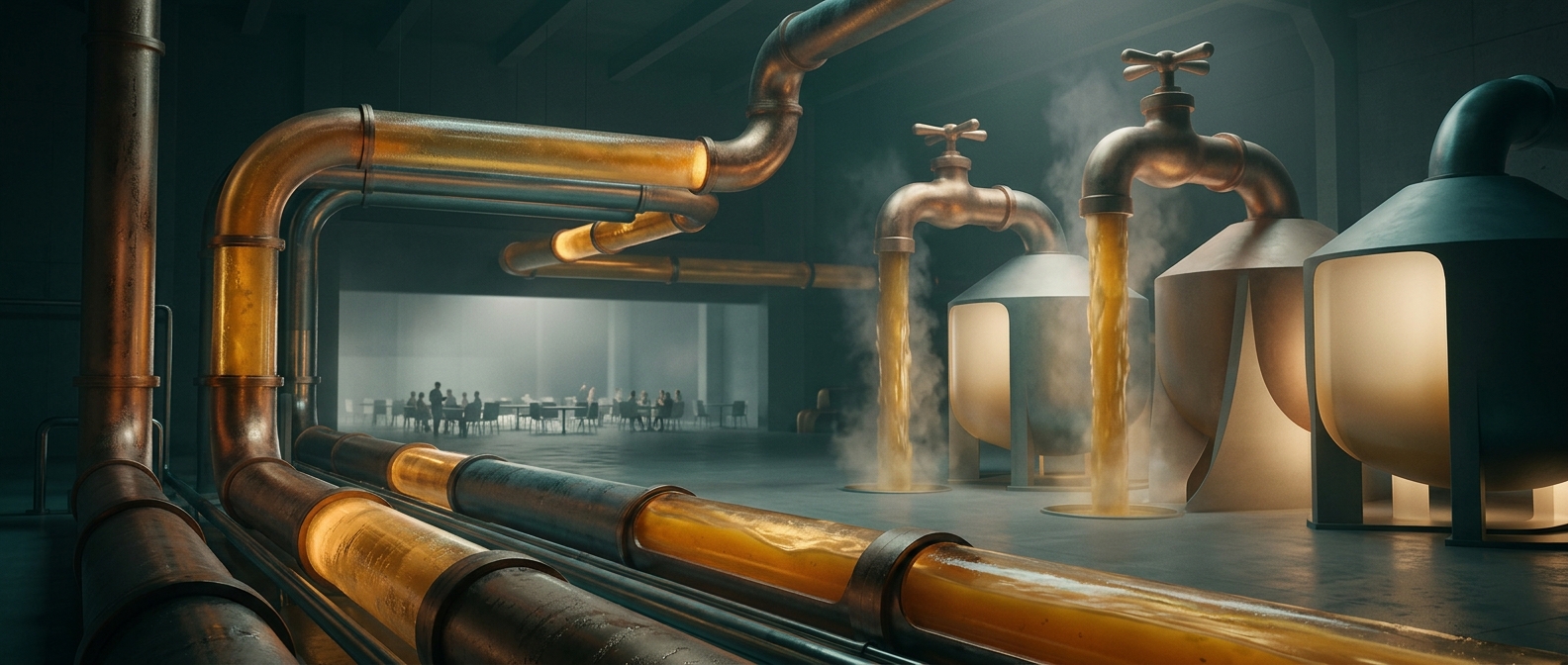
A central kitchen could send soup to serving points across a factory instead of carrying pots through the building. A pump pushed the liquid through a network of insulated pipes; insulation slowed heat loss on the way. At the other end, workers collected their meal near where they worked.
The arrangement changed the logistics of lunch. In a large workplace, moving everyone toward one dining room at once could interrupt production and create a rush through corridors. With several serving points, workers could get food without the entire workforce making the same trip. The soup moved through the building so the workers didn’t have to.
A Useful Shortcut With Practical Limits
Piping food is not as simple as piping water. Soup must remain hot and flow through the lines, while the system must also be cleaned between uses. Thick mixtures or large pieces of food can make pumping more difficult, so the method suits some meals better than others.
The pipes also did not eliminate waiting altogether: workers still gathered at the serving points. They changed where the bottleneck happened, replacing a building-wide walk with a more distributed way to collect lunch. In effect, the factory’s meal service became part of its infrastructure—like a utility, but carrying soup.