Why a Pneumatic Train Loses Its Push
The difficulty is not simply making air move; it is keeping a useful pressure difference across the car. The air behind a piston must be at higher pressure than the air ahead of it. As air slips past the piston, that difference shrinks, so less force remains to move the train. The leak is not just wasted air—it directly weakens the drive.
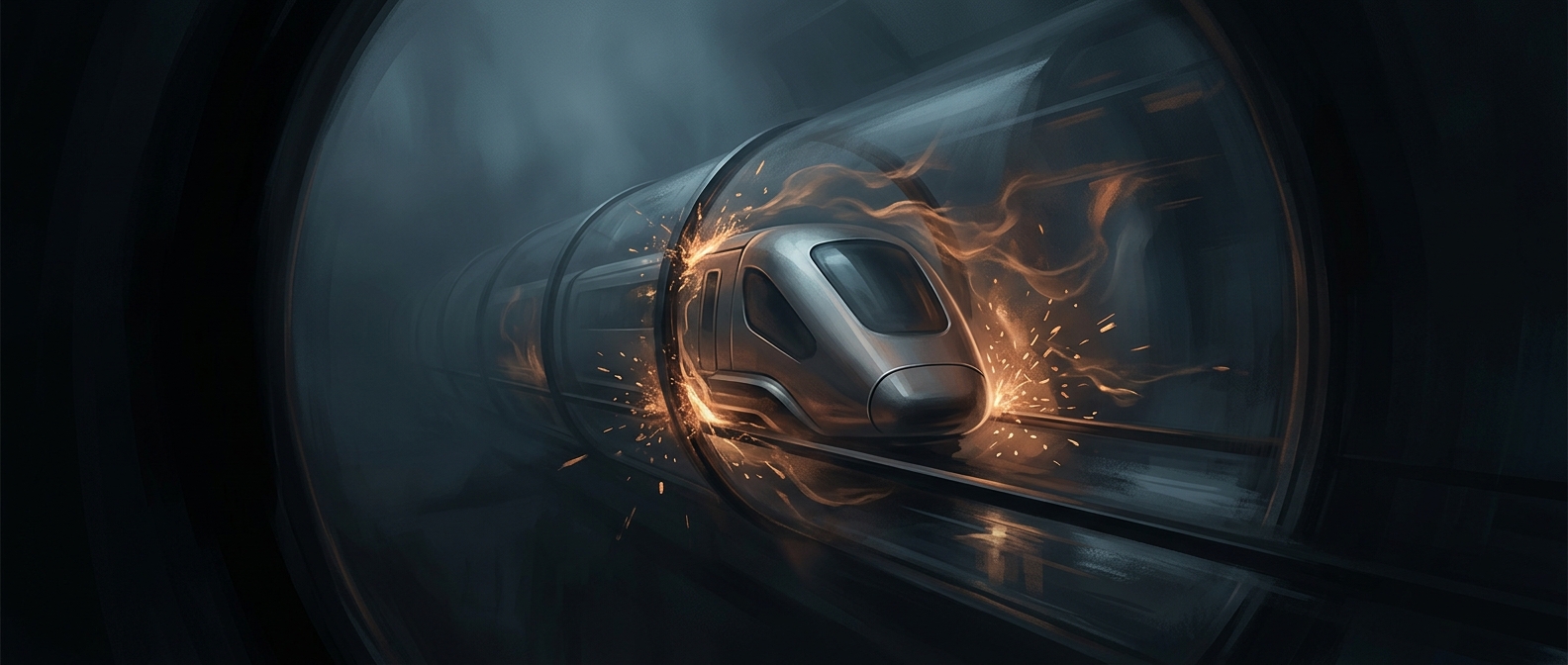
A tighter seal seems like the obvious fix, but the piston has to travel along the tube. More contact can mean more drag, and the seal rubs continuously as the car moves. That resistance consumes some of the force the pressure was meant to provide. Wear can also change how well the seal fits, making a once-acceptable balance harder to maintain.
The Tube Becomes Part of the Machine
The piston is only one place where pressure can escape. Joints, access openings, and changes in the tube’s shape must also be controlled. Every imperfect connection gives moving air another route out, while every extra point of contact or obstruction can add resistance. The system therefore depends on the condition of a long, enclosed track—not just on the car and its air source.
That makes pneumatic propulsion an engineering bargain: reduce leakage without making the moving seal too resistant, and keep the rest of the tube sufficiently tight for the pressure to reach the car. The practical consequence is that a seemingly simple push from air demands careful management of both friction and leakage across the whole route.