How a bank tube moves a sealed carrier
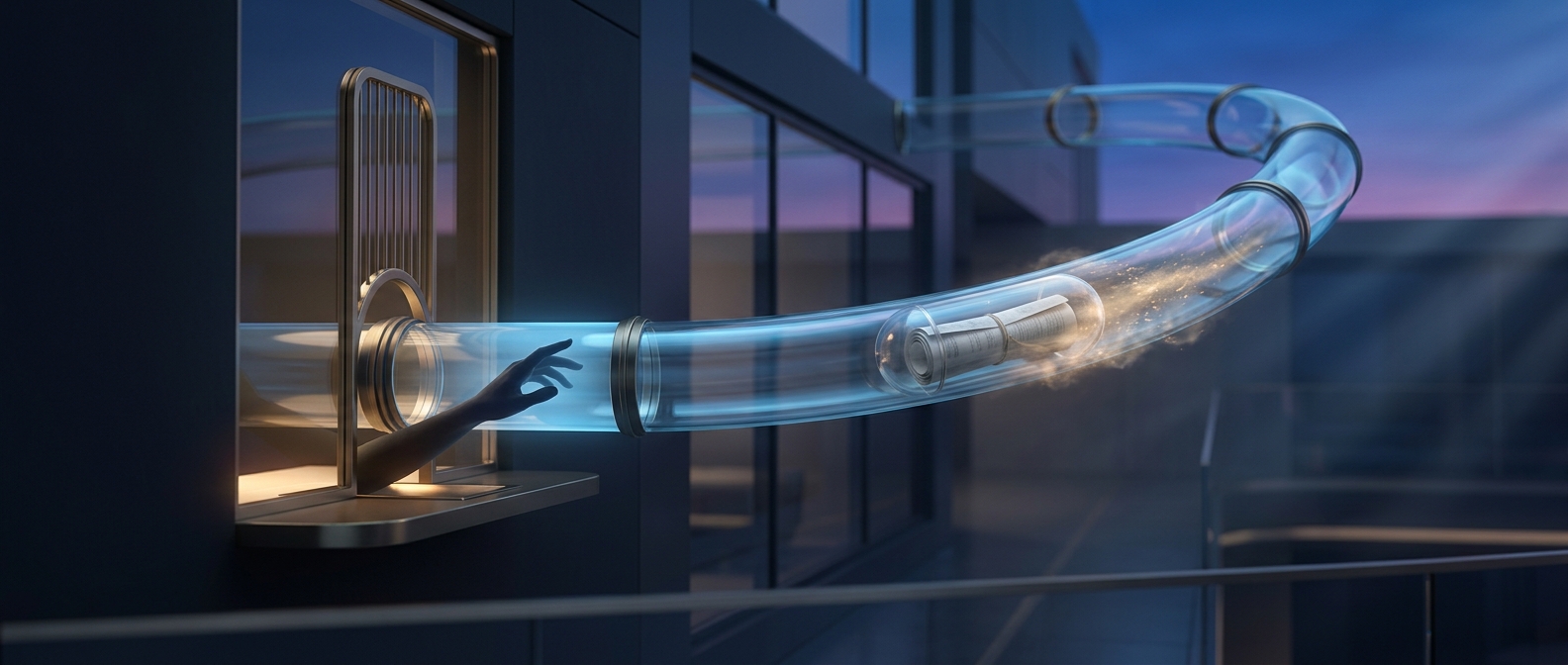
The carrier does not fly freely through the building. It fits closely inside a tube, and a blower creates a pressure difference that pushes or pulls it along. Air rushing around the carrier supplies the force; the carrier protects its contents and keeps them together during the trip.
At the drive-through, the teller places the customer’s items inside and sends the carrier into the tube. The system routes it to an indoor station, where the teller can retrieve the contents. To send items back, the process runs in the opposite direction. The tube provides a direct path between two work areas without requiring either person to leave their station.
The route is part of the machinery
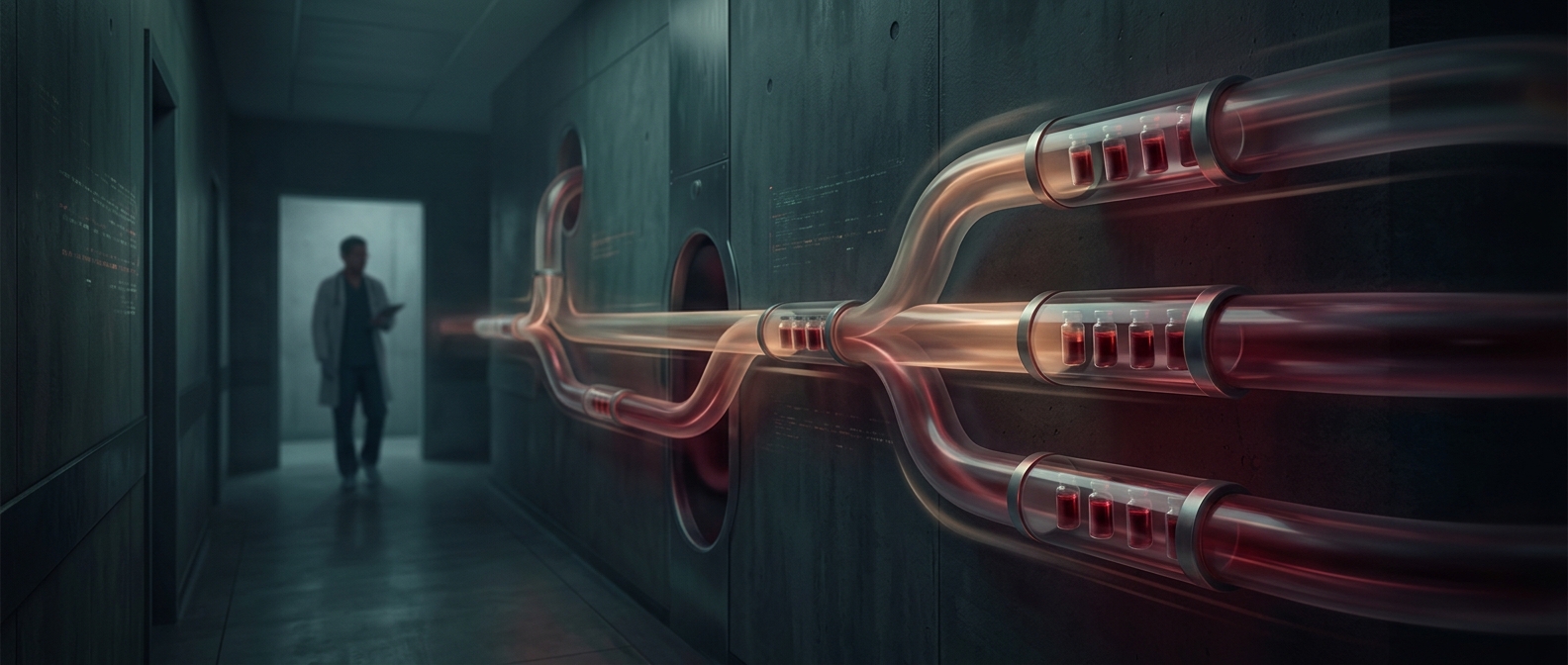
A tube network has to do more than move a carrier quickly. Its path must connect the outdoor window with a teller station, and bends or junctions must guide the carrier without letting it jam. Seals matter too: gaps can weaken the pressure difference that moves it. The blower, routing hardware, and carrier therefore work as one system.
That arrangement trades a fixed, carefully planned route for a simple handoff. A teller can pass cash or paperwork to someone in a car without bringing the customer into the building or sending an employee outside. The small capsule is useful precisely because the rest of the route—the tube hidden in the bank—does the difficult work.