How a Burger Could Travel by Air
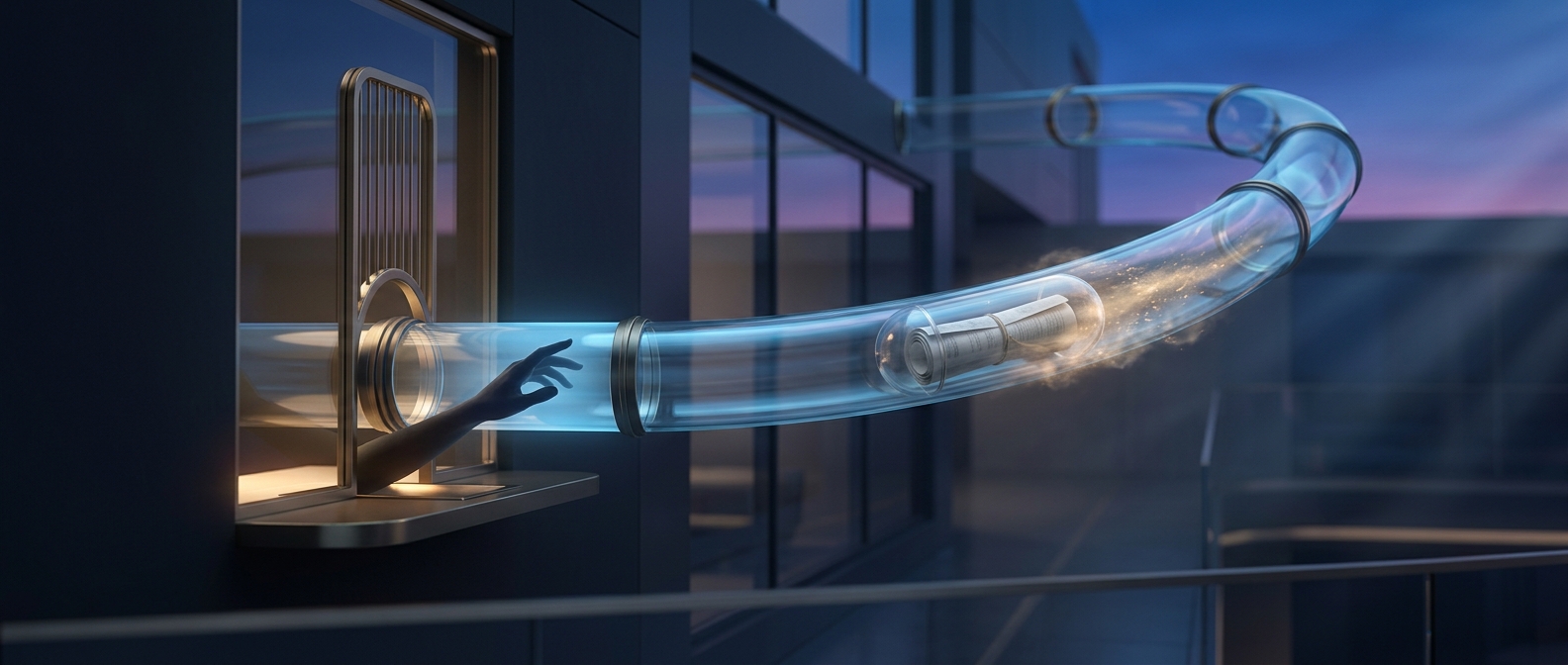
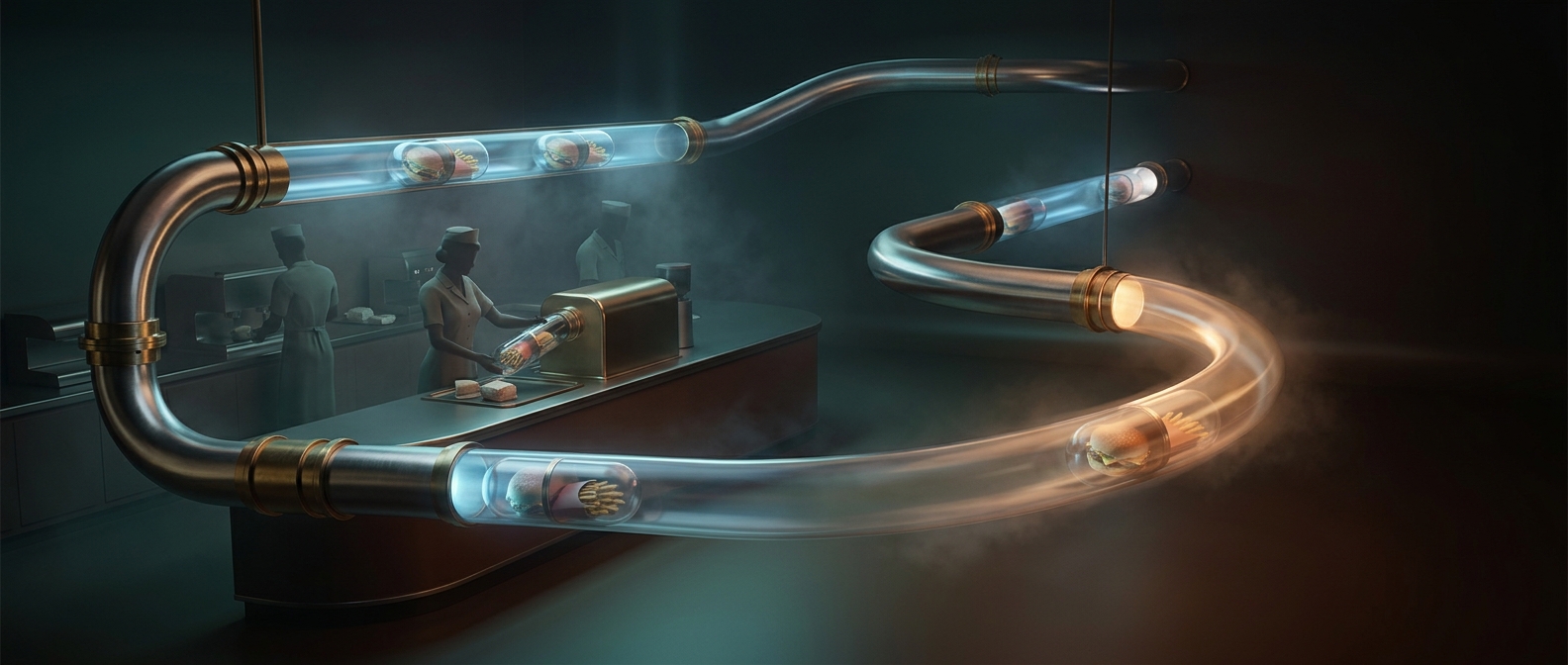
A pneumatic tube moves a carrier by changing the air pressure around it. In a restaurant, the carrier could hold an order and travel through a pipe between work areas, carrying food across the room without a person walking the route. The tube did not cook the burger or serve it to a diner; it handled the in-between trip after the order was ready to move.
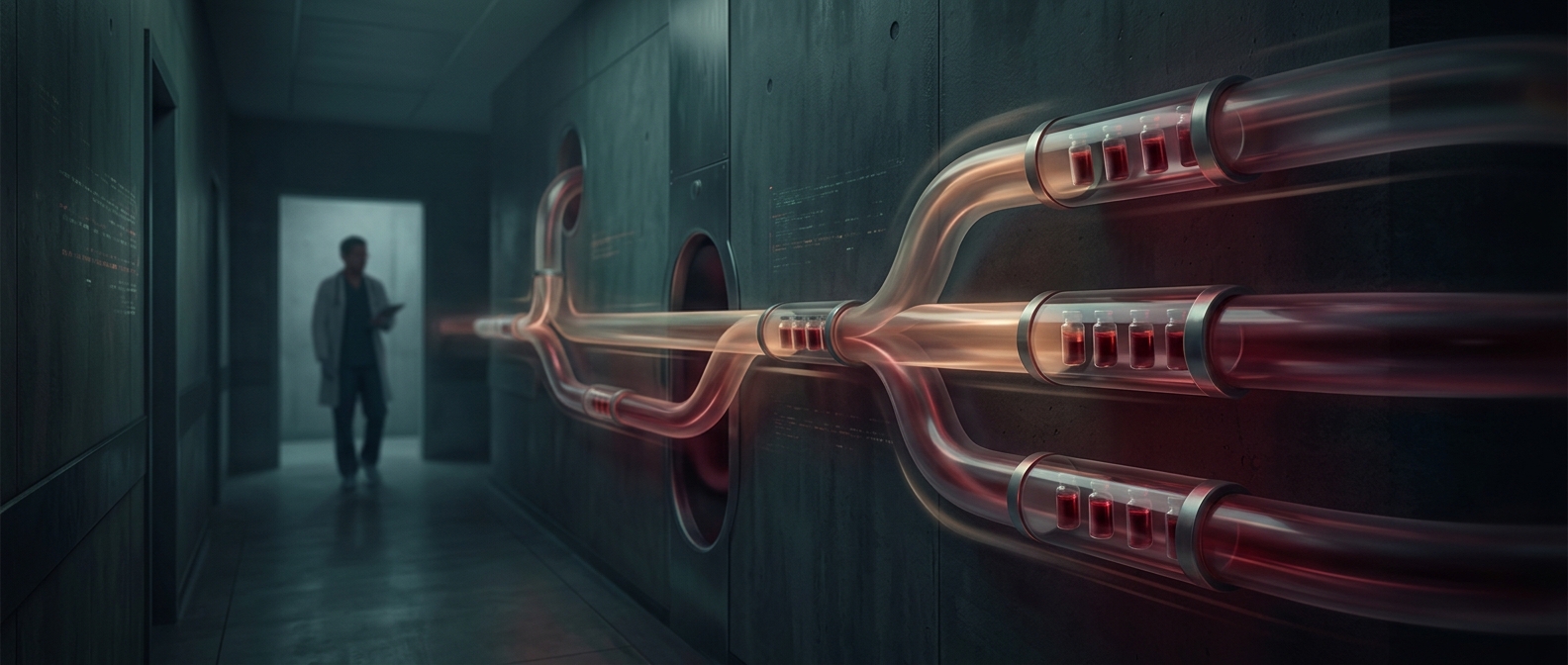
That small change matters in a busy restaurant. Servers and kitchen staff repeatedly cross paths while carrying plates or waiting for an order to reach the next station. A hidden tube gives that traffic a separate lane: staff can keep working while the carrier moves through the wall or under the floor to its destination.
A Shortcut With Limits
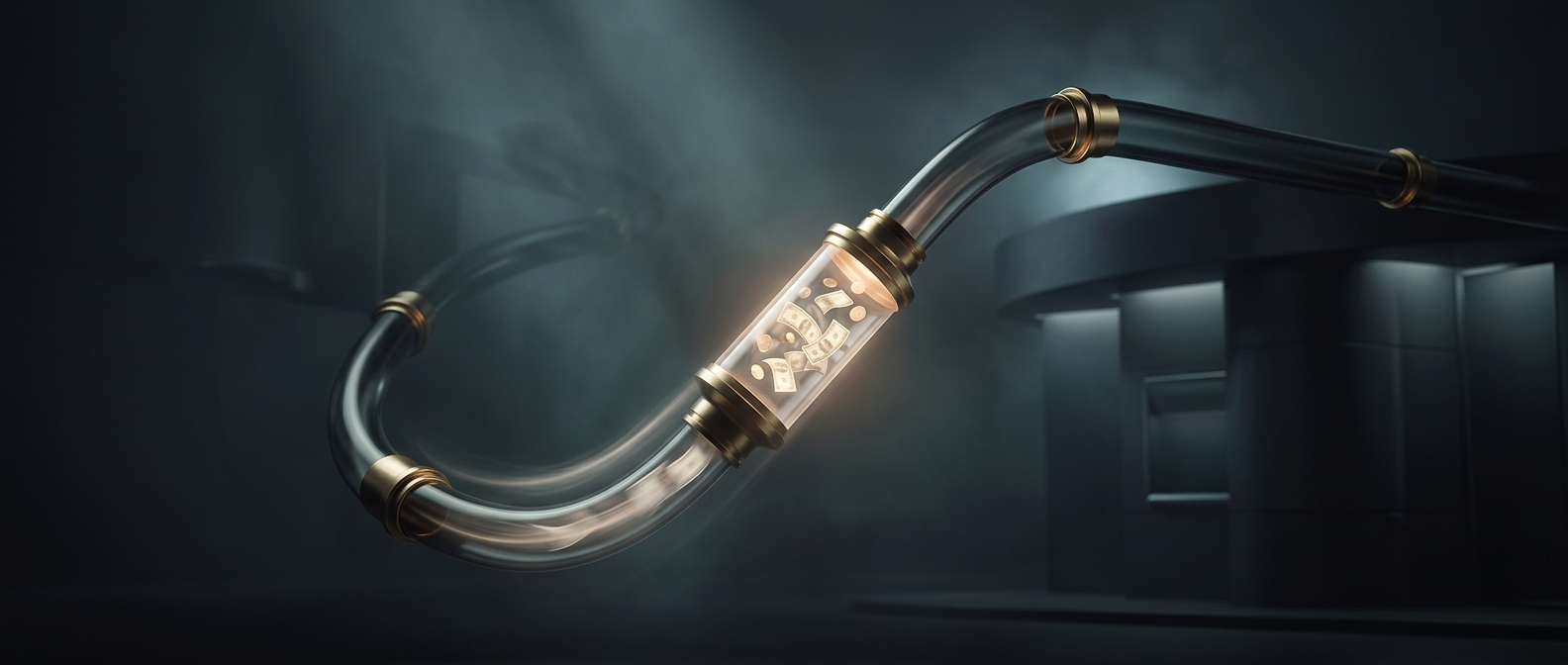
The system works best when the route and the carrier are designed around the job. A sealed carrier protects its contents during the ride, but it also limits what can be sent and how it must be packed. A burger order has to fit inside, and the food still needs to arrive in a state worth serving. The tube can save a walk; it cannot remove the need to prepare, pack, receive, and deliver the meal.
That is the tradeoff behind the curious image of a burger taking the express route. Plumbing could move an order through a crowded restaurant, but only along a fixed track—and only for the distance between the people and stations that still had to finish the job.