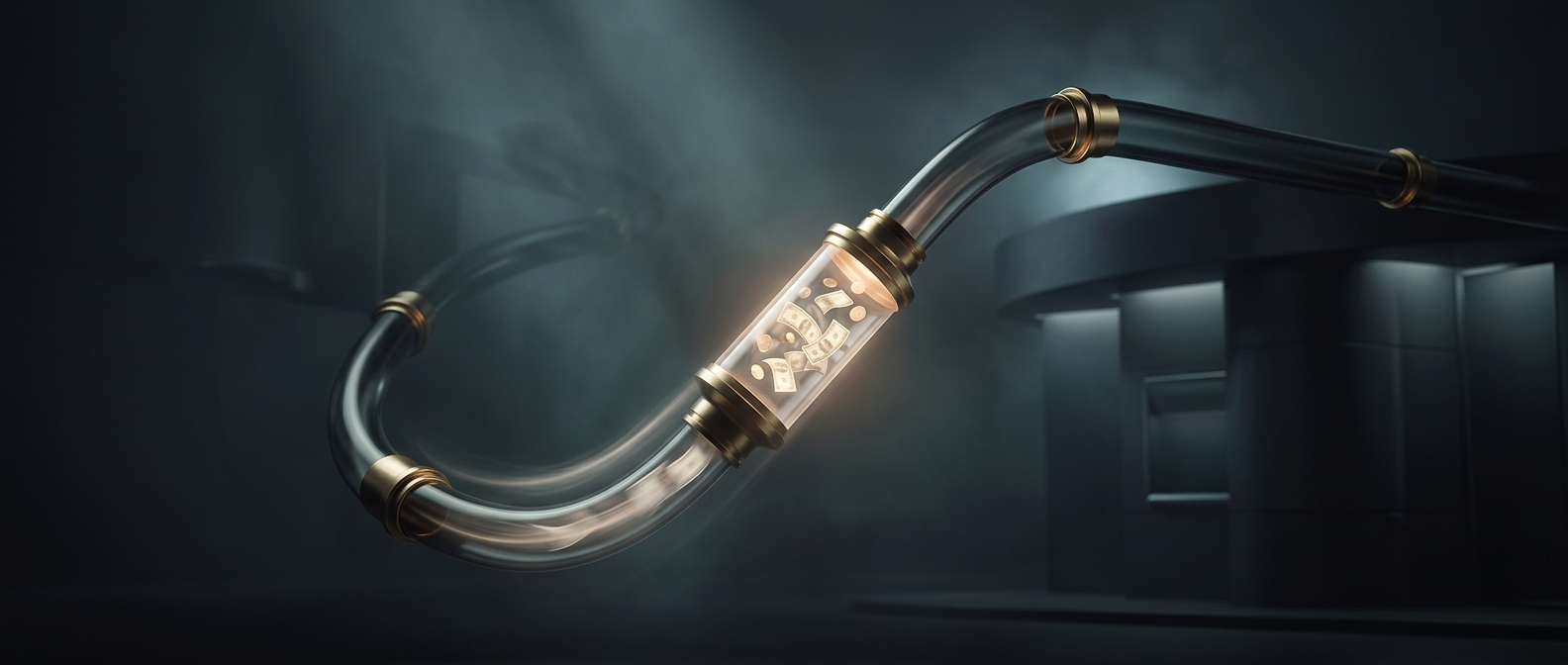
How a Tube Delivers a Bank Transaction
Inside a pneumatic tube, the carrier is not pushed along by a jet of air from behind in quite the way a straw sends a lightweight object flying. A blower creates a pressure difference across the carrier: air pressure on one side is higher than on the other, and that imbalance moves the capsule through the pipe. The carrier fits closely enough to the tube for the airflow to propel it, while still leaving room to travel.
At a bank, sending a capsule is only part of the job. The system must connect the customer’s station to the right teller station, then let the carrier arrive without damaging what is inside. Branch layouts and tube networks vary, but routes can be controlled through switches that direct a carrier toward its destination. The teller can return the capsule through the system after handling the transaction.
The Tradeoff Behind the Speed
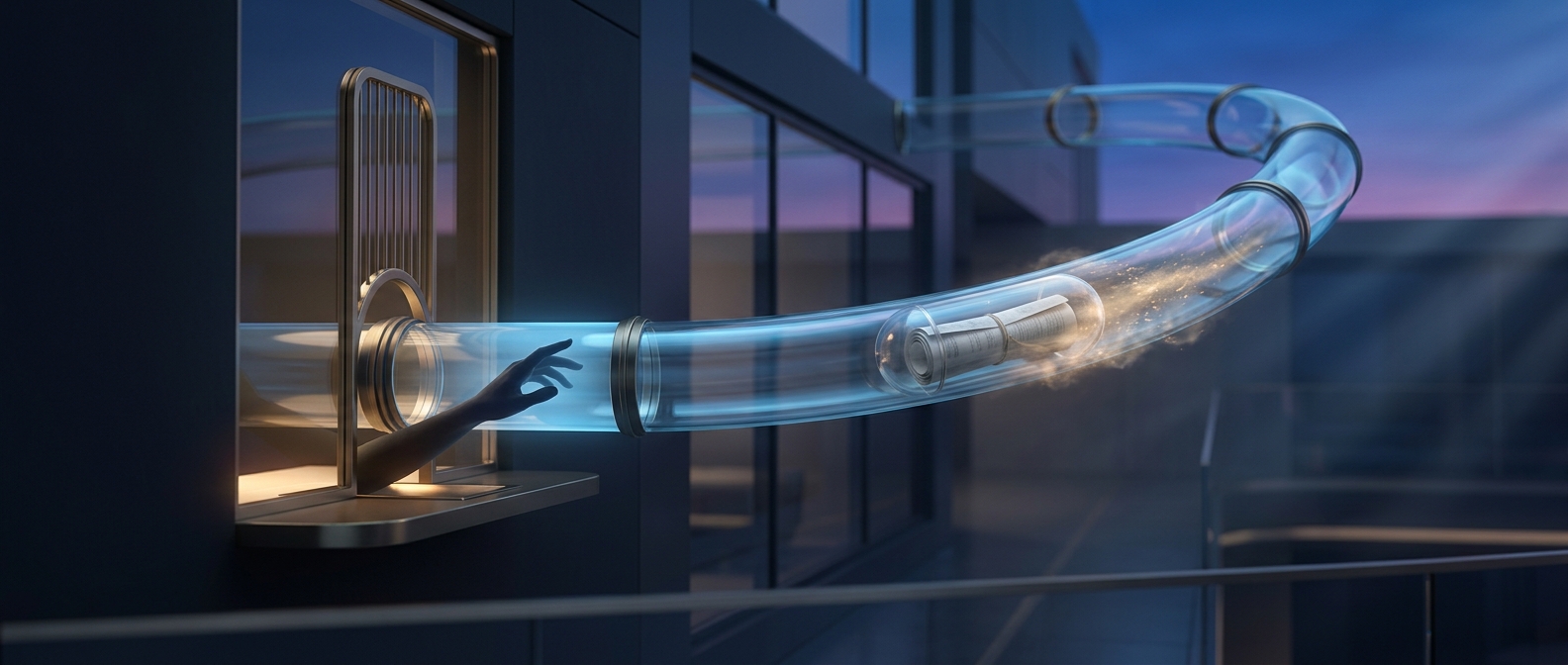
The tube turns a physical handoff into a mechanical route. A customer can send documents or cash from a drive-up lane without walking into the branch, and staff can exchange them without crossing the space between the window and the teller area. That is especially useful when the two ends are separated by walls, counters, or a lane designed for vehicles.
But the system works only along its installed network. It needs pipes, stations, and equipment that can move and receive the carrier; it cannot deliver to an arbitrary point the way a person can. The capsule also has to be loaded and secured so its contents stay contained in transit. Its cleverness is less about making money fly than about making a fixed route reliable: a teller can receive a customer’s deposit through a wall, with the building itself doing the carrying.