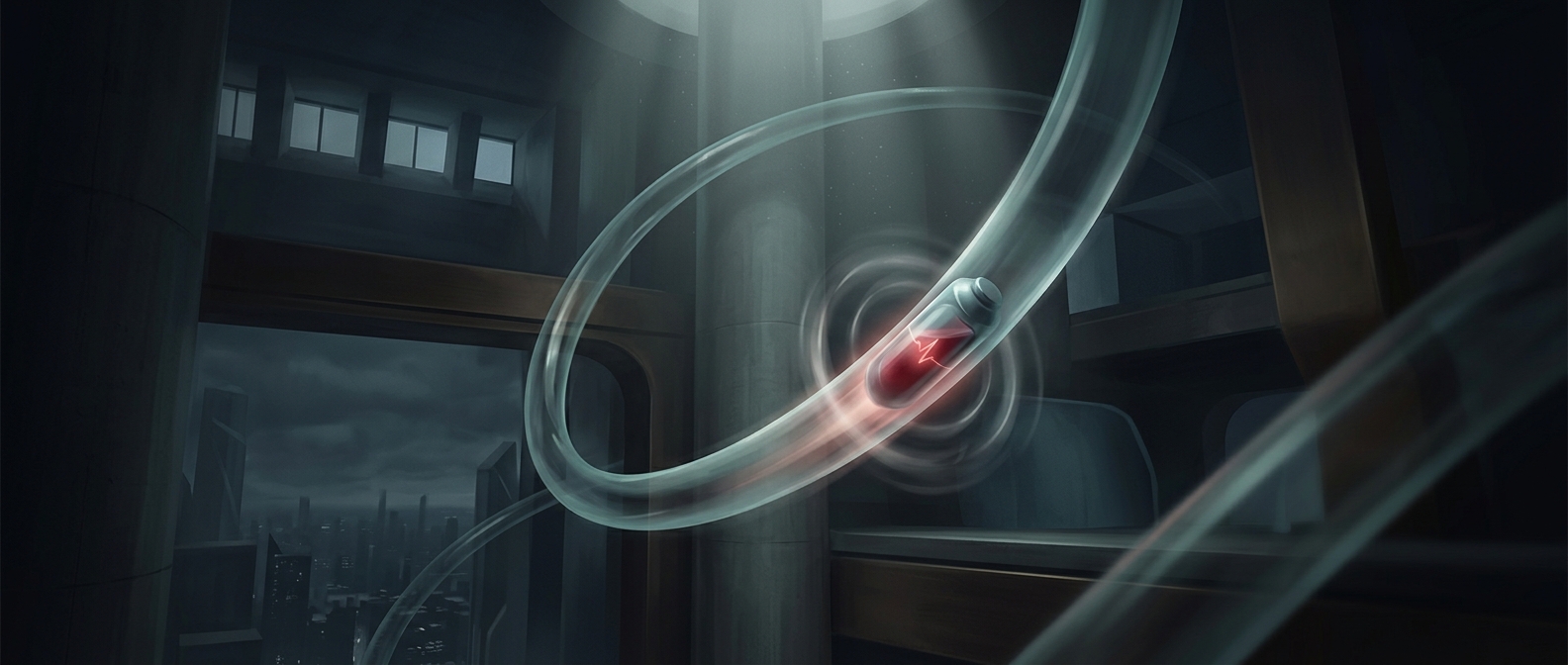
A shortcut through a crowded hospital
A hospital is a collection of separate work zones: blood-draw areas, wards, laboratories, and pharmacy counters may be far apart, while hallways and elevators are shared with patients, staff, and equipment. A pneumatic tube system turns that distance into a small, controlled delivery route. Staff place an item in a carrier, send it from a station, and the system directs the carrier to another station without requiring someone to walk the route.
That matters because a specimen’s journey is part of the work, not a pause between tasks. Once a blood sample is collected, it may need to reach a laboratory before testing can begin. Moving it through the tube network can make delivery more direct and predictable than relying on whoever is available to carry it.
Speed comes with routing rules
The system works more like an internal delivery network than a single open pipe. Stations provide handoff points, and routing controls send carriers toward their destinations. The carrier helps keep its contents together during transit; staff still have to package, label, and send the sample correctly, then receive it at the other end.
A tube is not suitable for every specimen or every situation. Hospitals decide which materials can travel this way and which need another method, because the trip itself—its movement, handling, and route—must be appropriate for what is inside. The tube system saves walking time, but it does not replace the safeguards around a sample. Its express lane is useful precisely because the hospital can reserve it for items that can safely make that trip.