How PLUTO turned the Channel into a fuel route
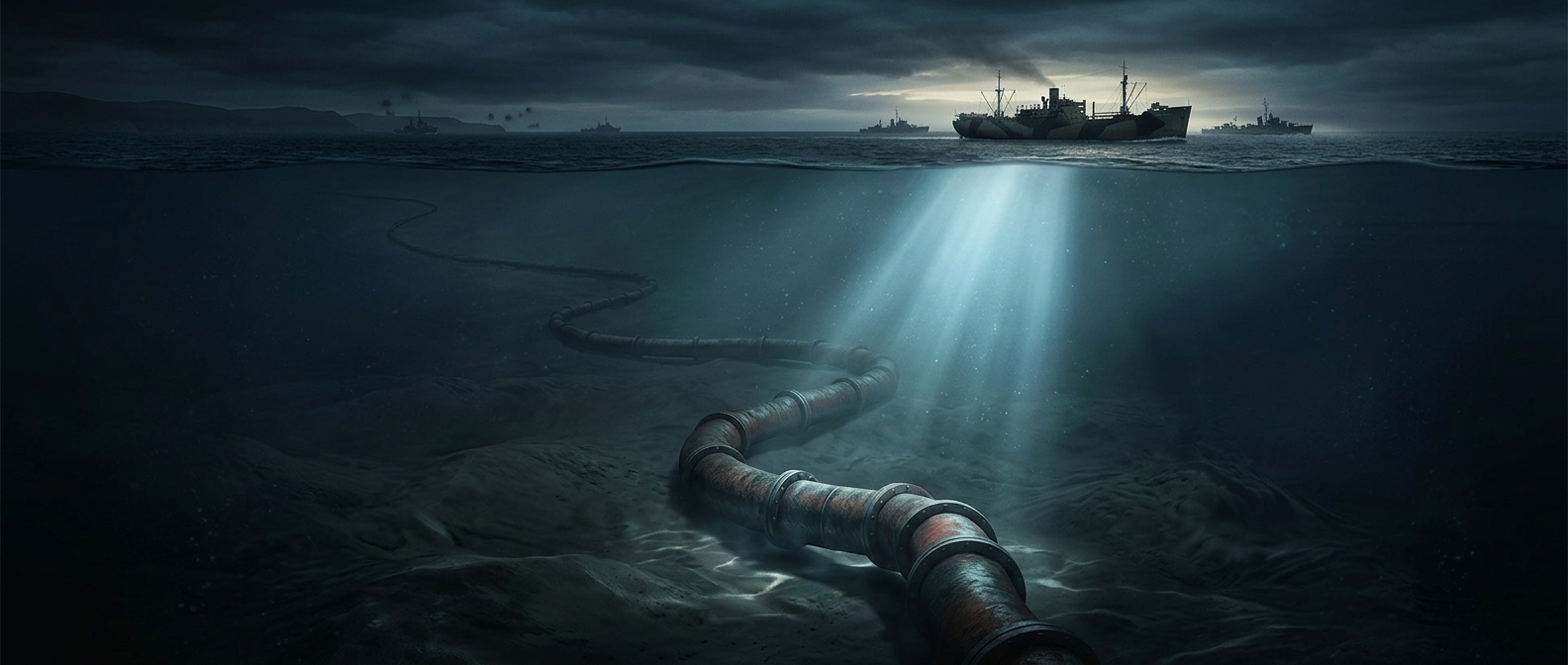
An army advancing through France needed a steady flow of petrol—not just the fuel carried in vehicles, but the enormous supply required to keep trucks, tanks, and other equipment moving. Sending it all by ship meant repeated voyages, vulnerable ports, and a long road journey from the coast. Operation PLUTO—short for “Pipe-Lines Under The Ocean”—offered another route: pump fuel from Britain through pipes on the seabed to France.
Making a pipeline survive the crossing
The Channel was not a sheltered trench. A pipe had to be manufactured, carried to sea, lowered into place, and kept intact under waves, currents, and the pressure of pumping. One design used flexible pipe with a lead core; another used steel pipe assembled into long sections. The designs addressed a basic engineering compromise: flexibility made a line easier to handle, while a rigid line had to withstand the strain of deployment and use.
On shore, pumping equipment pushed fuel into the line, where it could travel across the Channel to a receiving point. The pipeline did not eliminate the need for ships or land transport. It shifted part of the journey beneath the water, reducing the need to send every gallon across the sea in a tanker and then unload it at a port.
A hidden route, with a practical limit
PLUTO’s value depended on more than laying pipe. The line had to connect to functioning pumps and distribution networks, and fuel still had to be moved from the French coast to troops inland. It was therefore one part of a larger supply system, not a substitute for the fleet and the roads.
Its striking contribution was to make a vulnerable sea crossing into a less visible link in that system. The army’s advance relied not only on what could be seen moving across the Channel, but also on fuel being pushed through a pipe beneath it.