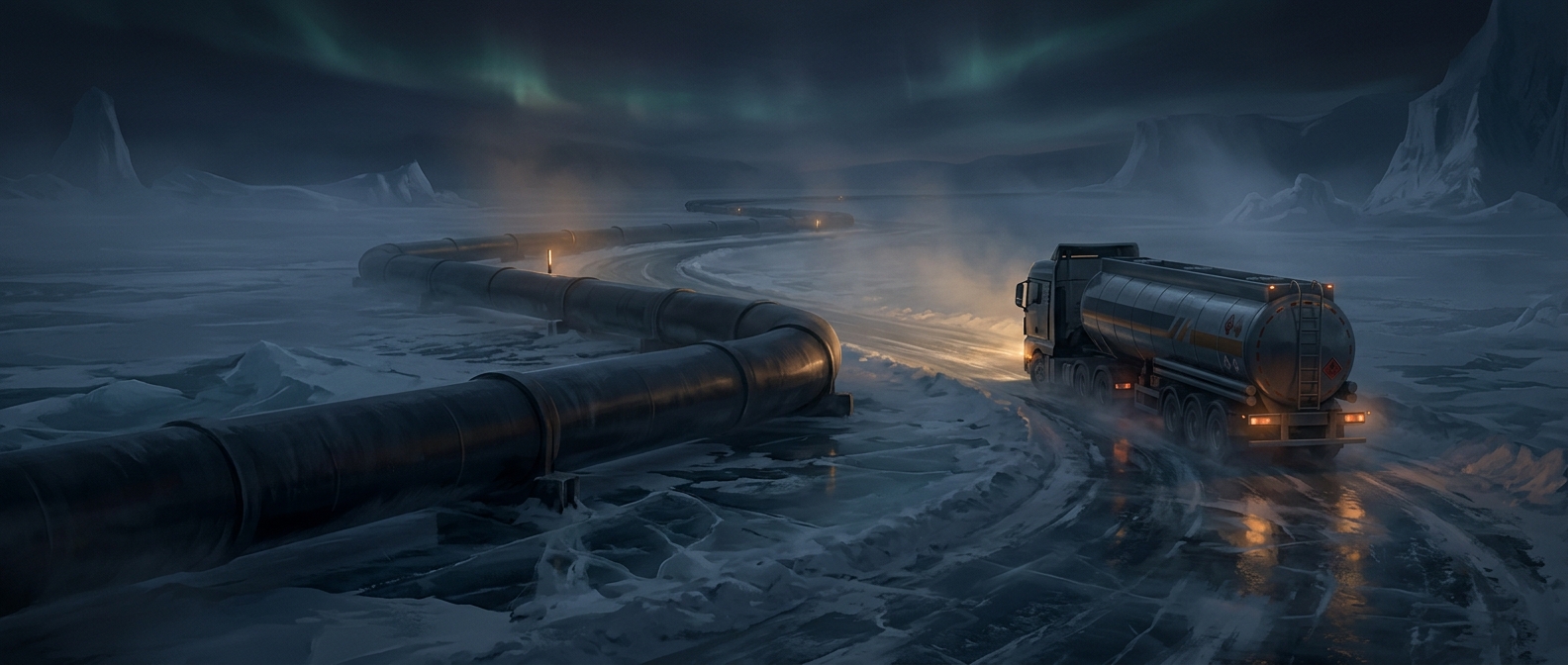
A construction route with a second job
A pipeline across Alaska’s remote interior could not be built from one end by crews carrying everything in. Workers needed a way to reach the route with heavy equipment, fuel, food, and replacement materials. The Dalton Highway supplied that access during construction of the Trans-Alaska Pipeline.
The road’s purpose did not end when the pipe was finished. A long pipeline needs people to reach it for inspections, repairs, and other upkeep. Keeping a road beside the route turned a one-time construction corridor into lasting access to infrastructure far from towns and ordinary supply networks.
Why the road is built for difficult ground
The challenge is not simply distance. The highway crosses remote, rugged country where weather and ground conditions make routine road travel harder and make bringing in supplies a major undertaking. A conventional paved road would not eliminate those difficulties; building and maintaining it would itself demand materials and work in a place with limited access.
A rough, practical route can serve the essential task: getting people and equipment through. The highway is therefore less like a polished commuter road than a working access link, built around the needs of a pipeline corridor and the demanding landscape it crosses.
One corridor, two kinds of upkeep
The road and pipeline are separate pieces of infrastructure, but their proximity connects their maintenance. The highway lets crews travel along a route that would otherwise be much harder to reach, while the pipeline gives the road a continuing purpose beyond its construction-era role.
That is the lasting tradeoff: the Dalton does not make Alaska’s interior easy to cross. It makes access possible enough to build and service a crucial line through it—and the road itself must keep working in the same remote country as the pipe.