How the Sky Stays Organized
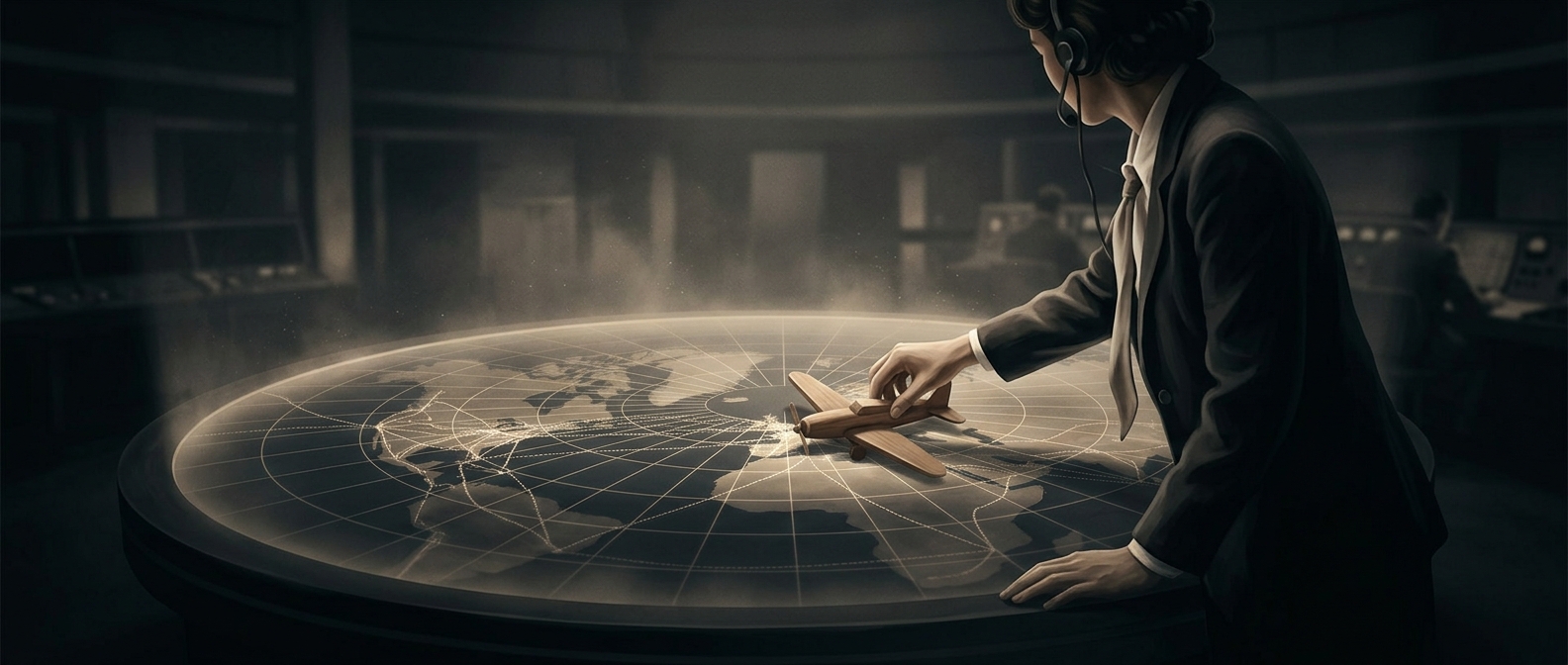
An airplane’s route is not a lane painted across the sky. Aircraft share a three-dimensional space, so safety depends on keeping them separated by altitude, distance, or time. Controllers track flights on radar and other surveillance systems, then issue clearances that shape where each aircraft can go and when. Pilots follow those instructions while also monitoring their own position and nearby traffic.
The system works in layers. Airports and approach controllers manage crowded departures and arrivals; en-route controllers handle aircraft crossing larger regions. As a flight moves between regions, responsibility is handed from one control center to another. Standard procedures make those transfers predictable, even when a plane crosses national boundaries.
Planning Around Weather and Uncertainty
Before departure, airlines and flight planners choose routes with forecasts, fuel requirements, airspace restrictions, and airport conditions in mind. A route may change in the air: controllers can steer aircraft around storms or congested areas, while pilots report conditions they encounter. Because weather forecasts and traffic conditions are imperfect, the plan is continually adjusted rather than treated as a fixed track.
Separation rules provide a buffer, not a promise that nothing will ever change. If a potential conflict develops, controllers can assign a different altitude or heading, and aircraft also have collision-avoidance equipment that can alert pilots to nearby traffic and, in some systems, recommend a climb or descent. These safeguards are designed to catch problems through more than one path.
The Airplane Is Built for a Hostile Environment
At cruising altitude, outside air is too thin for people to breathe comfortably, so the cabin is pressurized: air is managed to keep pressure inside the aircraft at a safer level. The fuselage, or main body of the plane, must withstand the repeated pressure changes of climbs and descents. Critical aircraft systems are also designed with backups, so a single component failure need not immediately become a loss of control.
The striking achievement is not that a plane simply stays aloft. It is that thousands of moving aircraft can keep predictable spacing while crews and controllers continuously respond to changing conditions. A transoceanic flight may spend hours beyond the reach of ordinary ground radar, so other forms of surveillance and established procedural separation help maintain order there. The global network’s safety comes from layered planning, communication, and engineering—not from any one person or device watching every airplane at once.