A Flexible Link Between Two Aircraft
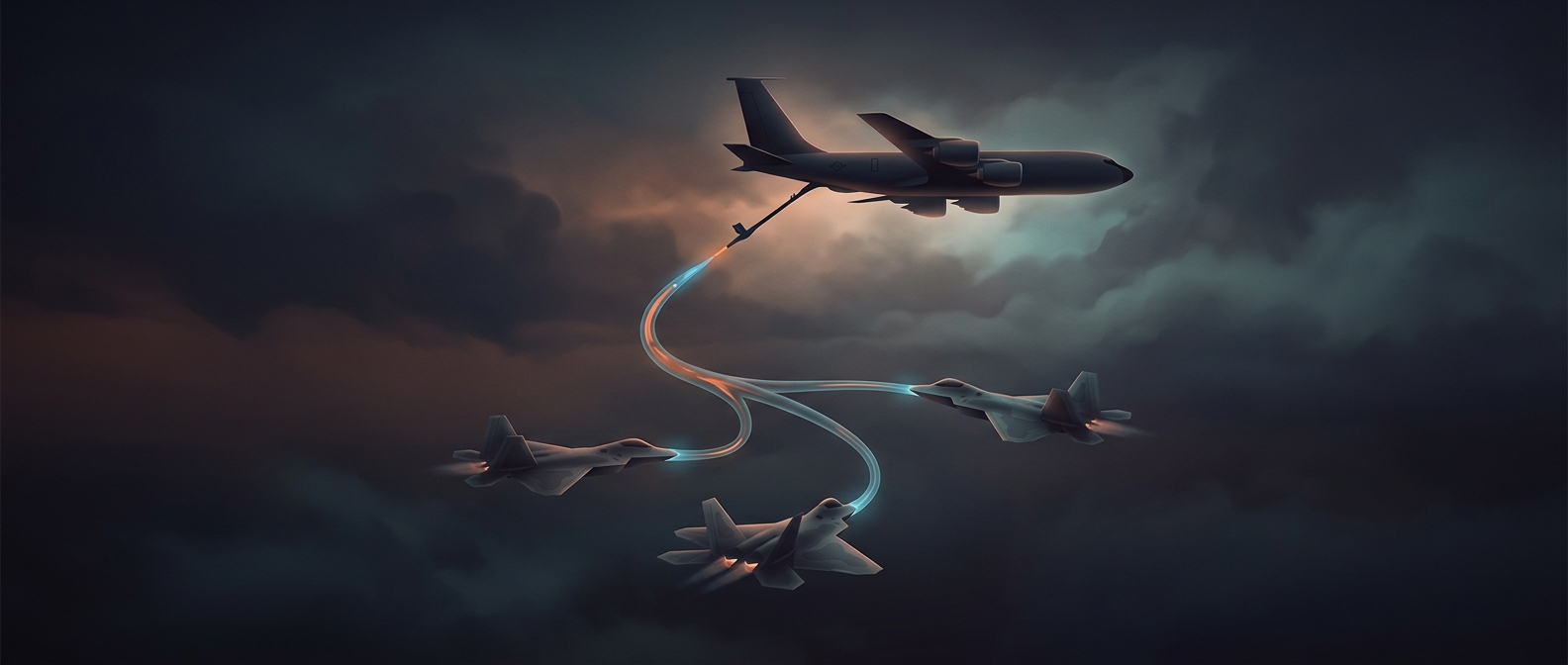
The drogue is more than a target: it is the end fitting of a fuel line. Airflow pulls the hose back from the tanker and keeps the basket extended, but the same moving air makes it sway. The fighter must approach from behind and line up its fixed refueling probe with the basket while both aircraft hold a steady course and speed.
Once the probe seats in the drogue, the connection opens a path for fuel. Pumps on the tanker move fuel through the hose into the fighter’s tanks. The pilot does not steer the probe independently; small changes in the fighter’s position guide the whole aircraft toward the swaying basket. A hard or off-center contact can knock the drogue aside, so the approach is controlled rather than a quick dart forward.
Why the Connection Takes Practice
The fighter has to remain close enough for the hose to reach without pulling it taut or drifting into the tanker. Turbulent air behind the larger aircraft can make that position harder to hold, while the basket’s motion gives the pilot a constantly shifting reference point. If the connection becomes unstable, the pilot can back away and try again; after fueling, the aircraft separates carefully so the hose and probe do not snag.
This method lets a tanker serve aircraft equipped with probes without a rigid refueling boom. The tradeoff is that the receiver’s pilot must do the precise positioning. The fuel transfer itself is only part of the task: every gallon depends on keeping two aircraft in formation while a flexible connection moves between them.