The engineering challenge behind a 4½-mile train
A train several miles long is not simply a normal freight train with more cars added. The greater the length and weight, the harder it becomes to start, control, and stop the whole consist—the railway term for locomotives and cars coupled together. A locomotive at the front must pull against the resistance of hundreds of cars, while the rear of the train can respond to changes in speed much later than the front.
That delay matters especially during braking. If the front cars slow sharply while the rear cars continue pushing forward, the forces along the train can strain couplers or make cars bunch together. The challenge is to manage those forces without sacrificing the hauling capacity that makes a giant train useful.
Power distributed along the train
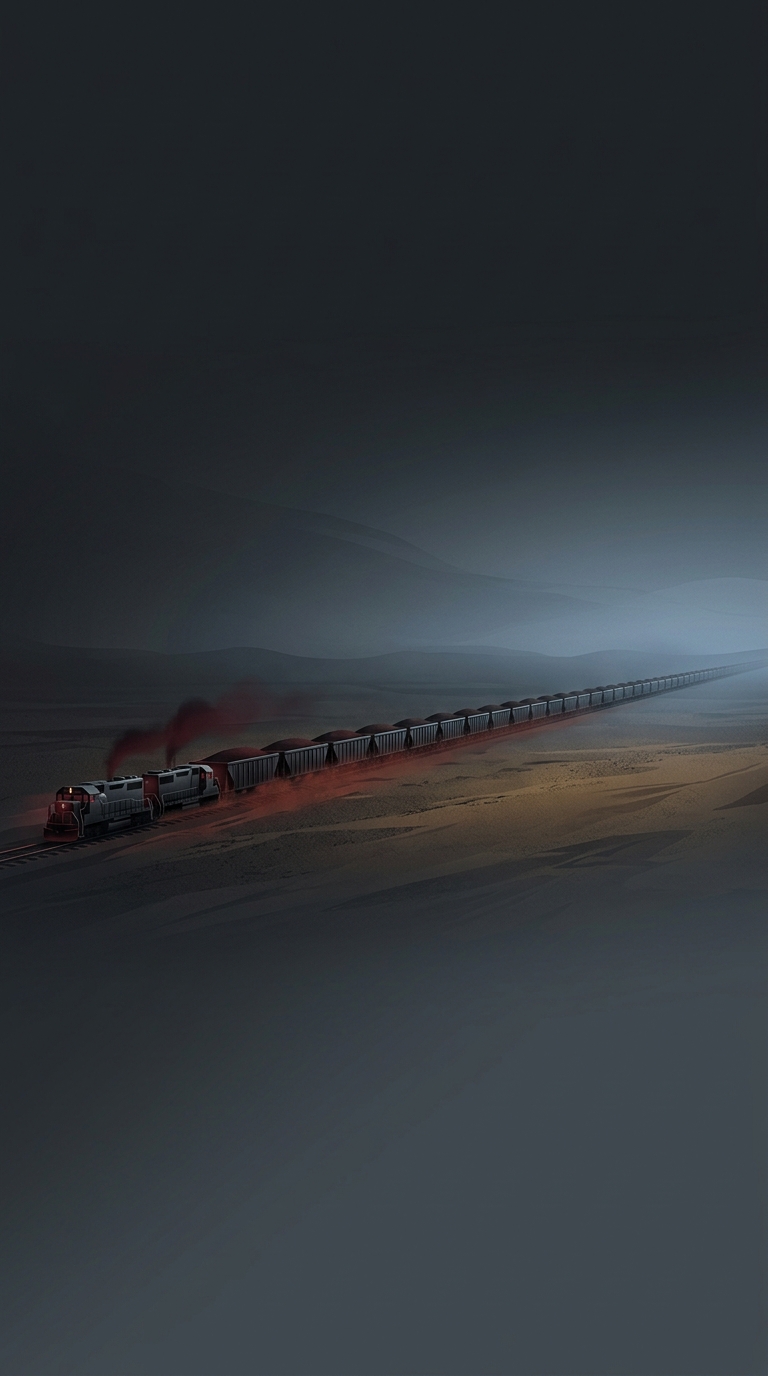
BHP’s record-setting train used eight diesel locomotives, rather than relying on a single engine at the head. Locomotives placed at different points can help apply pulling and braking forces across the train, reducing the extreme tug at the front and shove from behind. They are coordinated so the train behaves more like one controlled system than a long chain reacting car by car.
This arrangement also depends on careful operation: acceleration and braking have to be managed with the train’s enormous mass and length in mind. A small change at the front takes time to work its way through miles of coupled cars.
A record run, not just a long line of wagons
The achievement demonstrated how far heavy-haul rail engineering could be pushed for moving iron ore across Australia. Its scale was striking, but the deeper feat was controlling a load so long that the front and back could be separated by several minutes of travel. On a train like this, coordinating power is as important as supplying it.