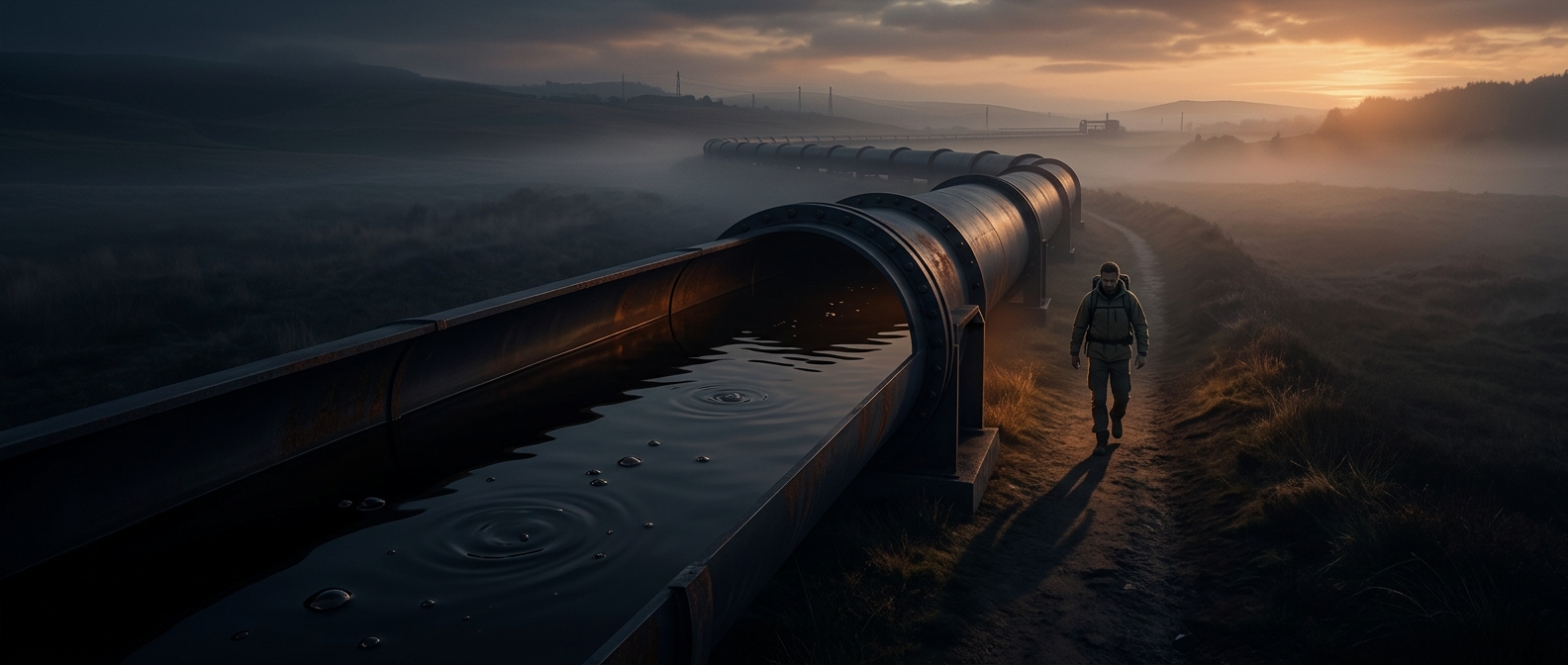
Why a Slow Oil Stream Can Carry So Much
A pipeline’s carrying capacity depends on two things: how quickly the oil moves and how much room the pipe gives it. A broad pipe has a large cross-section, so even a modest flow speed can move a substantial volume past any point over time. The oil may creep along more slowly than a person walking beside the line, yet the pipe can still deliver a steady, substantial supply.
That distinction is the difference between speed and flow rate. Speed describes how fast a bit of oil travels; flow rate describes how much oil passes through the pipe in a given time. A wider pipe can raise flow rate without making each bit of oil race along.
The Work Happens Along the Route
Oil resists movement as it rubs against the pipe wall and against other layers of oil. This resistance, called friction, uses up pressure. Pumps add pressure to keep the oil moving, and additional pumping stations may be needed along a long route as pressure falls. The oil’s thickness matters, too: more viscous oil is harder to push than thinner oil, so moving it can require more effort.
Pipeline operators therefore balance pipe size, pumping, and the properties of the oil. Making the oil travel faster is not automatically the best answer: faster flow can increase friction and the energy needed to overcome it. A pipeline’s quiet, slow-moving stream is not a sign of low capacity; its broad interior is doing much of the carrying.