What Makes Water Move Through a Pipe
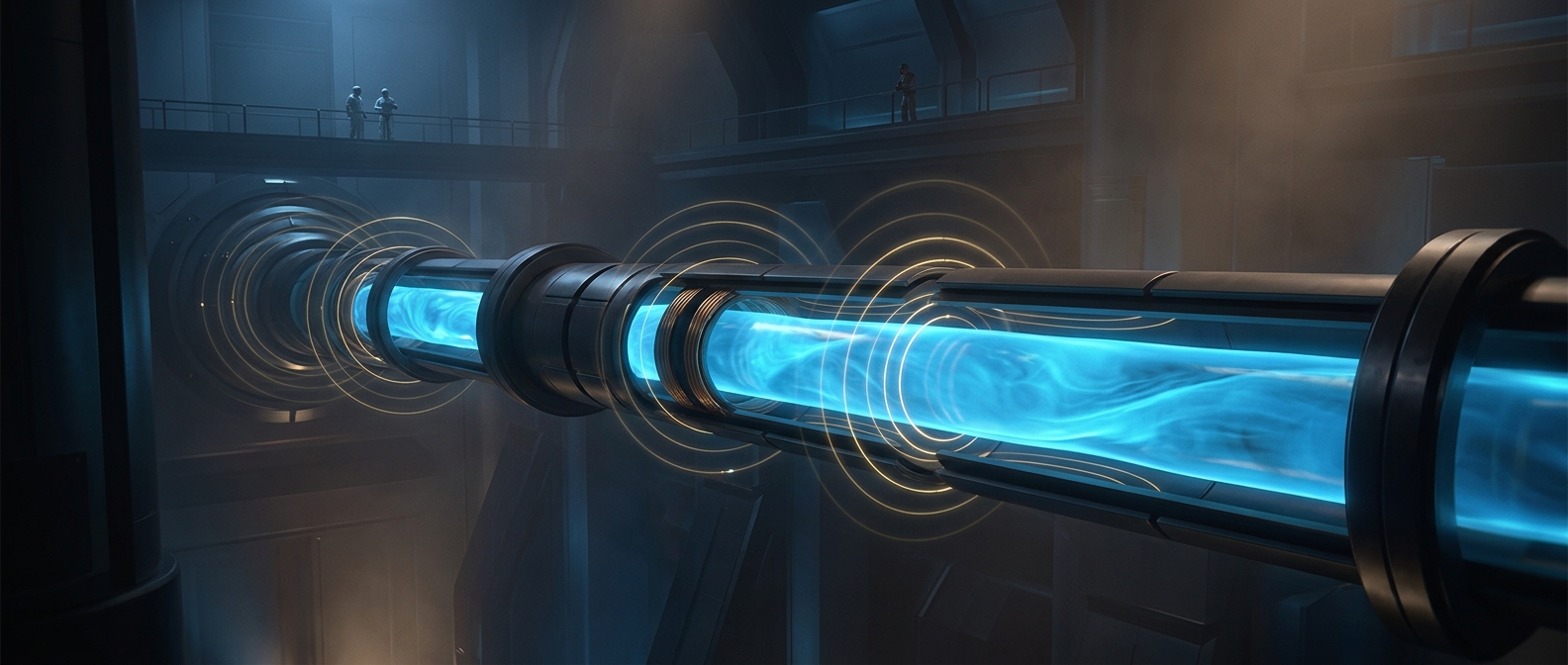
A pipe does not make water flow simply by containing it. Water moves when forces create a difference from one place to another. A pump can raise pressure at one end; a higher water level can provide pressure through gravity. Either way, water tends to move from higher pressure toward lower pressure, much as air escapes from an inflated tire.
Elevation matters because gravity gives water at a higher point more potential energy. In a water system, that height can help drive flow downhill or supply pressure at a tap. To send water uphill, a pump must add enough energy to overcome the climb as well as the resistance along the route.
Why Some of the Push Gets Lost
Water also resists being sheared: neighboring layers rub against one another, and water rubs against the pipe wall. This internal friction is called viscosity. It is less noticeable in a short, wide pipe than in a long, narrow one, where more contact and tighter space make it harder for water to pass.
As water moves, some of the energy supplied by pressure or gravity is dissipated as heat through this friction. The farther the water travels, and the more restrictive the path, the greater the push needed to maintain the same flow. Bends, valves, and rough surfaces add further resistance by disrupting the moving stream.
The Practical Balance
Engineers size pumps and pipes around this balance. A pump that supplies too little pressure may not deliver the required flow, especially at higher elevations; a larger pump can help, but it uses more energy. A wider pipe can reduce resistance, though it takes more material and space.
That is why water pressure at a faucet depends on more than the pump: height, pipe dimensions, route, and flow rate all shape what arrives. The same water can move readily through a short, wide line yet crawl through a long, narrow one, even when both begin under the same pressure.