How a Liquid Passes Motion Across a Shear
The “layers” in a flowing liquid are a useful picture, not separate sheets with a sharp boundary. Molecules are constantly moving in different directions. As molecules cross from one region of flow into another, they carry momentum with them; interactions with neighboring molecules then spread that momentum through the liquid. The result is a force between regions moving at different speeds.
This transfer is called viscous shear. In an ordinary Newtonian liquid, the force grows when the speed changes more sharply from one place to the next, and it also depends on the liquid’s viscosity. A more viscous liquid resists that change more strongly. Temperature matters too: warming most liquids makes them less viscous, so they flow more readily.
Why the Flow Slows at a Wall
At a solid surface, liquid molecules interact with the wall, so the fluid right beside it generally moves at the wall’s speed. If the wall is still, that thin region is nearly still. Viscosity passes the wall’s braking effect into neighboring regions, creating a gradual change in speed across the flow rather than stopping the whole stream at once.
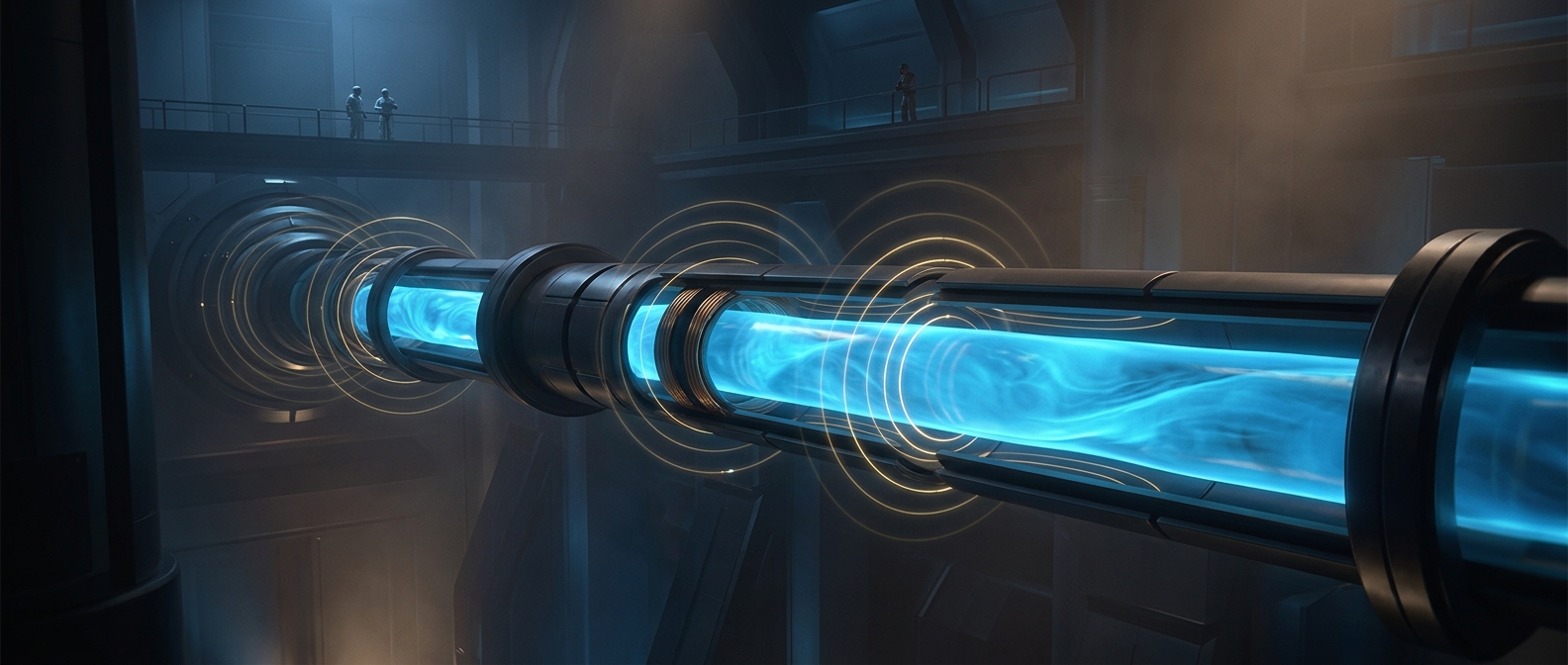
That same process helps determine how much force a pump must supply to move liquid through a pipe. The pump’s work overcomes viscous resistance, and much of that mechanical energy becomes heat. A narrow pipe, a steep speed gradient, or a more viscous fluid makes the resistance more consequential—because momentum has to be redistributed more intensely as the liquid moves.