How adult fan animation helped a hero shooter travel beyond the game
A hero shooter gives players a large cast of distinct characters, each with a recognizable look and personality. That makes the cast easy to remember—and easy for fans to reinterpret. Soon after the game appeared, some fans turned those characters into polished adult animations, often built as comic parodies rather than extensions of the official story. “NSFW” means “not safe for work,” a label commonly used for sexually explicit material.
The attention loop
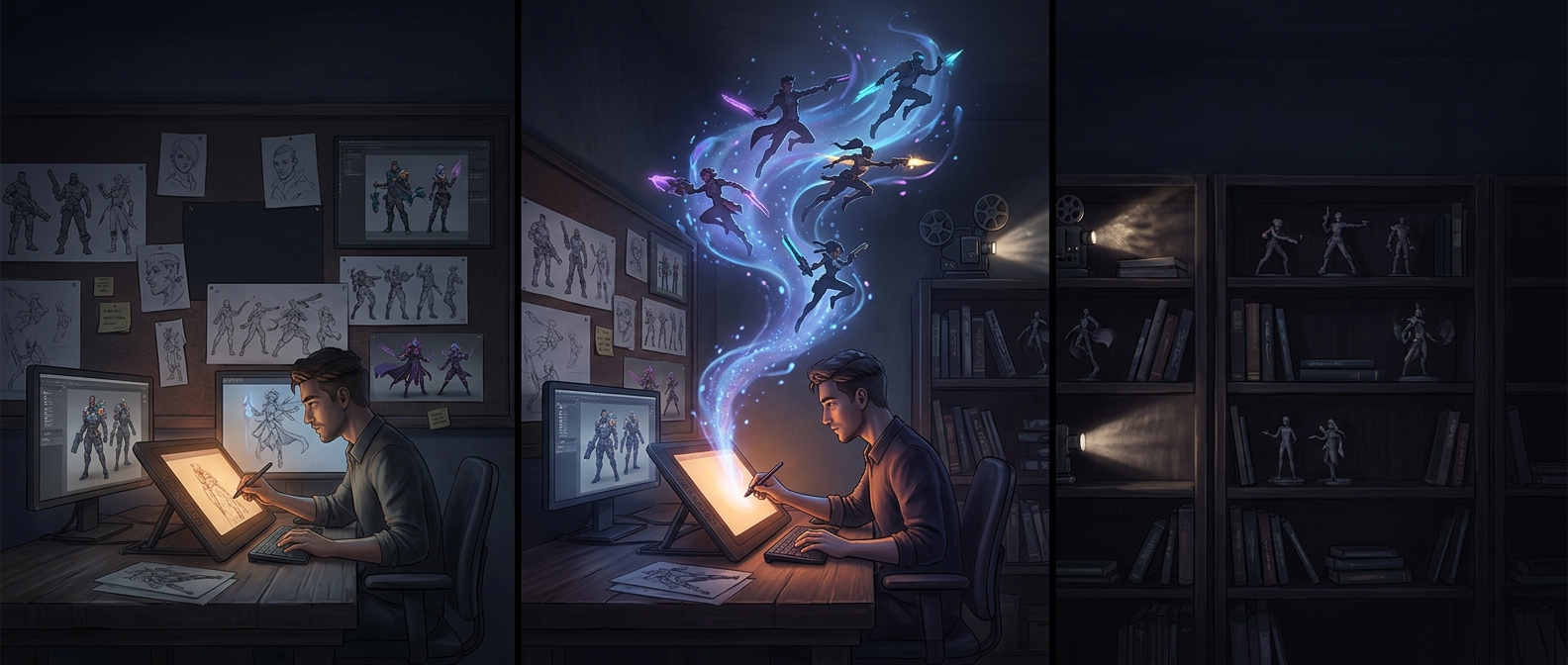
The animations gave people something to share even if they had never played a match. A striking clip could circulate through fan communities, prompt jokes and discussion, and send curious viewers toward the characters—and sometimes the game itself. Because the work was visual and used a familiar cast, it could make sense to someone who knew little about the game’s mechanics.
That attention could also reinforce itself. More interest in the characters meant a larger audience for fan creations; the creations, in turn, kept those characters visible. The official game did not control this material, but its recognizable cast gave fan artists a ready-made subject.
Visibility with a tradeoff
Adult parody was only one part of the game’s wider fan culture, and it should not be mistaken for the sole reason the game caught on. But it illustrates how a game’s reach can grow outside its own play experience: audiences may encounter its characters through fan work before they ever encounter the game. The same attention can be uncomfortable for players or creators who do not want the cast sexualized, so the added visibility comes with a real cultural tradeoff.