A Game That Escaped the Screen
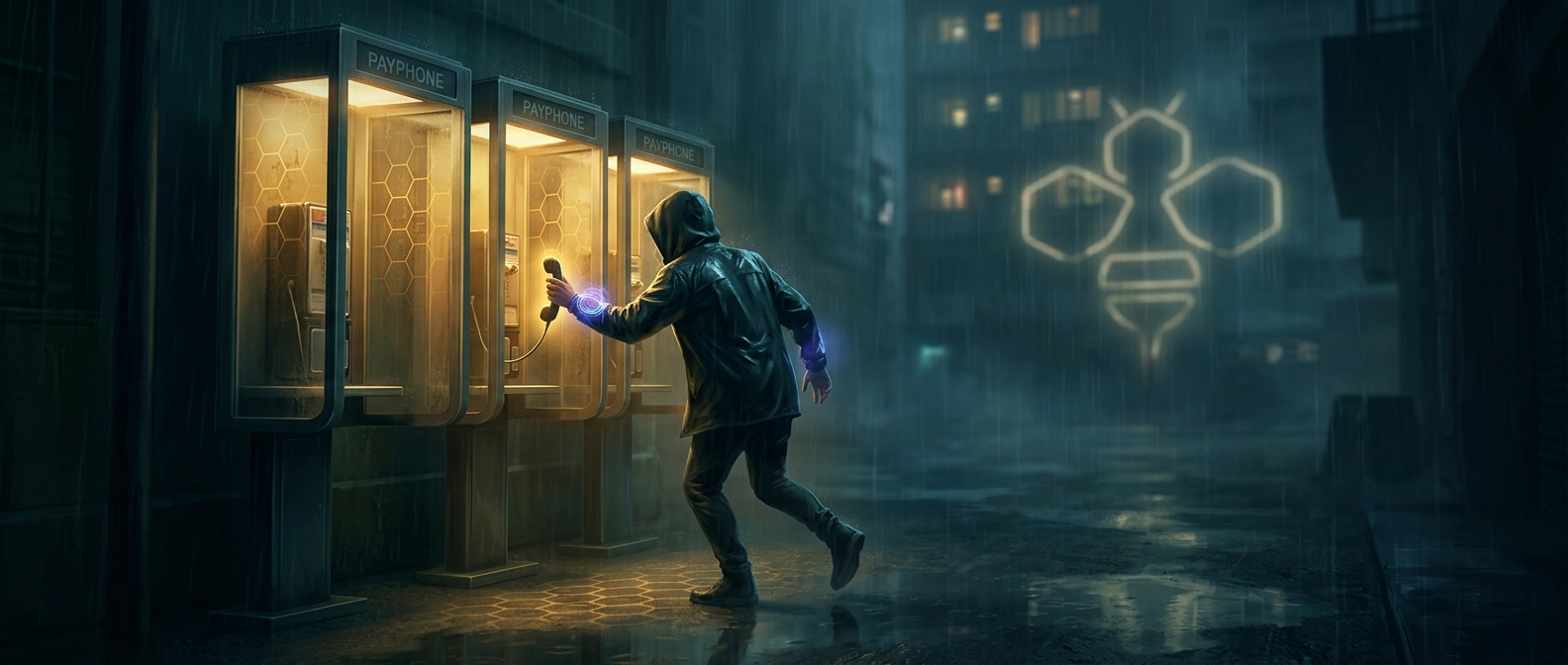
I Love Bees turned a Halo 2 promotion into an alternate reality game: a story presented through ordinary websites, phone calls, and real-world locations, with no single screen explaining how it all fit together. The campaign began with clues that led curious fans to a strange bee-themed website. As players investigated it together, they uncovered instructions pointing to payphones.
The phones were not just props. At designated times, some rang, and answering one could reveal a short piece of an audio drama. Each fragment added to a larger story, so a call offered a reward but not a complete explanation. Players had to connect what they heard with other clues and share discoveries with people following the campaign elsewhere.
Why Make the Audience Do the Connecting?
The scattered format made the audience’s work part of the experience. A conventional trailer delivers its message in one sitting; I Love Bees made information feel discovered. The payphone gave an online puzzle a physical endpoint: fans had to be in the right place, at the right time, and ready to answer. That constraint made the campaign feel less like an advertisement playing at its audience and more like a mystery intruding on ordinary life.
It also created a practical tradeoff. No one person could easily collect every fragment, so collaboration mattered. Players could compare recordings and clues, while the campaign’s divided story encouraged them to keep checking back. The result was a promotional narrative that could unfold across a network of participants rather than depend on a single, carefully timed viewing.
A ringing public phone normally asks for a stranger’s attention. Here, answering it meant stepping briefly into a story—and taking away a piece someone else might need to understand the rest.