Why vivid green mattered
Cooking and preserving vegetables often dulled their color. Heat and acidity can alter chlorophyll, the pigment that makes peas and other plants look green. In a market where shoppers judged food partly by appearance, a bright green pickle or pea could seem fresher and more appealing than one turned olive-colored.
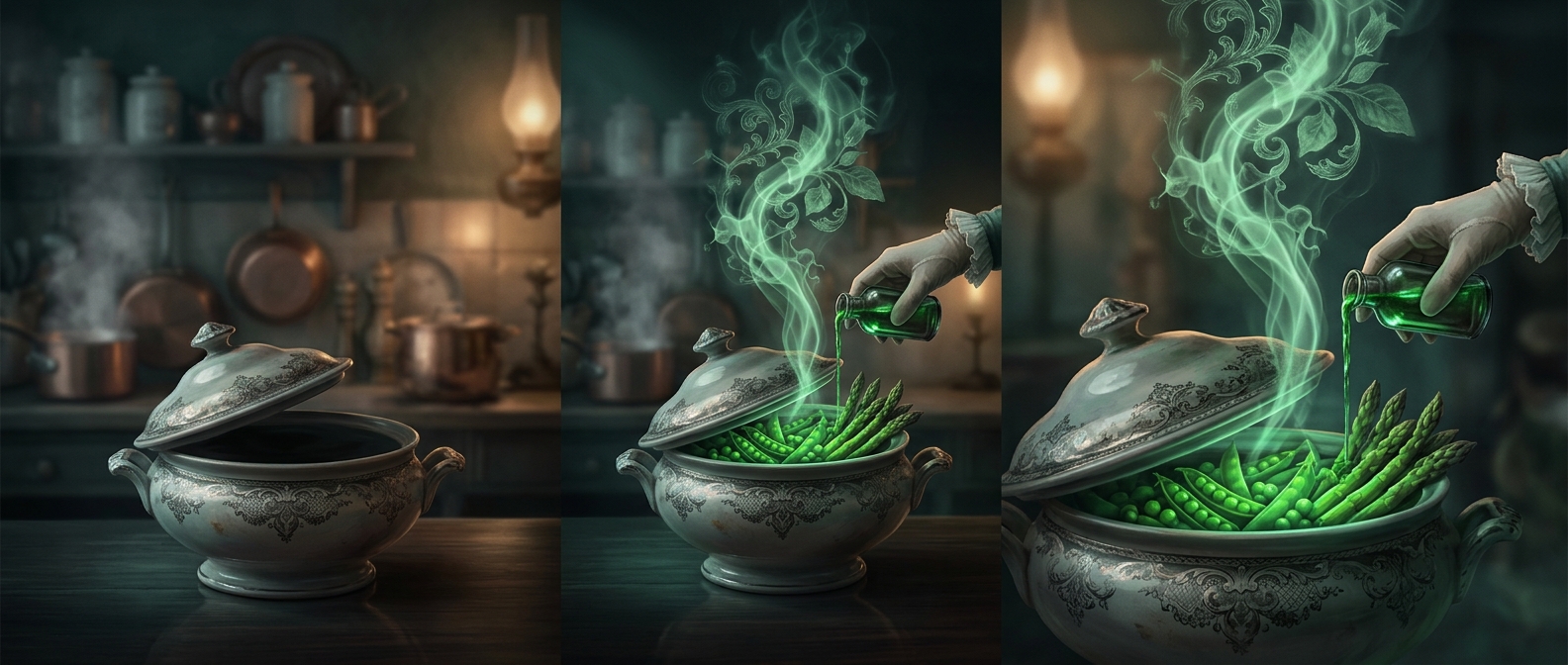
Some Victorian manufacturers used copper sulfate, a copper salt, to restore that vivid look. Copper ions can interact with chlorophyll, producing a more stable green pigment. The treatment changed what customers saw, not how fresh the vegetables were.
A cosmetic fix with a real hazard
Copper sulfate is toxic if enough is swallowed. Adding it to food therefore turned an appearance trick into a health risk: the same chemical that helped preserve a convincing green color could harm the person eating the product. The danger depended on exposure, but consumers had little way to judge from the color alone how the food had been treated.
The practice also exposed a weakness in the food trade of the time. Preserving food was essential, but there was a commercial incentive to make stored produce resemble freshly picked produce—even when that meant using an unsafe additive. A vivid green pea could signal freshness to a shopper while concealing the very processing that had changed it.