The first pancake is a calibration trial
Cooking a pancake asks for several judgments at once: how much batter to pour, when to flip, and what heat setting will brown the surface without leaving the middle raw. Those judgments are hard to make from a recipe alone because pans and burners behave differently. A cook has to learn the setup in front of them.
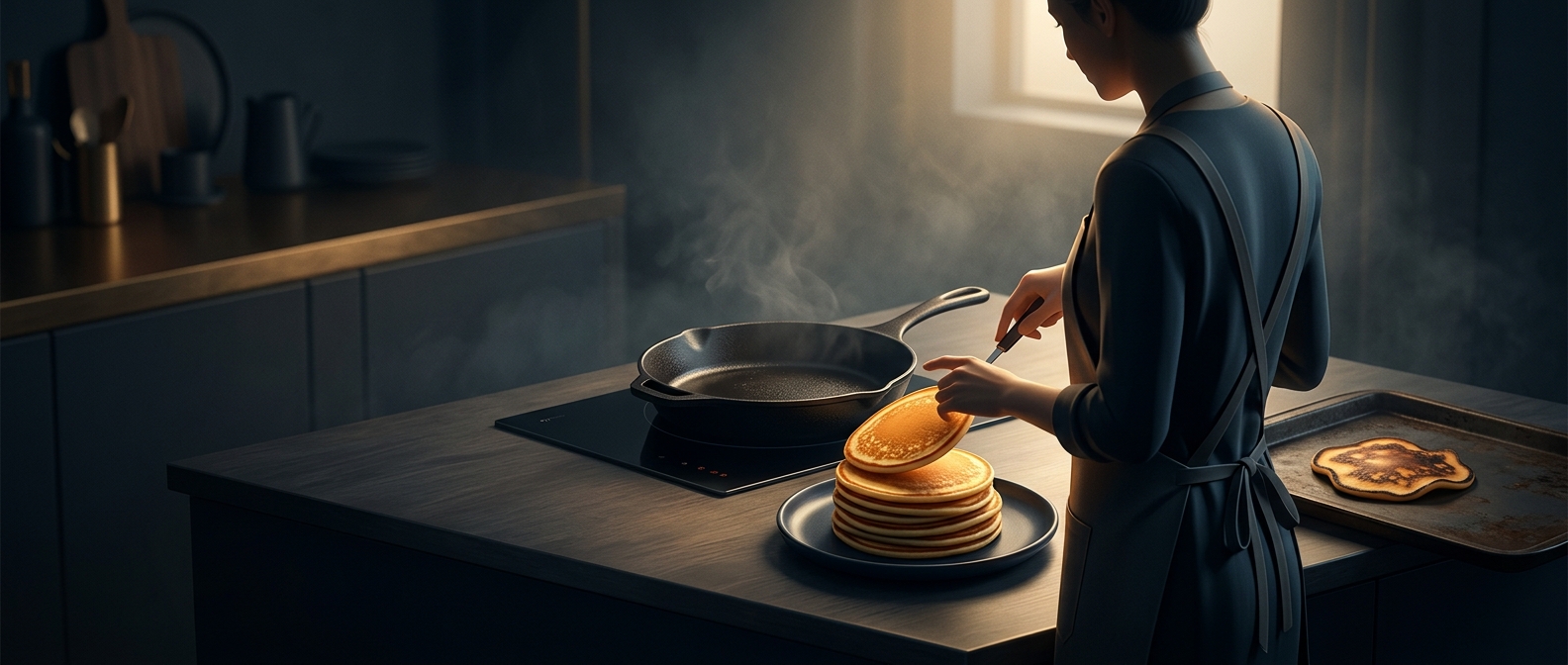
The first pancake supplies feedback. Its color, bubbles, edges, and resistance to the spatula are clues about what the pan is doing. A pale underside suggests the surface may need more time or heat; a pancake that darkens before it sets points toward less heat. The cook can then change one thing and see what happens.
Why the next attempt often improves
This is a small example of learning by feedback: comparing an intended result with the result in front of you, then adjusting the next action. The improvement is not magic or simply greater confidence. The cook has gained information about the pan’s heat and the batter’s timing, and can use it to make a more informed choice.
It is also why treating the first miss as useful can help in other everyday tasks. A rough first draft, test run, or practice attempt can reveal conditions that were invisible beforehand. The practical lesson is to notice what the attempt tells you—and avoid changing so many things at once that you cannot tell which adjustment helped.