A bridge became a warm, narrow-roofed roost
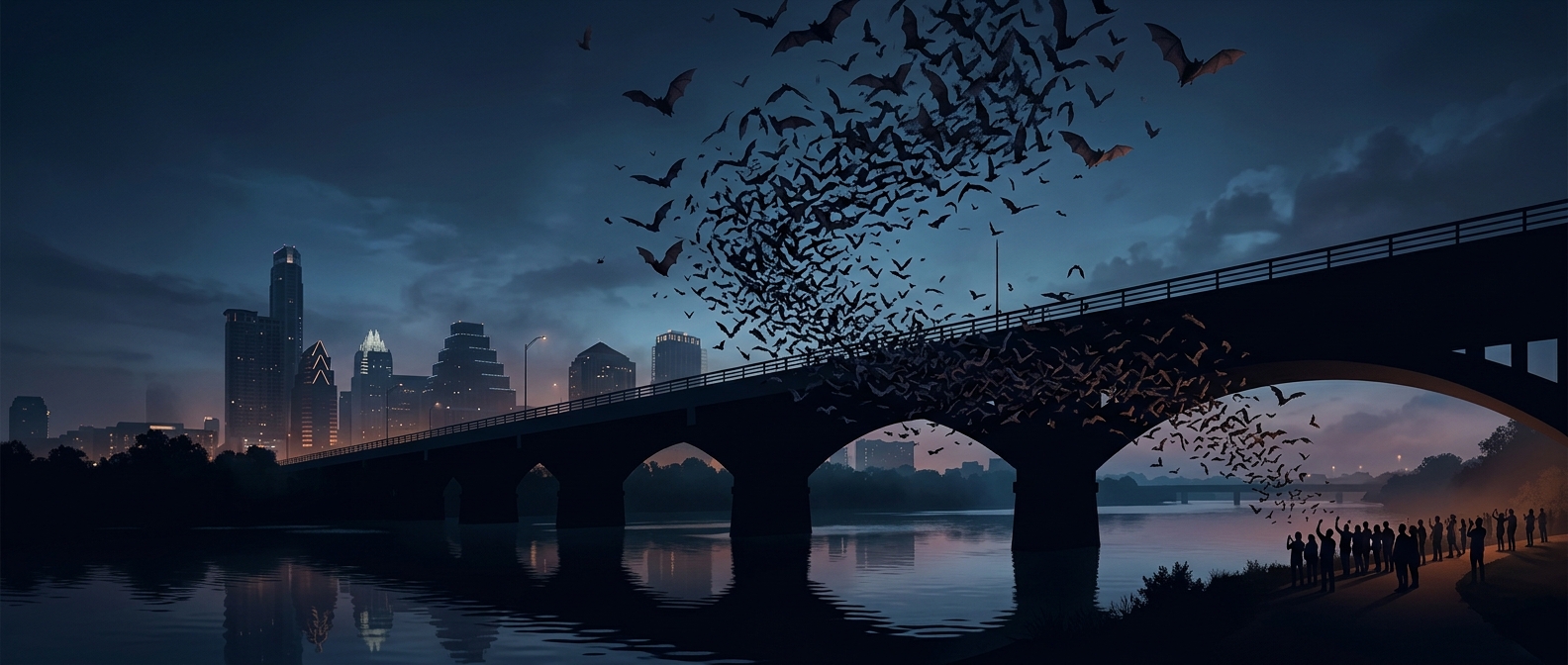
The bats gather beneath Austin’s Congress Avenue Bridge because its underside offers the kind of tight shelter they naturally seek. Mexican free-tailed bats can squeeze into narrow cracks, where they cling together out of sight during the day. When the bridge was rebuilt in the 1980s, its construction left crevices that proved inviting to the animals. A piece of city infrastructure had unintentionally created a large communal roost.
Why they leave together
After sunset, the bats head out to feed on insects. Their mass departure is partly a matter of timing: when thousands begin flying from the same sheltered place, the streams merge into a swirling cloud. The spectacle can look like a single dark shape, but it is many individual bats spreading out into the night sky.
The colony is especially large during the warmer months. Female bats use Texas roosts to raise their young, and the number beneath the bridge changes over the year as bats arrive, reproduce, and move on. That seasonal rhythm helps explain why the evening display can vary in size rather than appearing identical every night.
The city’s wildlife, on a nightly schedule
The bats’ feeding trips connect the bridge to the surrounding landscape: they leave the downtown roost and forage over a much wider area. For visitors, the best-known part is the launch itself, but the practical reason behind it is simple. A dense colony needs a sheltered place to spend the day, then a reliable way to reach its nighttime food supply. Under Austin’s bridge, those two needs meet in the middle of the city.