How a tilted room made gravity look strange
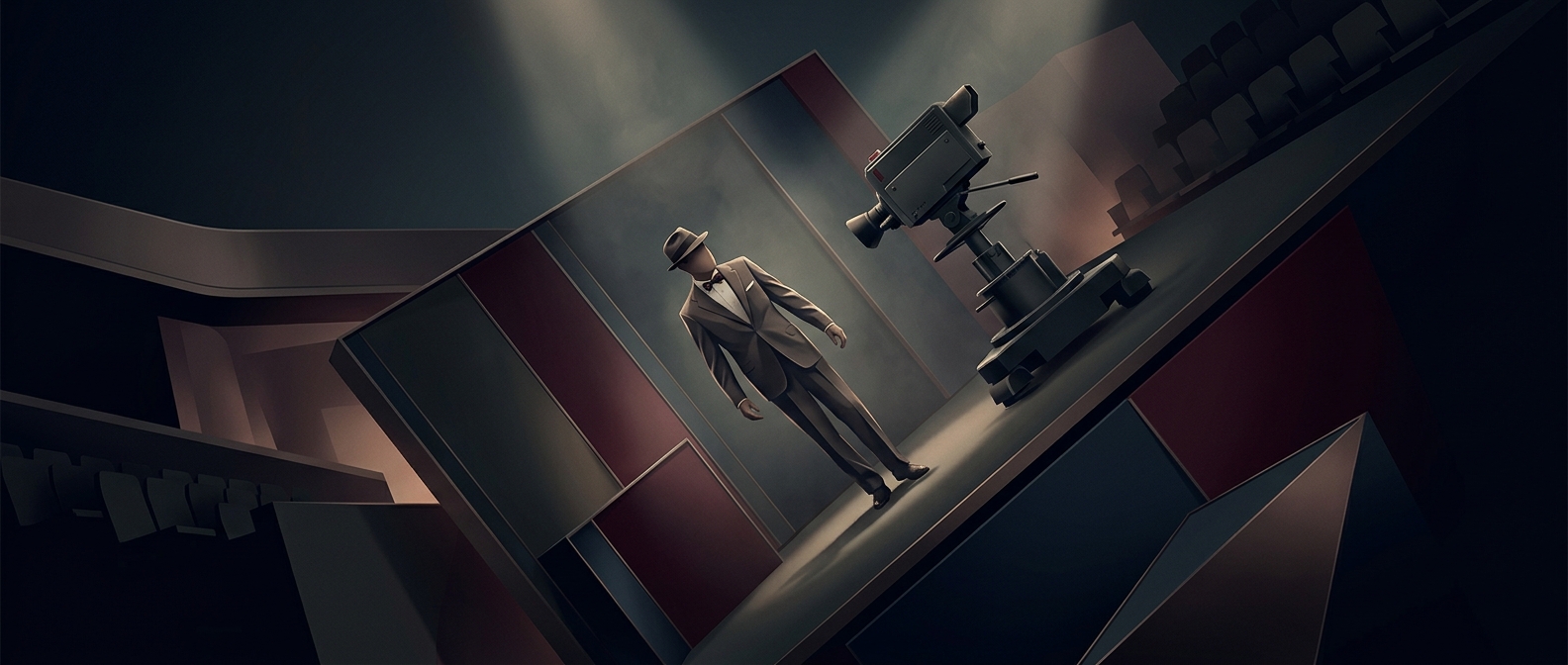
Ernie Kovacs’s trick depended on separating two things viewers usually take for granted: the room’s apparent orientation and the direction gravity actually pulls. The set was built at an angle, then framed so its walls and furniture looked roughly upright on screen. But gravity did not rotate with the scenery.
That mismatch changed how ordinary movement looked. An actor standing squarely on the slanted floor could seem to lean, because the room suggested one “upright” while the actor’s balance followed another. A stream of milk still fell under gravity, but against the tilted room it seemed to travel at an odd angle—almost as though it curved through the air.
A physical effect, not a camera trick alone
The illusion came from arranging the set, camera, and performers to make the audience trust the wrong reference point. The room looked like a normal space, so viewers instinctively judged bodies and falling liquid against its walls and surfaces. In reality, those visual lines no longer matched the true vertical.
That made the effect practical and repeatable: the crew could use a real room, real performers, and real liquid, then let the conflicting angles do the work. No digital image manipulation was needed. The surprise came from watching familiar physics behave strangely inside a room that looked familiar but was not aligned with it.