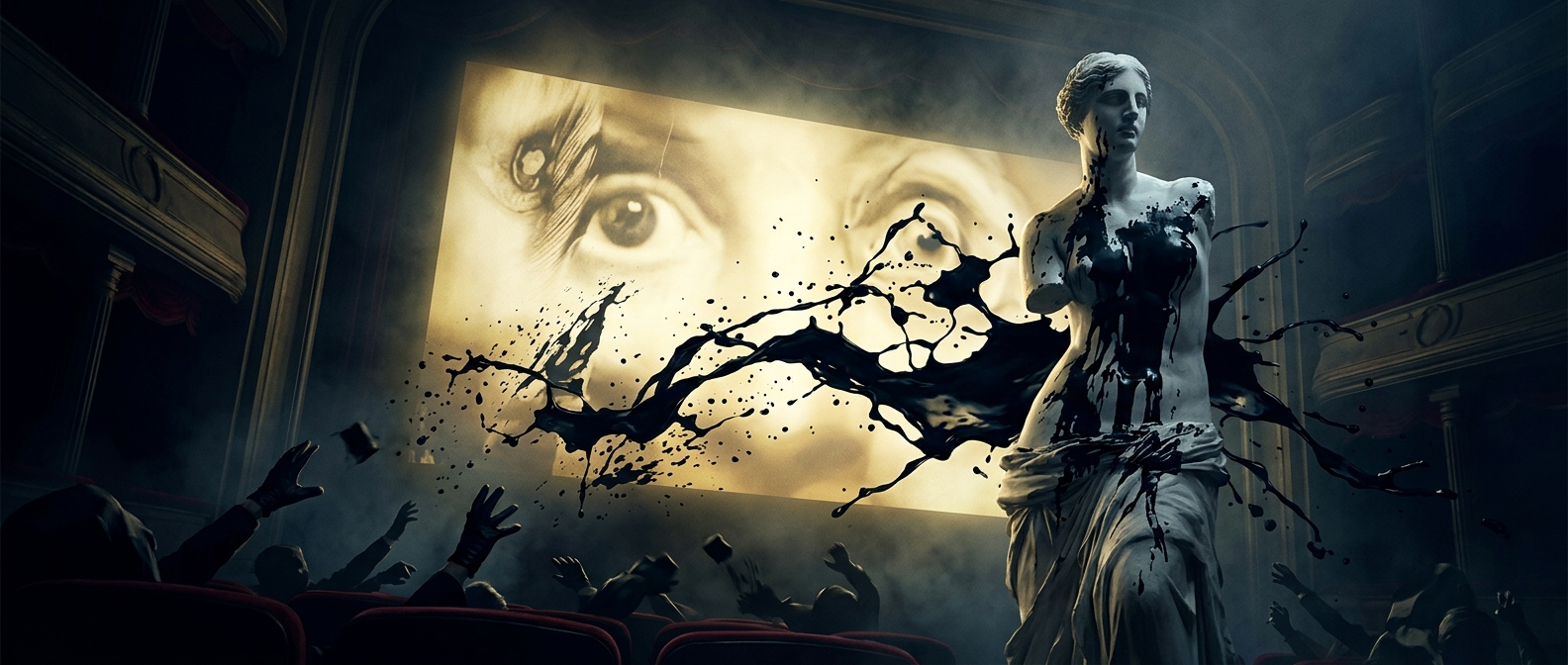
When a film premiere became a political confrontation
The violence at the 1930 premiere was more than an interruption of a screening. By attacking the screen, the audience, and the theater’s artwork, right-wing extremists turned a movie house into a stage for intimidation. The aim was to make the film impossible to show—and to make its supporters feel that attending came with a risk.
That tactic mattered because a cinema gathered a large audience in one place. A coordinated group could disrupt the screening, frighten other patrons, and attract attention far beyond the theater. Purple ink on the screen made the image itself disappear; assaults and smashed paintings carried the threat into the room around it.
From disruption to suppression
A riot does not, by itself, explain a ban. But when a screening becomes a public-order crisis, officials and theater operators face pressure to stop the immediate trouble. Preventing future showings can then achieve what the attackers wanted without requiring them to defeat the film’s argument on its merits.
The ban’s long duration made the episode consequential beyond opening night. It restricted who could see the movie and delayed the public debate it might have prompted. The extremists were not merely heckling a film; they were trying to control whether it could reach an audience at all.