How Houston’s “chop” became part of the beat
Chopped and screwed music is not simply a song played more slowly. In the style associated with Houston DJ Screw, slowing a record changes its feel: drums spread farther apart, and voices drop into a lower register. The resulting space gives each sound more weight and makes familiar tracks feel newly strange.
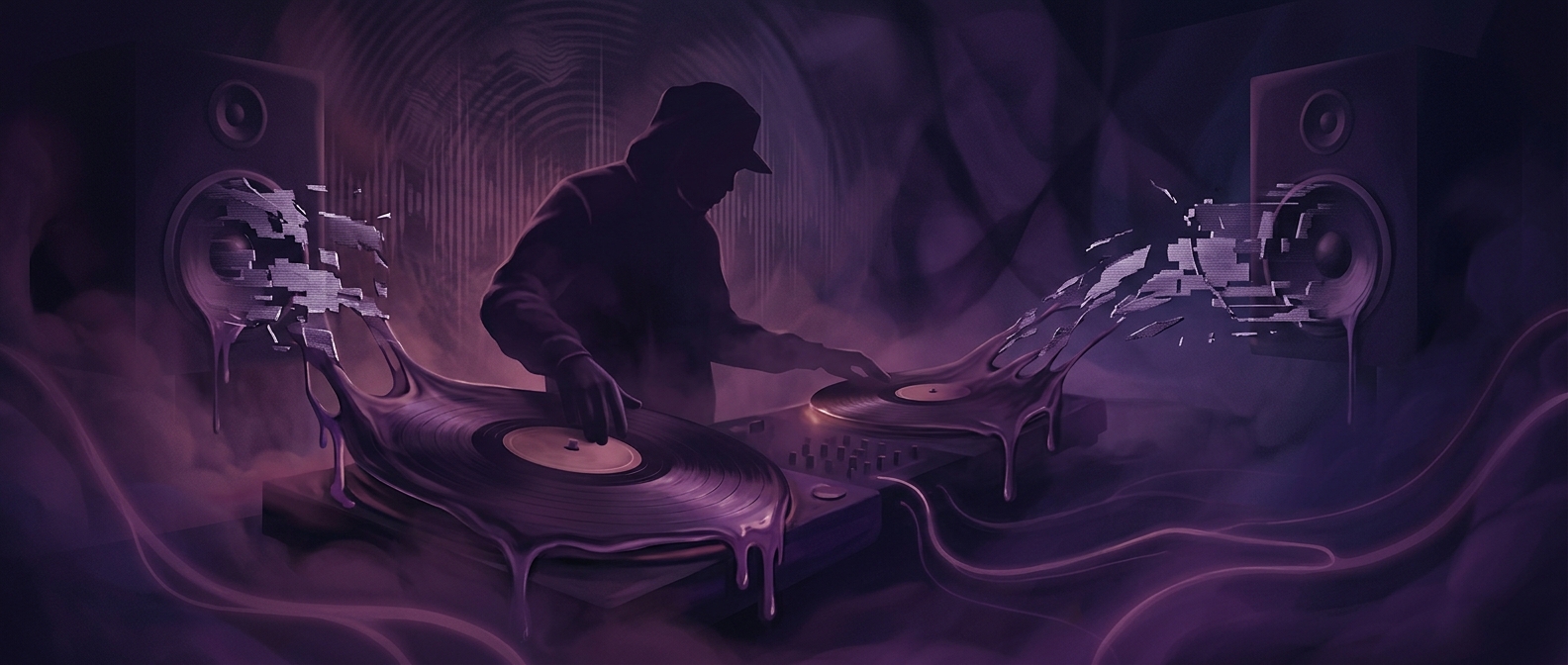
The “chop” adds another layer. A DJ cuts a short piece of a record and repeats or interrupts it, turning a vocal syllable, drum hit, or other fragment into a rhythmic event. Those abrupt returns can make the music seem to stumble, but the interruptions are deliberate. They create tension against the slow, heavy pulse.
A remix built for close listening
Screw developed the approach through mixtapes in Houston, transforming existing songs rather than relying on a conventional band arrangement. The techniques worked together: slowing a track stretched its phrases, while cuts and repeats made small details stand out. Listeners could hear the texture of a voice or the space between beats in a way the original recording did not invite.
The effect is often described as hypnotic because the music moves slowly but keeps changing in tiny increments. A repeated fragment can feel almost suspended, then a sudden cut jolts the listener back into the rhythm. That contrast—not slowness alone—is central to the style.
Why the sound lasts
The approach also makes remixing audible as a performance. The DJ is not just selecting songs; the timing of each slowdown, cut, and return shapes the track’s mood. A familiar recording becomes less like background music and more like something being worked over in real time. Its impact comes from that tension: the beat seems to drag, while the edits keep the listener alert.