A Ticket That Could Ride on a Lapel
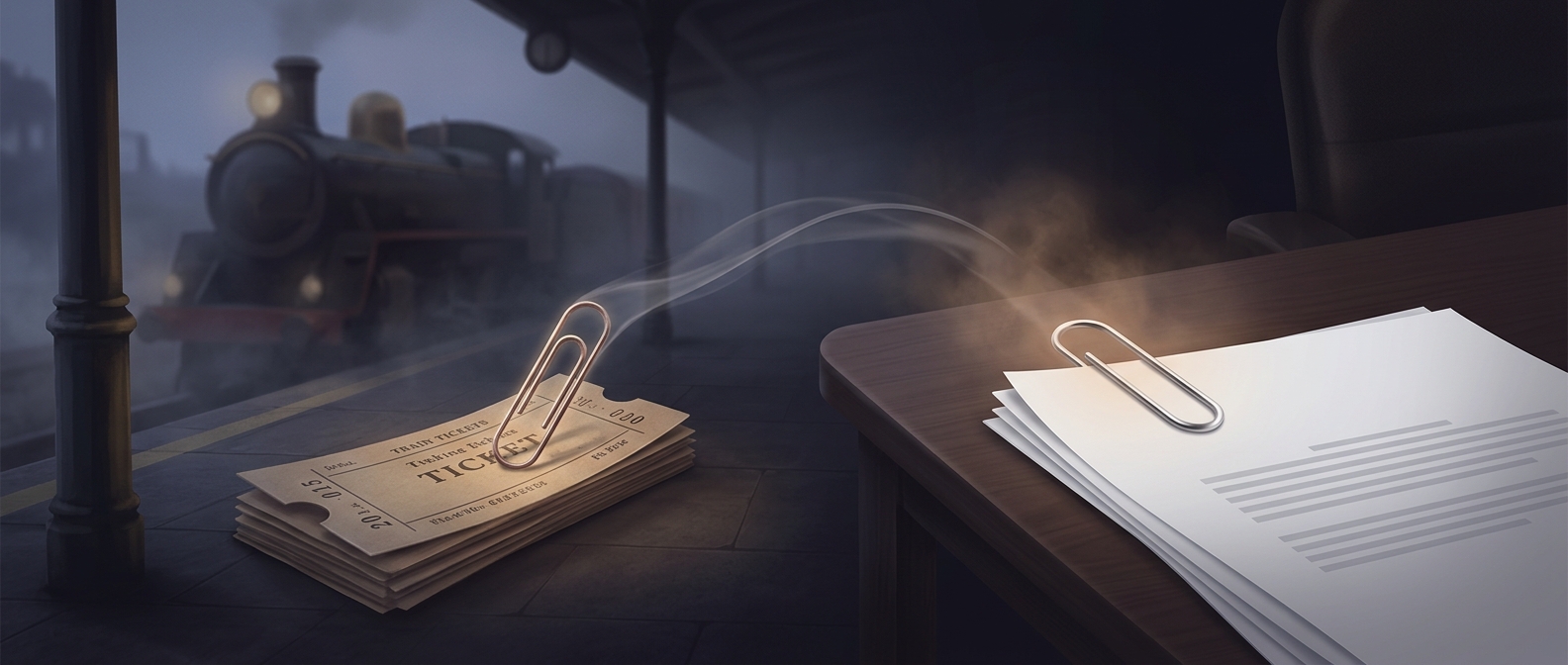
Before the paperclip settled into its familiar office role, its loop had a more wearable job: holding a thick cardboard train ticket against a passenger’s coat. The ticket needed to stay visible and close at hand, but fastening it directly with a pin could pierce or snag the fabric.
A loop offered a different kind of grip. Instead of making a hole, it held the ticket and lapel together by pressure, turning a small piece of wire into a temporary ticket holder. The design answered a practical problem of travel: how to keep a ticket attached while moving without treating either the ticket or the coat as disposable.
From Wearable Fastener to Desk Staple
That early use helps explain why the paperclip’s shape matters. A loop can hold material without cutting or puncturing it, and it can be removed and reused. The same basic advantage makes a clip useful on a desk, where it gathers loose sheets without permanently fastening them.
The paperclip’s familiar office identity can obscure that modest beginning. Its loop was not simply a decorative flourish: it made the wire useful as a small, removable attachment. A design made to keep a train ticket on a coat could later keep papers together for the same essential reason—it holds without making a hole.