Why a Children’s Bike Makes an Adult Race So Awkward
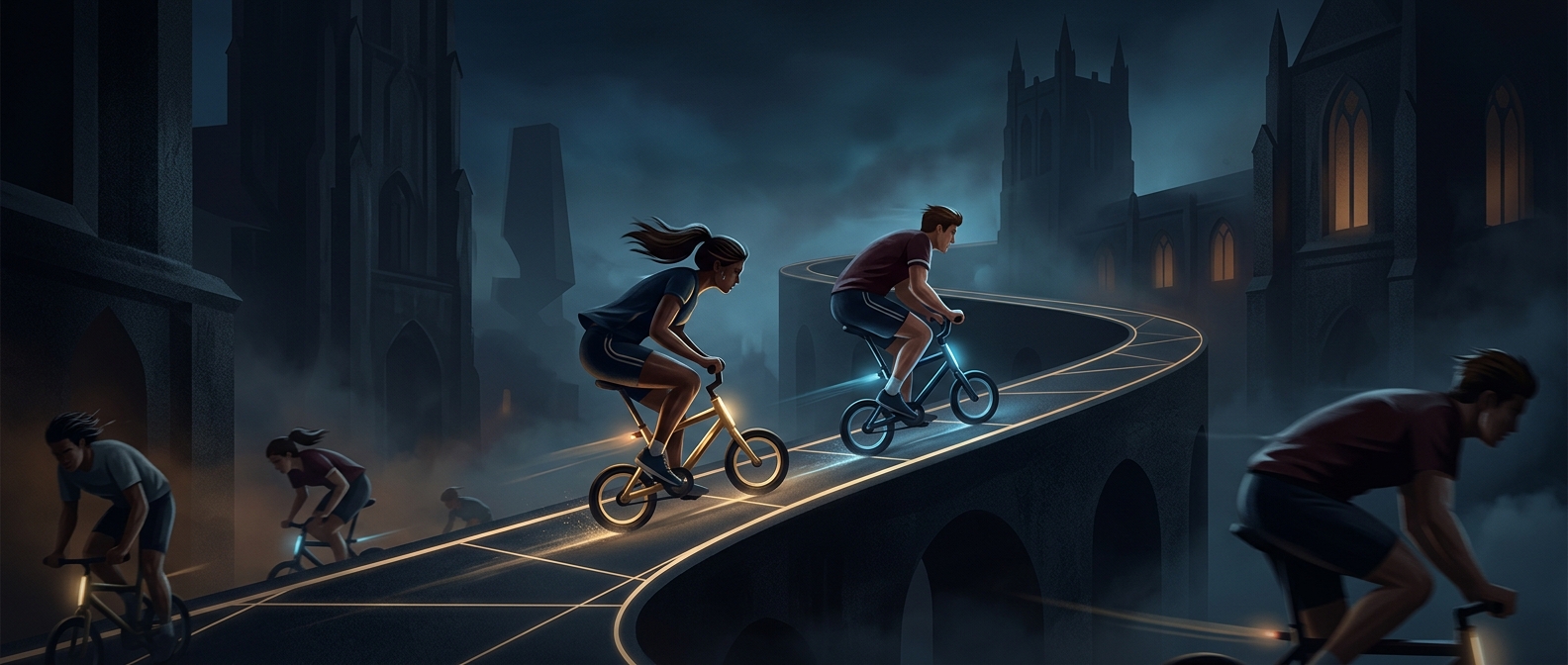
A small bike changes more than the rider’s appearance. Its short frame leaves an adult with little room to bend and shift weight; knees crowd the handlebars, and the rider sits close to the front wheel. That cramped posture makes it harder to steer and balance with the relaxed, broad movements possible on a full-size bike.
The short distance between the wheels also means small steering inputs can produce a quick response. Add an adult’s weight and long limbs to a frame built for a child, and every correction can look exaggerated: the rider leans, the bike wobbles, and the handlebars seem uncomfortably close.
The Challenge Is Control, Not Speed Alone
On an ordinary bicycle, a rider can use space and leverage to make smooth adjustments. A children’s bike takes much of that room away. The rider has to manage balance while keeping knees, hands, and handlebars from competing for the same cramped space. Even a modest bump or turn can become a visible test of control.
That mismatch is what gives the race its comic tension. The bikes are familiar objects, but adult bodies make them behave—and feel—anything but ordinary. What looks like a simple contest of pedaling becomes a spectacle of riders trying to stay composed on machines that leave almost no room to move.