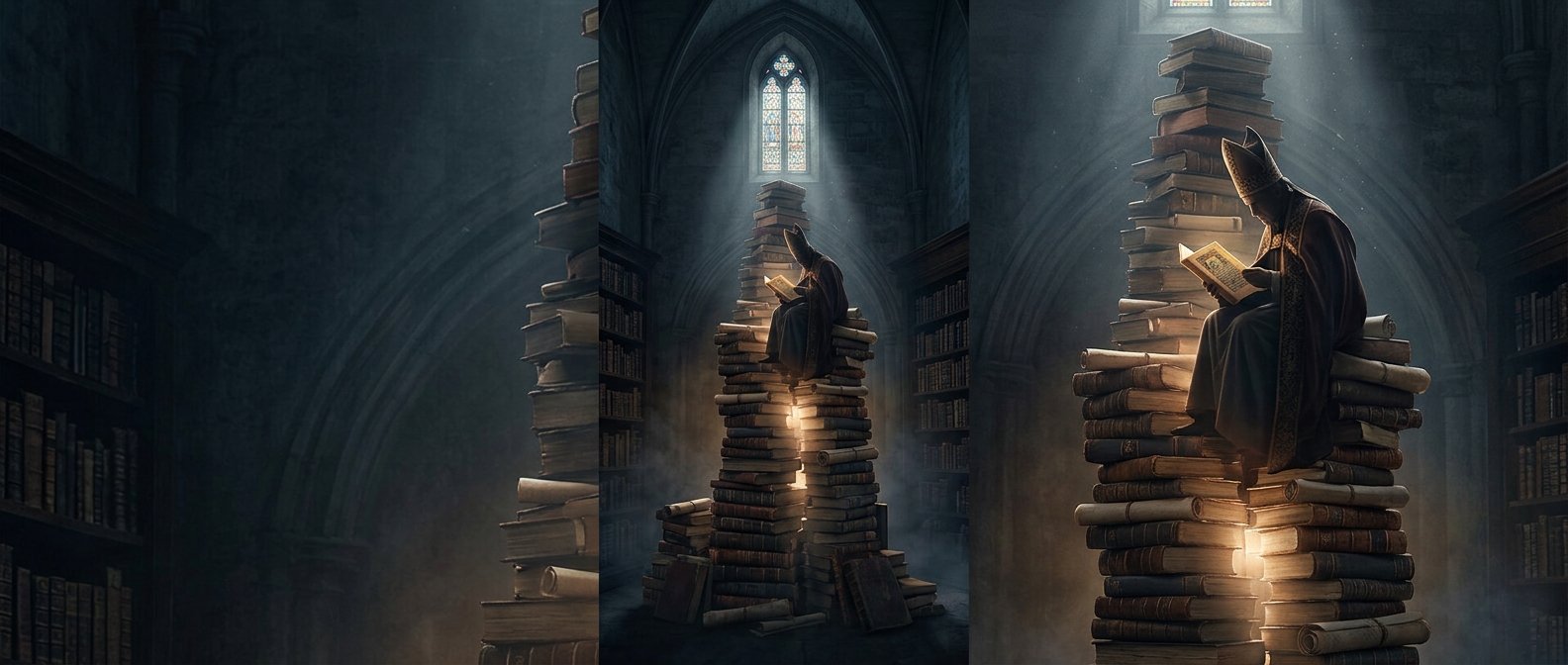
A library scattered by the Dissolution
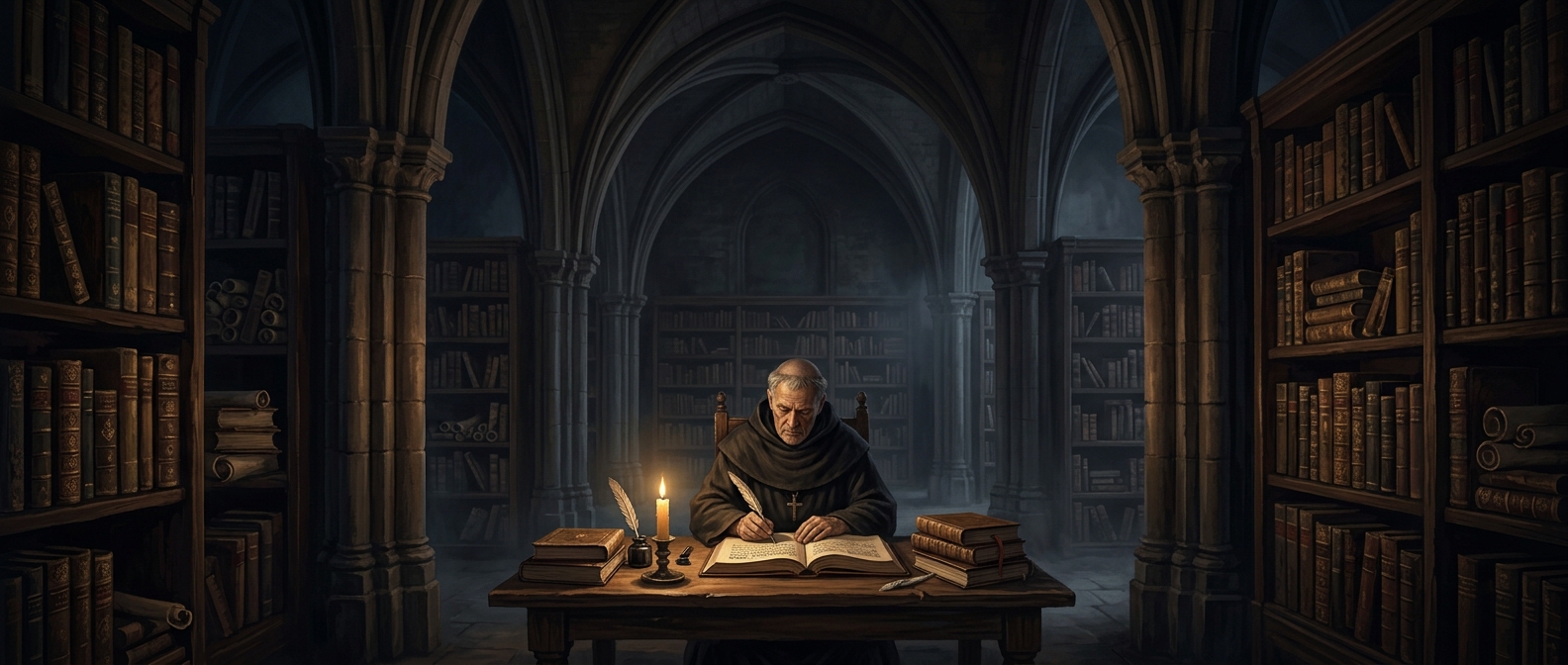
When Henry VIII’s government closed England’s monasteries in the 1530s and 1540s, their books lost the communities that had housed and cared for them. Monastic libraries held far more than religious texts: they preserved chronicles, legal records, early English writing, and accounts of church life. Once a monastery was shut, its books could be dispersed, neglected, or treated as useful parchment rather than as records of the past.
Matthew Parker, later Archbishop of Canterbury, worked to gather manuscripts from this upheaval. His collection helped preserve evidence of the English Church as it had existed before the break with Rome—a history that mattered in the religious arguments of his own time.
Red chalk as a practical mark
Parker’s library grew from books found in different places, not from a single intact monastic collection. In that setting, a simple identifying mark could help distinguish books he had selected or acquired. Some manuscripts bear red-chalk marks associated with his collecting; the mark is a trace of the effort to sort and retain books while old libraries were being broken up.
The chalk did not preserve the pages by itself. The crucial step was gathering manuscripts that might otherwise have vanished from institutional care, then keeping them together as a usable collection.
From private rescue to public record
Parker left his library to Corpus Christi College, Cambridge, where it became a lasting resource for readers and scholars. Its survival means that materials once held in medieval religious houses can still illuminate the institutions, beliefs, and writing of pre-Reformation England. The red marks are small, but they point to a larger consequence: decisions made during the Dissolution did not determine the fate of every book.