The cage made the fast part of the show
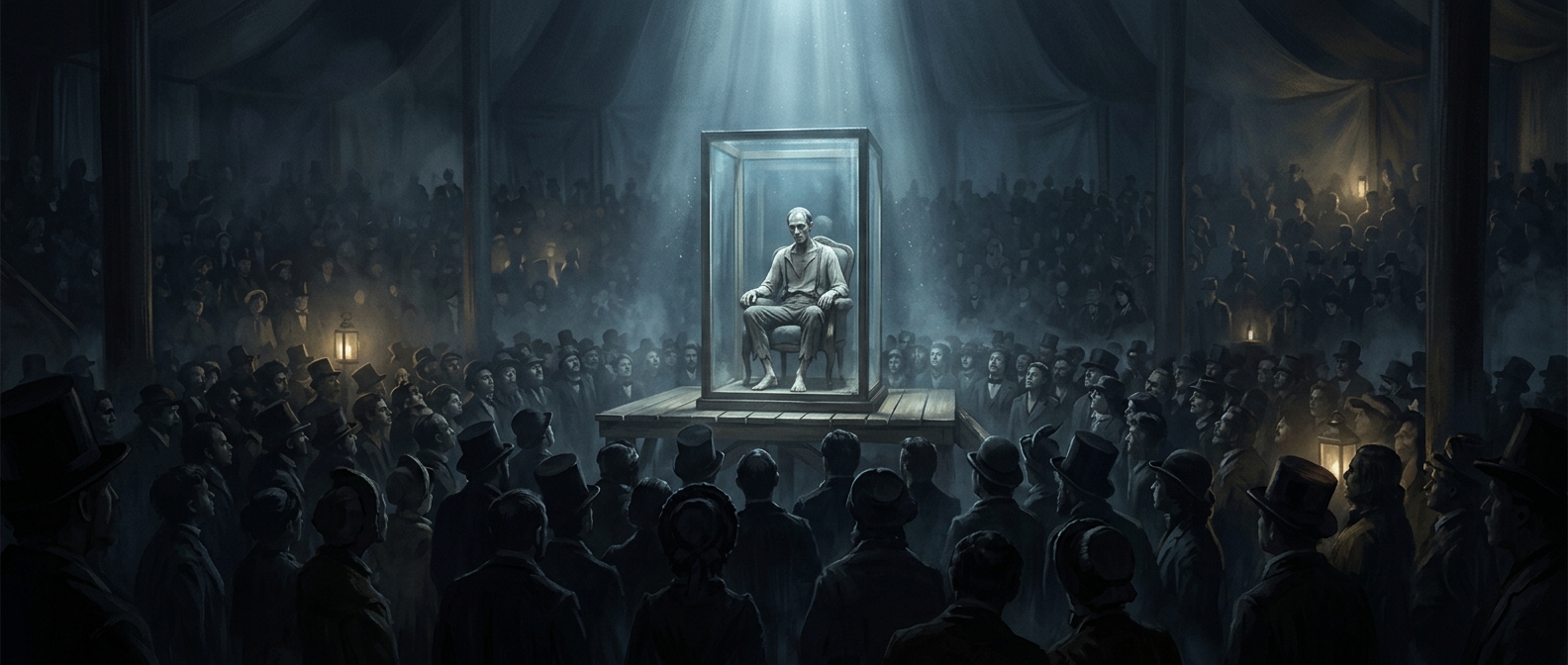
A hunger artist’s enclosure was more than a stage prop. It let spectators watch continuously and made the claim of abstinence seem easier to verify: the performer was visible, the supplies were limited, and the audience could judge whether the feat was genuine. In an age before recorded footage, that live scrutiny was part of the attraction.
The arrangement turned endurance into a business. Admission paid for the chance to witness a body change over time, while the performer’s visible frailty served as evidence that the fast was real. Each day could deepen the suspense: Would the artist continue, or would the act end? The audience did not merely see a finished trick; it watched the physical cost accumulate.
The proof was also the danger
That same visibility made the performance increasingly precarious. With little or no food, the body uses stored energy and begins breaking down its own tissues; weakness grows, and prolonged deprivation can damage organs and become fatal. Water does not prevent those effects. The worsening condition that drew attention was therefore also a sign of mounting bodily harm.
The spectacle depended on a difficult balance: audiences wanted proof of extraordinary endurance, but a performance could not continue indefinitely without serious risk. The cage made that tension impossible to ignore. It put the artist’s weakening body at the center of the transaction—and made every ticket a payment to watch the boundary between a staged attraction and a medical crisis draw nearer.