A machine’s view, built from familiar computer text
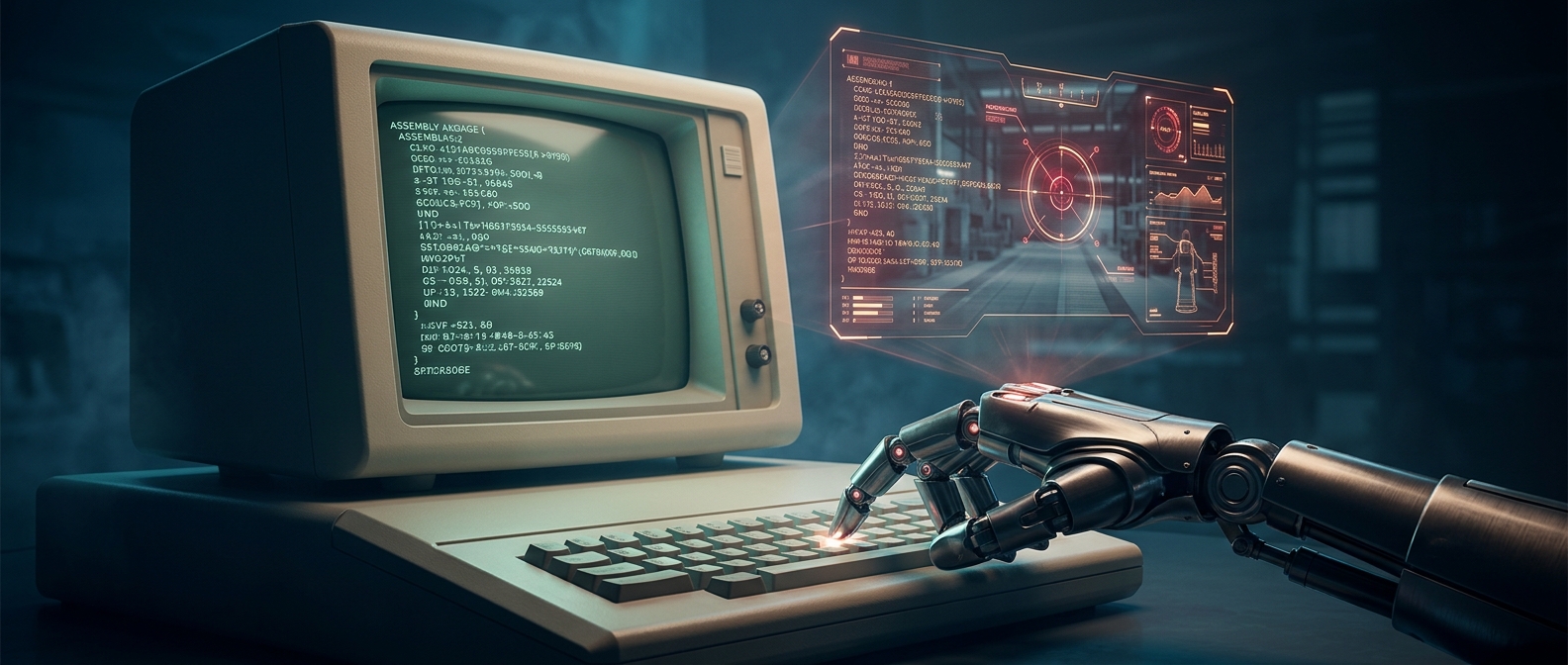
The Terminator’s point-of-view shots needed to look unlike ordinary human vision. Instead of showing only what the machine saw, they layered the image with labels, readings, and other visual data—as if the scene were being inspected and sorted by a computer.
For that overlay, James Cameron’s effects team used pages of Apple II source code: the written instructions that tell a computer what to do. The code supplied dense, orderly text that could make the view feel computational without requiring every line to function as a live readout. On screen, it served both as computer language and as visual texture.
Why the choice still reads as science fiction
The effect turns an abstract idea—seeing through a machine’s eyes—into something viewers can recognize at a glance. The image is still a film shot, but the code suggests that the Terminator is processing it rather than simply looking at it. Its distinctly 1980s computer text also anchors that imagined intelligence in the technology of the period.
That contrast is part of the scene’s appeal: a terrifyingly capable fictional machine, framed by the ordinary-looking code of a real home computer. The Apple II text makes its vision feel less like magic and more like a system at work.