The Cabin Chime Is a Cue, Not a Codebook
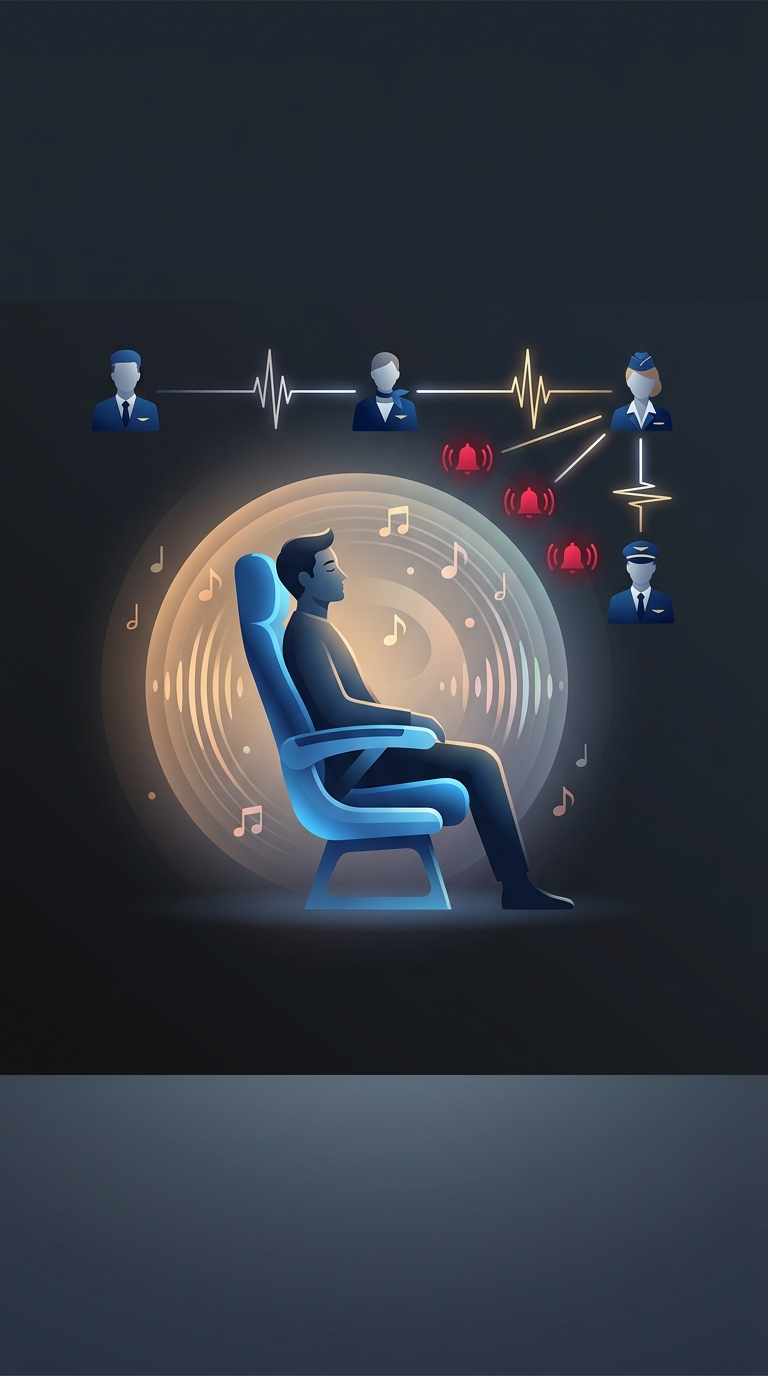
A chime gives cabin crew a quick signal that something needs attention. On many aircraft, different tones or tone sequences distinguish ordinary passenger calls from calls involving crew stations or the flight deck. A high-low pair can indicate a crew member calling another station over the intercom, though the exact patterns vary by aircraft and airline.
The sound is only part of the message. When someone presses a call button, the system can also light an indicator at the relevant crew station, helping attendants identify where the call came from. The chime gets attention; the light and intercom provide the useful detail.
Why Use Different Sounds?
Cabin crew work across a large, noisy space, often with limited visibility of one another. Distinct tones let them recognize a call without stopping to inspect a panel or hear a spoken announcement. A passenger need not know what each pattern means: the system is designed to help crew coordinate while keeping routine cabin activity in the background.
That does not make every chime an emergency warning. Calls can be routine, and the same-sounding cue may have a different use on another aircraft. What passengers hear as a mysterious signal is, for the crew, a practical prompt to check an indicator or answer the intercom. The important information is usually not the tone itself, but who called and where the call originated.