Why a passport changes under ultraviolet light
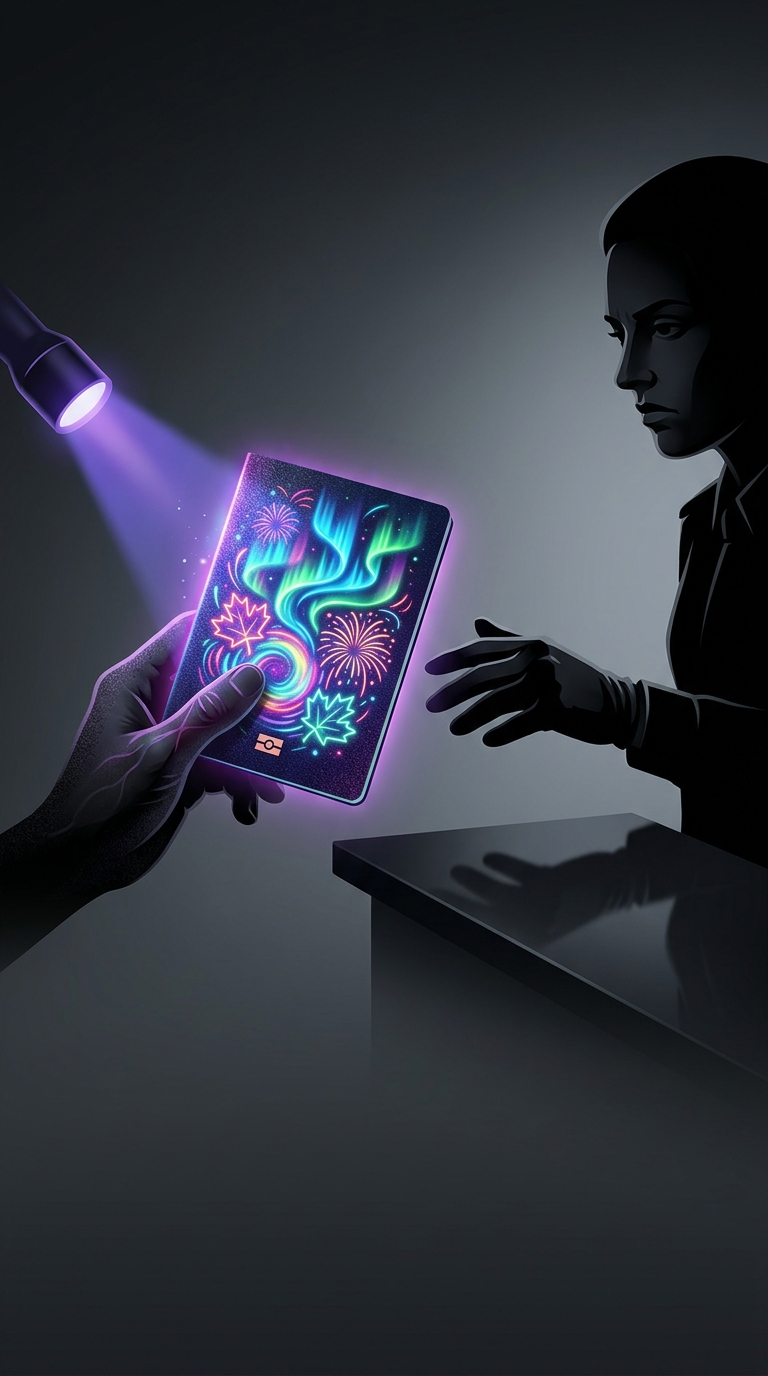
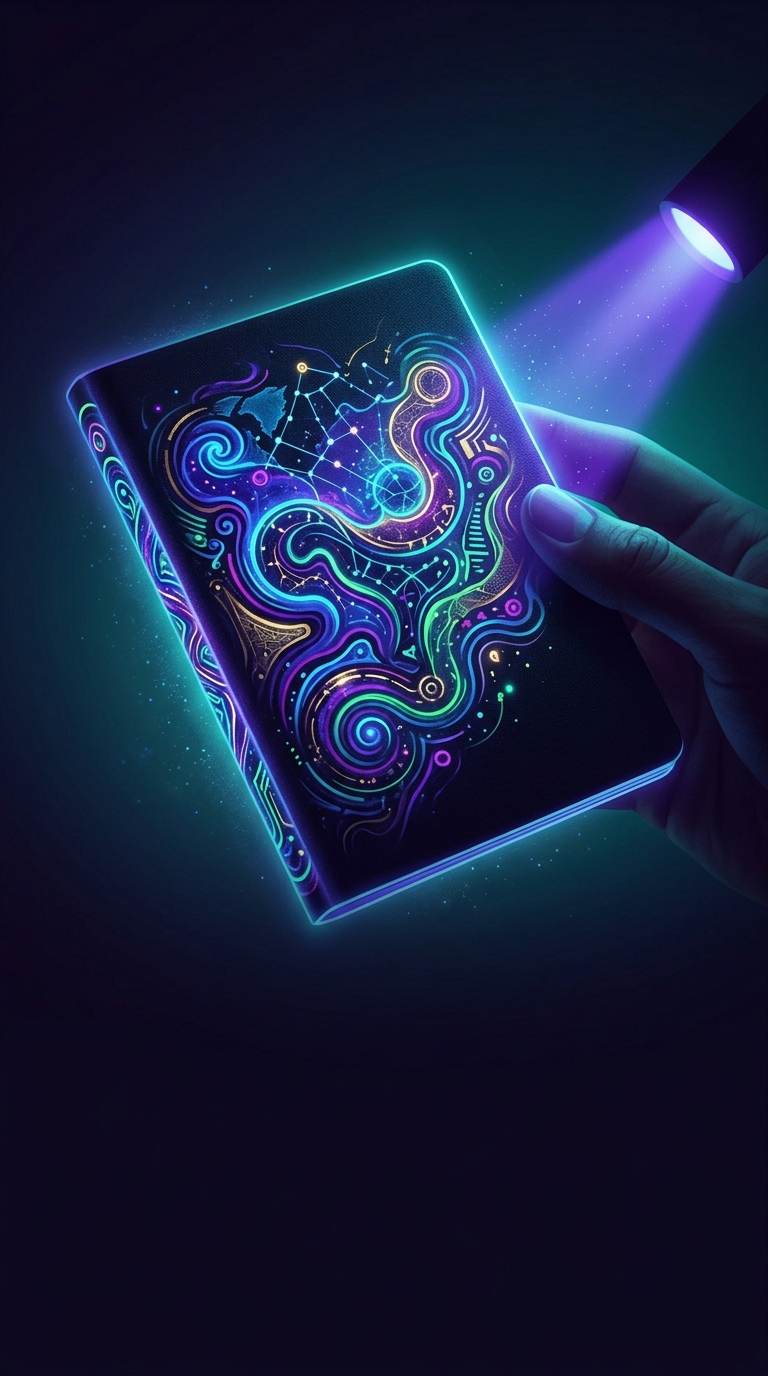
A blacklight sends out ultraviolet light, which is mostly invisible to the eye. Some security inks in passports absorb that energy and release it as visible light—a process called fluorescence. That is why a page that looks ordinary in daylight can reveal bright colors, fine patterns, or images when viewed under the right lamp.
The effect is built into the document during printing. Security designers can place fluorescent details in specific locations and combine them with other fine-printing features. The pattern is not decoration added later: it is part of the passport’s manufactured design, and it differs among issuing countries and document versions.
What the glow can tell an inspector
During an examination, an inspector can illuminate the passport and check whether its fluorescent elements appear where and how they are expected to. A counterfeit may imitate the visible artwork yet lack the right inks or reproduce the hidden pattern poorly. Ultraviolet inspection gives officials another way to notice that mismatch, alongside checks of the printed page, embedded features, and the document’s physical construction.
A glow alone does not prove that a passport is genuine; counterfeiters can imitate some security features, and legitimate passports do not all share the same design. The useful clue is the specific response of a particular document, not simply whether it lights up. That is why the hidden image is both striking to travelers and practical at a checkpoint: its appearance depends on materials and printing choices that are harder to copy accurately than an ordinary picture.