A chime is a cue, not a conversation
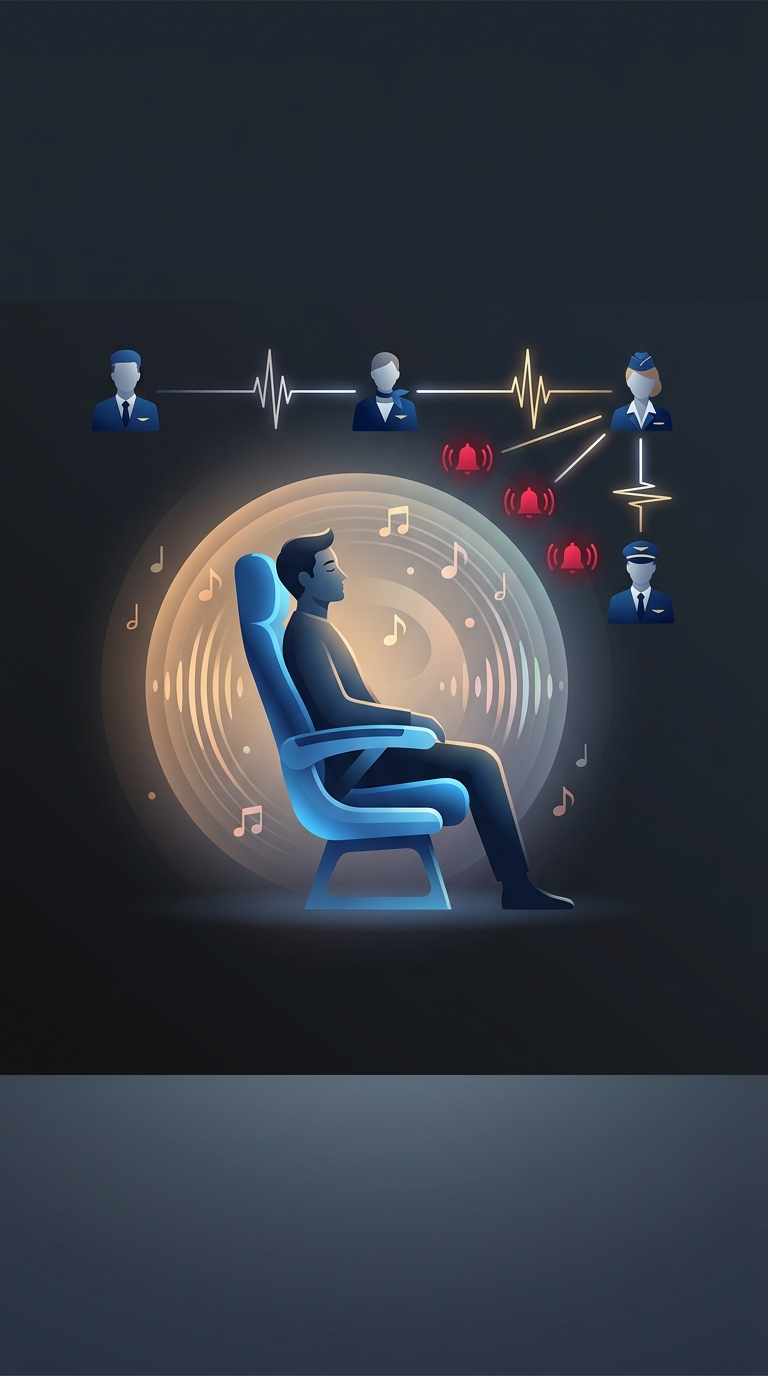
The sounds are part of the aircraft’s cabin communication system. A tone can alert a flight attendant to a call from a passenger, signal communication from the flight deck, or accompany a change in a cabin indication such as the seat-belt sign. The tone gets attention; a light or display often helps show where the alert came from.
That lets the crew respond without having to shout across the cabin. If a passenger presses the call button, for example, a flight attendant can see which seat needs attention and go there when it is safe to do so.
Why the sounds can seem unpredictable
There is no single chime code used in exactly the same way on every airline and aircraft. The tones and their meanings depend on the plane’s equipment and the airline’s procedures. Some sounds may be intended for crew coordination rather than as a message to passengers, and a short sequence can reflect more than one cabin event.
Timing also depends on what is happening. A call button may be pressed at any point in the flight, while other alerts are tied to operational changes. When several cues occur close together, passengers may hear a pattern without knowing which light or message the crew is responding to.
The practical purpose
A brief tone gives the cabin crew a low-disruption way to notice that something needs attention while they are moving through a noisy, crowded space. It does not, by itself, tell passengers that something is wrong. The useful clue is the combination of the sound, any illuminated indicator, and the crew’s response—not the chime alone.