A screen between the magistrate and the witness
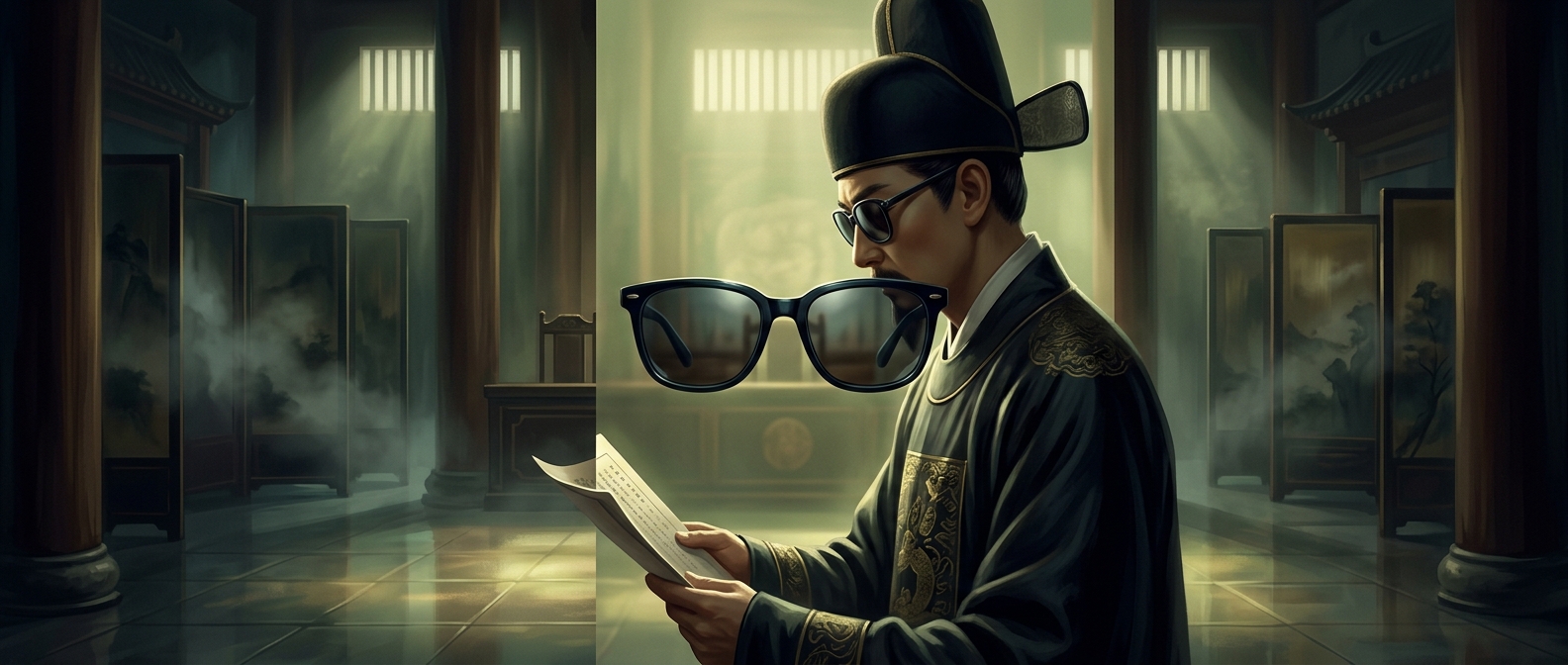
The smoky-quartz panes were not ordinary sunglasses for bright daylight. Set in a frame, they darkened the area around a magistrate’s eyes, making it harder for a witness to read a raised eyebrow, a frown, or a flicker of surprise. The magistrate could still look at the person speaking, but the person speaking had less access to the magistrate’s reactions.
That small visual barrier changed the feel of questioning. In a courtroom, witnesses may search an official’s face for signs that an answer is pleasing, doubtful, or dangerous. Concealing those cues could make the magistrate seem more composed and less personally responsive, while discouraging witnesses from tailoring what they said to visible approval or disapproval.
The power—and limit—of an unreadable face
The quartz did not make a magistrate literally expressionless, nor did it hide the entire face. Its effect was narrower: it obscured the eyes, among the most revealing parts of an expression. The unusual appearance also marked the wearer as an official whose attention was difficult to interpret.
So the panes served both as a practical screen and as a visual signal of judicial authority. A witness could see the magistrate listening, but not easily tell what the magistrate thought.